INSIDE KOREA · ICN · A trip with breathing room
Six nights in Seoul let you visit Suwon and Incheon as separate day trips while keeping a familiar room. The order alternates city history, a museum and two longer outings, with a recovery day before departure. Skip one excursion if transport feels tiring; the week still works without collecting three cities.
🧭 Your journey at a glance
One main outing, a seated meal, then room to pause. The card times are suggested allocations, not opening hours or transport schedules. Move the whole card to another day when weather or a closure requires it.
Hongdae and Yeonnam: settle in before exploring
1–2 hours
Gyeongbokgung and a slower Jongno afternoon
4–5 hours
Yongsan: choose a story at the National Museum
2–3 hours
Suwon: a chosen section of the fortress
6–8 hours
Incheon’s old port and Chinatown
5–7 hours
A useful blank day
Optional
✈️ Return to the airport
🚆 Arrival and transport
At Incheon, start with your terminal, baggage and the address of your accommodation in Korean. The AREX all-stop train serves Hongik University; the Express runs to Seoul Station and is a different service. Choose the station closest to the hotel, then account for the walk from that station: a cheap room beside a steep lane can be a poor bargain with luggage. For Yeongjong or Incheon city, check a local route instead of automatically taking the Seoul-bound train. Keep arrival day reservations flexible.
Airport guide · Incheon Airport
Hongdae and Yeonnam: settle in before exploring
After dropping bags, choose one stretch of the Gyeongui Line Forest Park toward Yeonnam. Find dinner before browsing shops so tiredness does not turn the first evening into a search for food. A café stop is a useful rest, not an obligation to queue for the most photographed doorway. Keep the return to the hotel simple; save nightlife for an evening when you know your energy and the route home.
Gyeongbokgung and a slower Jongno afternoon
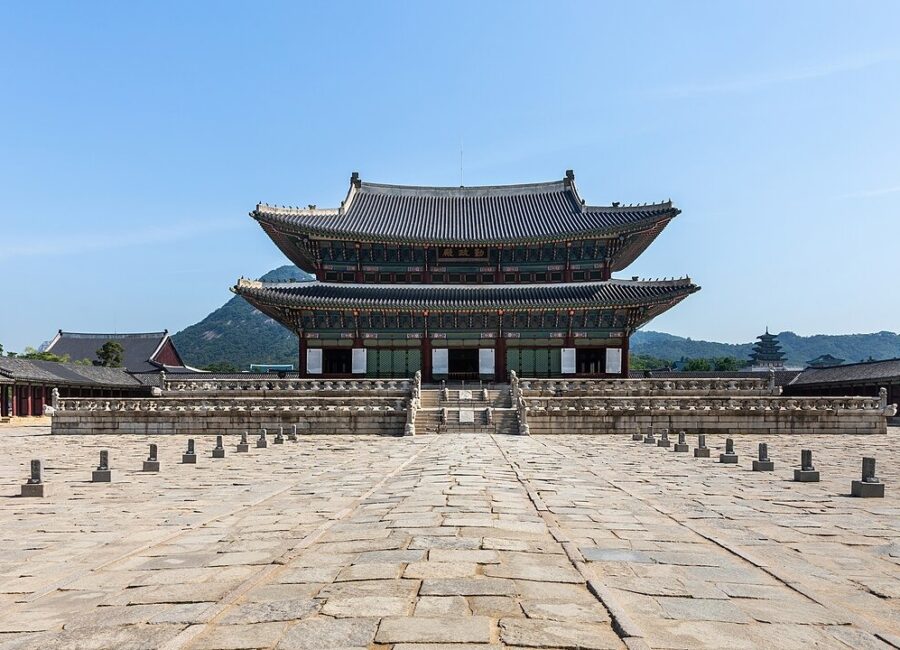
Give Gyeongbokgung the morning rather than squeezing it between two districts. Walk the main courtyards, pause in the grounds, then eat around Jongno and browse Insadong at your own pace. Gyeongbokgung normally closes on Tuesday, with holiday exceptions: swap this day with the museum day after checking the official calendar. If adding Bukchon, enter the designated restricted residential zone only within the permitted visitor hours, currently 10:00–17:00, and keep voices low.

Yongsan: choose a story at the National Museum
At the National Museum of Korea, choose two or three galleries that interest you instead of attempting every floor. The permanent collection is free; special exhibitions may charge separately. Check current gallery closures and the museum calendar before making this your rainy-day fallback. Sit down for lunch afterwards. A short garden walk can finish the visit; do not automatically add a distant shopping district just because admission did not cost anything.
Suwon: a chosen section of the fortress
Treat Suwon as a full day from Seoul, including both rail travel and the local connection to Hwaseong. Choose a section around Hwahongmun and Banghwasuryujeong instead of committing to the entire fortress wall. Eat in the Haenggung-dong area and leave a café break before the return journey. The best measure of this day is having time to look at the walls and the city around them, not completing every gate.
Incheon’s old port and Chinatown
Start around Incheon Station, have one proper meal in Chinatown, then walk the old-port streets slowly. Jayu Park adds elevation; treat it as optional if luggage, knees or heat make slopes unwelcome. Songwol’s painted lanes can be a short detour, not a second major outing. This is a neighbourhood walk, so avoid lining up several tiny museums simply to fill a checklist. Leave time to notice the transition between restaurants, old façades and everyday streets.
A useful blank day
Use this space for laundry, an unhurried breakfast and a return to the neighbourhood you liked most. Keep one unbooked half-day for weather or a delayed arrival; it is not a hidden obligation to visit another city. On a month-long stay, alternate a larger outing with an ordinary local day. Confirm rubbish rules, quiet hours and any cleaning charge with the host, and save a nearby pharmacy and grocery store on your map.
🛏️ Choose the room by the walk home
Before comparing hotel photographs, save its Korean address and inspect the walk from the station exit to the actual entrance. “Hongdae” and “Jongno” describe areas, not a guarantee of a short level walk. With luggage, an elevator, a quieter street and a nearby ordinary restaurant may matter more than a fashionable lobby. Confirm the reception hours and how late arrival works. Ask whether bags can be stored before check-in and after checkout, and when they must be collected. A station locker icon does not promise a free large compartment. Keep the first and last walks near the place holding your bags; returning across the city to retrieve them adds another journey. Two people comparing a room rate should check that the quote covers both guests, the same dates and the same cancellation terms. Choose one base for the short city stay and spend the saved packing time outside.
🚇 Read the whole journey, not just the train time
Save four points: your hotel, the correct station entrance, today’s main attraction entrance and the way home. A place name on a map can point to the middle of a large park rather than its usable entrance. Compare routes by transfers and walking as well as minutes; a slightly longer direct ride can be easier with bags or tired children. Check the direction on the platform before boarding and allow time for exits at large interchange stations. Treat a café across town as another outing, not a small addition because both places are in Seoul. After dinner, check the last workable route including connections, not just one line’s final train. Keep the hotel address available offline. On departure day, include retrieving bags, walking to transport and reaching the correct terminal in the return calculation; the railway station and the airline check-in desk are not the same arrival point.
🌳 Make western Seoul a walk, not a list
In Hongdae, begin with the Yeonnam-dong section of Gyeongui Line Forest Park, then choose one side street for lunch or browsing. The official park route extends far beyond this section; its full length is not a target for arrival day. Save a recognisable point near the station for the return and avoid blocking residential entrances while taking photographs. If Yeouido is on your route, choose one stretch of Hangang waterfront and an indoor meal nearby. A riverside picnic needs suitable wind and weather; a café meal can replace it without spoiling the day. Find a toilet and a place to sit before adding distance. Bike rental, cruises and shopping are separate optional activities, each with waiting and return time. On a short visit, choose one instead of stacking them. Between Hongdae and Yeouido, check the route from your exact starting point; the neighbourhood names alone do not tell you which transfer or river access is easiest.
🍚 Put real meals between the sights
Keep breakfast close to your room, lunch inside the area you are visiting, and dinner on the way home. In Jongno, a bowl of noodles or a rice meal can separate a palace visit from an alley walk; around Hongdae, eat before joining the evening crowds. If your plan includes a market, treat small dishes as tastes rather than a requirement to eat everything. Check whether the price is per person, per plate or a set, and ask about minimum orders before sitting down for a shared grill. Travelling alone is easier with a place offering a clearly priced individual meal. For allergies or dietary needs, show a translated sentence and ask about broth and sauces as well as visible ingredients. A vegetable dish is not automatically vegetarian or halal. Choose a backup restaurant in the same area so a closure or long queue does not trigger another cross-city journey. Keep a little room in the food allowance for water and a seated break; a famous dessert does not have to replace lunch.
🏛️ Give the palace and museum different kinds of attention
For Gyeongbokgung, choose a daytime visit and leave space between courtyards rather than trying to match every gate in a photograph. Check the official calendar before assigning the day; the regular Tuesday closure and holiday exceptions matter more than a rigid itinerary number. Lunch in Jongno can separate the palace from a short Insadong walk. Bukchon is optional and residential: obey the signed visitor area and hours, speak quietly and do not photograph through private doors. The published red-zone tourist window is 10:00–17:00, not permission to enter every alley. At the National Museum, choose two or three galleries based on your interests, then stop for a seated break. Permanent galleries are free; special exhibitions can have separate tickets or rules. A free entrance is not a reason to rush every floor. Check gallery notices and allow the final walk out of the building before your next transfer. If one venue is closed, move a whole day block rather than adding both to an already crowded afternoon.
🛏️ Where to stay
Jongno · Insadong
6 Nights
A Jongno or Insadong base keeps the palace day close and gives you ordinary restaurants after the sightseeing streets quieten down. Compare an elevator, room size with open suitcases, night noise and the walk from the station before comparing décor. Ask about luggage storage before check-in and after check-out. One well-connected room is more useful here than changing hotels for a slightly different view.
₩ A budget you can adjust
Illustrative planning allowance for one adult when two adults share a room, in KRW. These are editorial assumptions, not checked hotel offers or a ceiling on costs. Multiply lodging by nights and daily spending by days, then add a 10% buffer. Flights, shopping, insurance and premium activities are excluded; replace every allowance with actual quotes before booking. A solo traveller should budget the whole room charge.
| Room share / night | ₩60,000–110,000 |
|---|---|
| Meals / day | ₩35,000–55,000 |
| Ground travel and small admissions / day | ₩30,000–70,000 |
| Illustrative subtotal + 10% | ₩896,500–1,688,500 |
☔ When the plan changes
If rain or fatigue arrives, remove the most exposed or distant stop first and keep meals near the accommodation. Check museum closures before using an indoor alternative. For reduced mobility, verify step-free station exits and the actual entrance, not just the nearest map pin; palace gravel, hills and coastal steps can matter. With children, add toilet and snack breaks between the cards. Book fewer non-refundable activities on arrival and departure days, and keep one location saved offline for an easy regrouping point.
✈️ Return to the airport
Work backward from your airline’s check-in and boarding deadlines. As a conservative planning choice, aim to be at the departure terminal about three hours before an international flight or two before a domestic flight, adding more for a car return, mobility needs or busy periods. This is a buffer, not an airline rule or a guarantee. Include luggage collection at the hotel and the walk to the platform. A short same-day outing is only suitable after confirming entry permission, usable landside time and a reliable return; otherwise keep the day at the airport.
A little closer to Korea.
Thank you for reading.