What becomes visible when the frame disappears
With chunky black glasses, the frame is usually the first thing you notice. The silver AETHER by 2CUBE removes most of that outline, leaving clear lenses and narrow metal connections across the face. It still has a definite character. Long, shallow rectangles draw the eye horizontally, while thin temples carry that line towards the ears. Instead of surrounding the eyes and eyebrows with a heavy border, it defines them through the edges of the lenses. If you think of rimless glasses as simply invisible, look again at this horizontal proportion: the absence of a thick frame makes the lens shape more important, not less.
This guide concerns AETHER in silver, identified by the brand’s product number 5009811350 and MUSINSA Global’s listing number 6102691. Similar 2CUBE designs and glasses appearing in general brand publicity should not be mistaken for this particular model. The discussion draws on the product’s stated materials, measurements and photographs to explain its design and the decisions involved in buying it. It is not an account of wearing the glasses all day. Separating what a photograph can show from what must be checked on your own face makes it easier to translate an appealing image into a useful everyday accessory.
A shallow rectangle measuring 54 by 28 millimetres
The stated lens measurements are 54 mm across and 28 mm high. That is close to twice as wide as it is tall, giving these glasses a different relationship to the face from round lenses or deeper squares. In the product photographs, the corners are softened rather than sharply pointed, with a gentle transition around the lower edge. The lenses retain the direction of a rectangle without drawing an uncompromising box around each eye. Understanding this combination helps you decide whether you like the actual silhouette, instead of choosing solely because the glasses belong to the fashionable rimless category.
The 28 mm height matters particularly if you expect a large lens extending well down towards the cheek. Photographs are not reliable substitutes for measurements: camera distance and angle change the apparent relationship between a model’s face and the glasses. Compare this figure with the lens height of a pair you already wear. The difference will become much easier to imagine. Decide whether you want the compact, horizontal impression of a shallow lens or a shape that encloses a larger area around the eye. This is a more practical starting point than assuming that a particular face-shape label automatically determines which glasses you should wear.
The silver bridge and the small visible connections
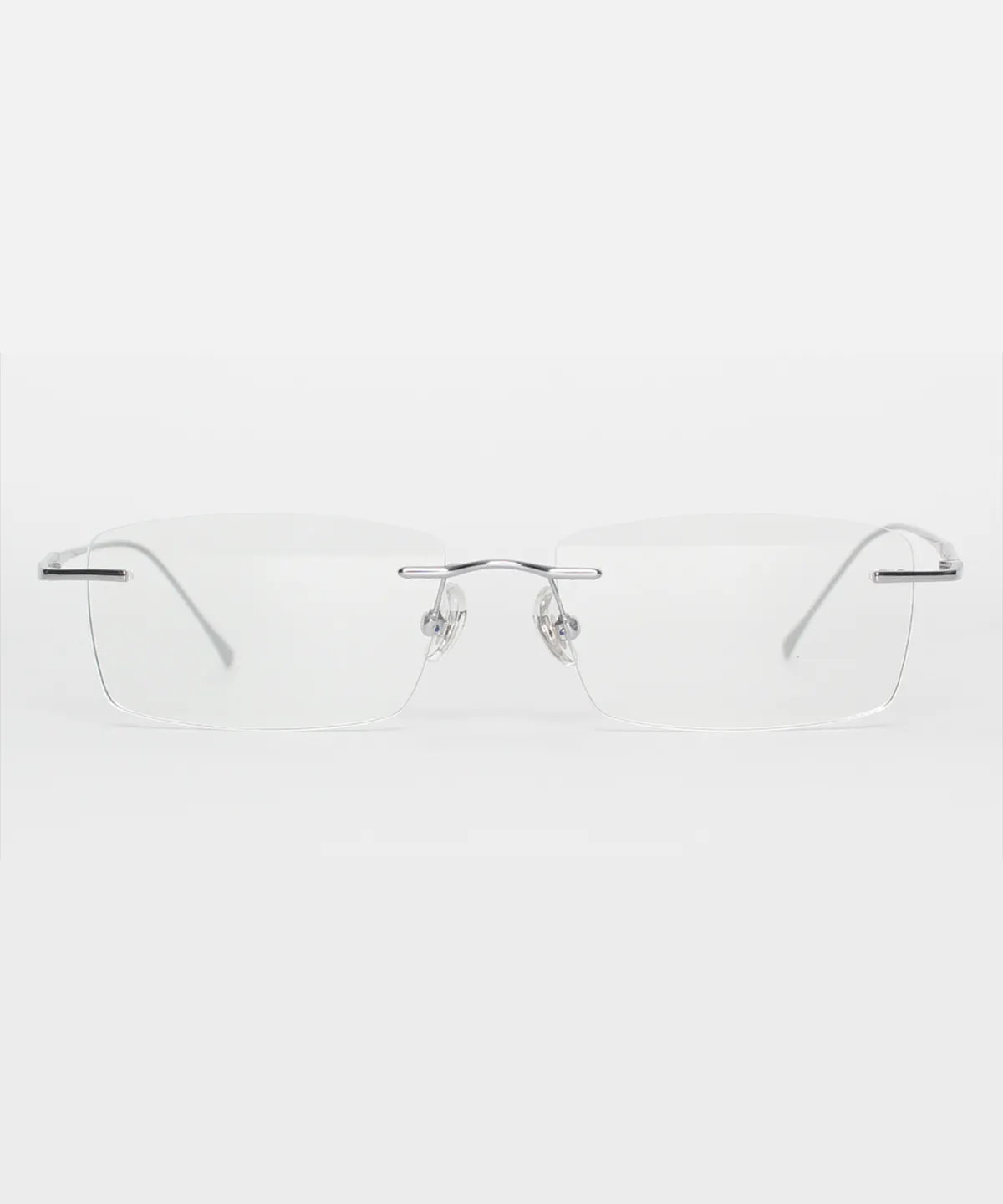
From the front, the principal metal elements are the bridge between the lenses and the attachments at the outer edges. The bridge forms a narrow line that rises gently at the centre, while small fixing points meet the clear lenses at either side. Without a substantial rim around each lens, the position and finish of these little components become part of the design. Silver appears as a line catching light rather than a broad block of colour. Against black clothing it can become distinct; with a pale shirt or bright surroundings, it may recede alongside the transparent lenses.
Rimless does not mean structureless. The points joining the lenses, bridge and temples each do a job, and the components remain visible at close range. When a new pair arrives, look for reasonably even placement at the left and right connections and examine the edges and attachment areas for anything unexpected. Oblique photographs can help distinguish the small details that belong to the construction from a mark that deserves attention. With so few lines in the design, a slight change in alignment can affect its overall impression. A minimal appearance is therefore a reason to inspect the small details carefully, rather than to overlook them.
Titanium for the frame, PC for the lenses
The model-specific information identifies a titanium frame and PC lenses. The retailer also lists titanium as the material and China as the country of manufacture. The distinction matters: a product associated with a Korean brand should not consequently be described as made in Korea. Frame and lens specifications also refer to different parts. Titanium does not mean that every component of the glasses is made from the same material, and the information available does not give a complete material breakdown for every pad and fitting. Reading the component alongside the material name is more useful than treating one prominent word as a description of the entire object.
The brand emphasises lightness and flexible temples, but does not provide a finished weight in grams. There is therefore no basis here for claiming that AETHER weighs a particular amount less than another pair, or that everyone can wear it for hours without pressure. The sensation of weight depends on the lenses, fittings and adjustment together. Its visually delicate construction may be what first attracts you, but comfort still needs a separate check around the nose and ears. Rather than declaring the glasses comfortable on the strength of a material name, connect that specification with the balance and contact points that work for you.
How to interpret the 125 mm overall width
The brand’s size guide gives an overall measurement of 125 mm, a bridge measurement of 19 mm, a lens width of 54 mm and a lens height of 28 mm. The diagram for the overall measurement indicates the width across the front of the glasses. A separate temple-length figure is not supplied. Do not assume that the familiar sequence of numbers printed inside another pair’s arm also appears here, or reinterpret the front width as the length of the arms. Knowing which direction each measurement describes gives you a much firmer comparison than deciding that a rimless pair looks small on a screen.
It is also unhelpful to add two lens widths to the bridge figure and substitute that result for the stated overall width. The diagram does not explain that all these figures share an identical measuring convention. Compare the supplied overall and individual measurements separately. Start with the front width and lens height of glasses you find comfortable, then check the position of the temples through a fitting or a question to the seller. A single FREE option means one offered size, not a guarantee of a universal fit. Different face widths and nose shapes can still call for different adjustments within the same retail option.
Small nose pads with a central role
The photographs show two clear nose pads on metal supports, and the brand describes silicone pads with an adjustable construction. These contact points help determine where the glasses sit, alongside the shape of the lenses themselves. Check whether the pads meet the nose evenly, whether the glasses tilt as you move, and whether the lenses touch your eyelashes or cheeks. The presence of pads does not guarantee a perfect fit for any particular nose shape. It does, however, identify an important area to inspect when trying the glasses on instead of judging the fit only by their width.
Avoid starting by spreading the pads forcefully or holding a lens while twisting another part. The brand notes that the fitting can change during delivery, but that is not an instruction for every buyer to make substantial adjustments unaided. Examine the initial alignment first, then ask the seller or an optician about an appropriate adjustment. With rimless glasses, the fine connections are exposed, so it makes sense to avoid transferring force through them while trying to improve comfort. Checking the original condition before anything is altered also makes it easier to distinguish a delivery issue from a later change.
The line of the temples in profile
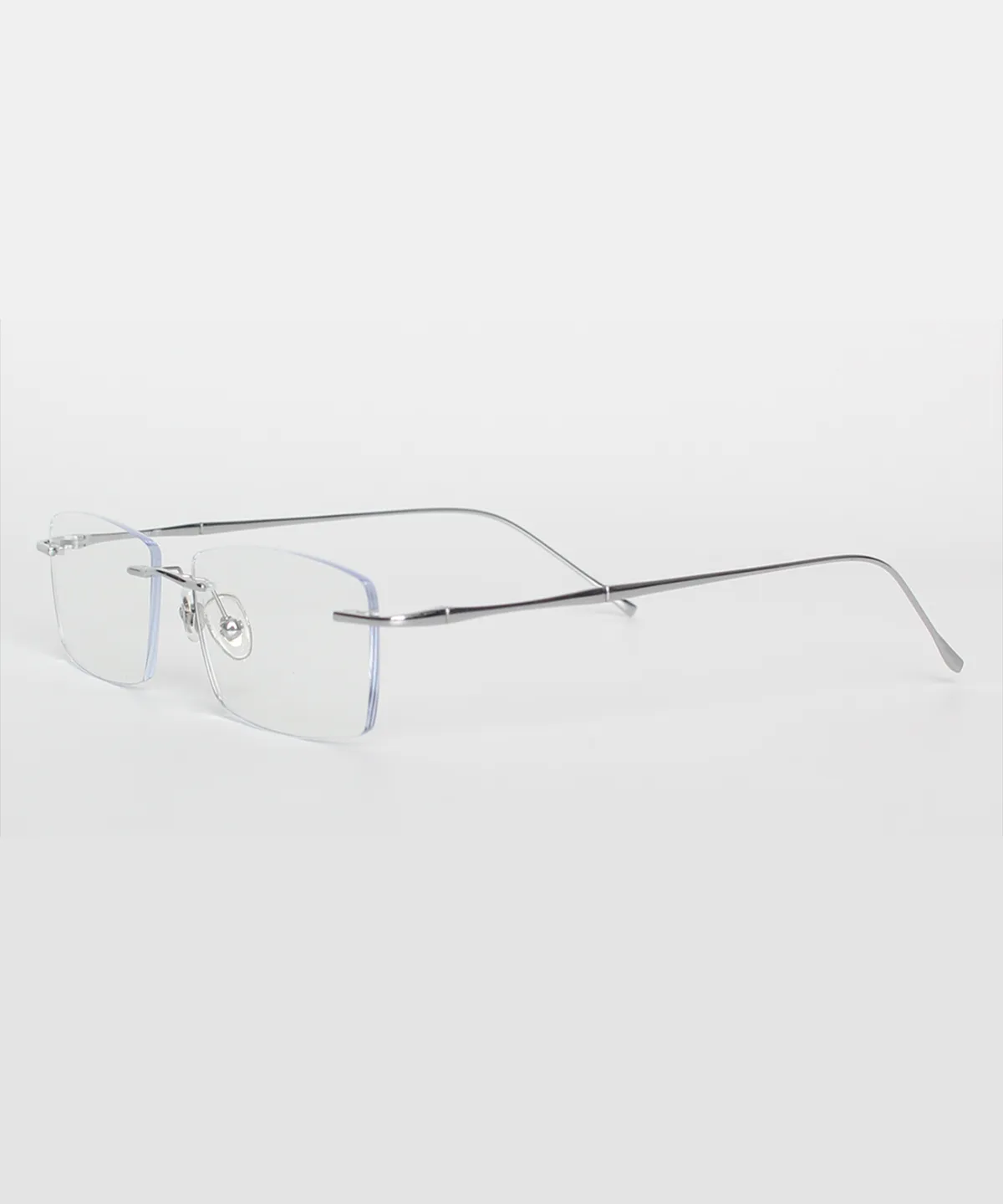
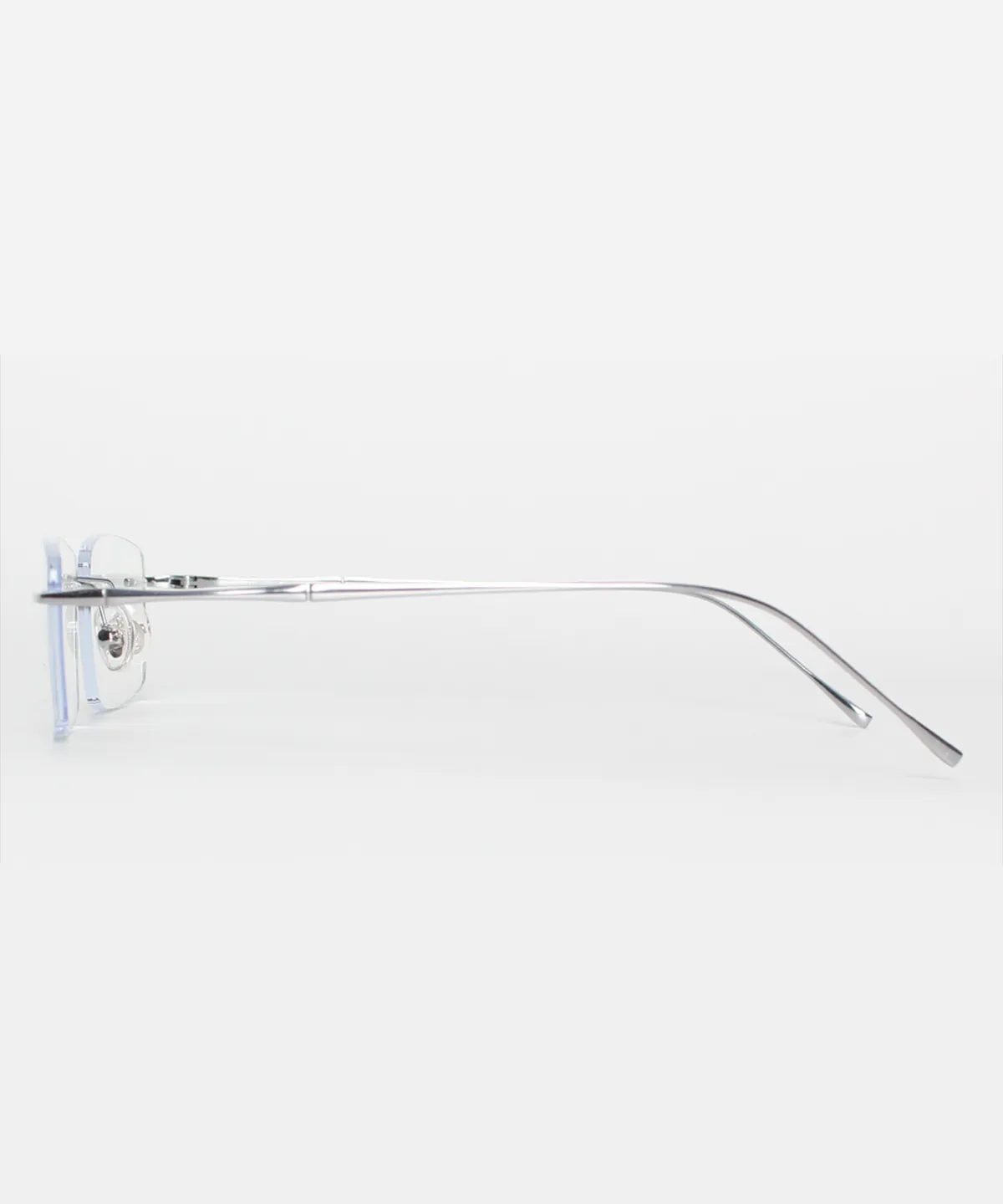
The angled and side views show narrow temples extending from the lenses before curving down at the ear ends. They do not create the broad panel along the side of the face that a thick plastic arm can produce. Instead, they appear as brief metal lines between strands of hair, continuing the delicate impression of the rimless front. Even glasses that look similar head-on can look quite different in profile when the temples vary in thickness or shape. For AETHER, the horizontal direction of the lenses and the fine arms form a continuous visual idea, which is worth checking in more than one photograph.
In use, pay attention to contact behind the ears and pressure near the temples. A thin arm is not automatically loose or comfortable, and a claim of flexibility is not an invitation to bend it as far as you can. If you normally wear a beanie, headphones or a mask, try that combination briefly too. Several objects may share the same space around the ear. Glasses that feel acceptable alone can sit differently when something else presses against the arms. The spare outline in the photograph is part of the attraction, but the objects you wear with it belong in the fitting decision.
UV400 and polarisation describe different things
The brand’s general information describes UV400 protection for the supplied lenses, while a section of its longer detail image discusses polarised lenses. These are statements supplied by the seller, not results from optical testing conducted for this guide. If a lens feature is essential to your purchase, ask specifically which specification applies to the clear AETHER silver option. Ultraviolet protection, polarisation intended to reduce reflected glare, and a blue-light filter for screen-related use are different characteristics. One term should not be treated as evidence that the other features are also present.
The model-specific information reviewed here does not clearly state a blue-light filtering figure or a purchase package that includes prescription lenses. Clear lenses should not be described as having a screen-use function simply because they look transparent. Likewise, PC in the material description does not mean that the lenses are intended for a personal computer. Colour, material and optical features need to be read separately. Someone choosing non-prescription glasses for their appearance has different questions from someone who requires a particular lens specification. Establishing the intended use first helps keep the photographic mood and the technical expectations in proportion.
Questions to ask before ordering prescription lenses
If you plan to use lenses made for your prescription, separate the choice of frame from the process of ordering the lenses. The basic price of this listing should not be assumed to include personalised lens manufacture. Ask the seller or an optician whether appropriate lenses can be processed and fitted to this rimless structure, whether your preferred lens type is suitable, and what the additional cost and turnaround time would be. Having the lens width and height to hand makes the question more precise. These checks concern the complete pair you want to obtain, not just the appearance of the frame in the listing.
Replacement lenses may change the thickness, weight and appearance of the exposed edges. It would be misleading to promise that every prescription will reproduce the fine, transparent outline in the product photographs. Check the available configuration and likely result before deciding the order of purchase and fitting. Lens replacement or adjustment also changes the item from its delivered condition, so examine the relevant exchange and return terms in advance. The point is not to recommend a particular prescription. It is to avoid leaving out an important stage, practical limitation or cost when planning the glasses you will actually wear.
A black beanie, long hair and a clear outline
The main styling photograph places the silver rimless glasses between a black beanie, dark outerwear and long hair. There are already substantial dark areas around the face, so another thick black outline is unnecessary to make the outfit look defined. The lens edges and metal temples provide small bright lines while leaving the eye area comparatively open. The useful idea is the contrast between large dark surfaces and fine light-catching details, not the need to buy the particular logo on the photographed beanie. You can explore that relationship with a dark hat or jacket you already own.
If you pull a beanie down low, check whether its edge presses on the glasses’ arms. An arrangement tidied for one photograph may behave differently while you walk or move throughout the day. Tucking hair behind the ears exposes more of the silver temples; leaving it loose makes the outline of the lenses more central. These small changes offer ways to alter the effect without buying several new accessories. Decide whether the glasses should stand out or quietly connect the face with the rest of the outfit, then adjust the position of the hat and hair accordingly.
Moving the same glasses into shirts and knitwear
Replace the beanie with a simple shirt and the same metal lines can read as a more restrained detail. A white shirt lets the bright lenses and silver fittings blend into a lighter setting, while a black knit may make the tiny reflections more apparent. Large earrings or a substantial necklace are not forbidden. But if you want the glasses’ fine outline to remain the main detail, the scale of the other accessories is an easy place to start. A silver-toned watch or small earrings you already own can connect the look without introducing several additional colours.
For photographs, check reflections on the lenses separately from the impression you see in the mirror. Removing the rim does not remove the reflecting surface, and the position of a window or lamp can change how clearly the eyes show. No specific anti-reflection performance should be inferred without a confirmed specification. Look at the clothing colour and the position of the glasses together, and adjust the camera angle if necessary. Rather than treating smart shirt outfits and casual hat outfits as requiring completely different glasses, consider how this one shape changes with its surroundings.
Putting them away and keeping them clean
Exposed lens edges are part of the appeal of rimless glasses, but they also deserve thought when the glasses share a bag with other objects. When you put them down, avoid resting the lens surfaces against a desk or floor. In a bag, use a case that protects them from being compressed. Do not force heavy items over the folded temples to save space or leave the glasses loose beside keys. The brand’s general packaging example includes a different, dark full-rim model. That picture should not be read as a promise that a second pair of glasses comes with this AETHER purchase.
For cleaning, first check the seller’s guidance for the actual lenses and coating instead of trying to remove every mark by rubbing harder. There is no reason to invent a routine involving strong cleaners, an unspecified polish or heat to reshape the frame. Handling both sides steadily when putting the glasses on and taking them off can help avoid unnecessary twisting compared with pulling hard on a single temple. Include the model name when asking about cleaning or repair options. A minimal appearance does not mean maintenance-free construction: it rewards attention to a few small surfaces and connections.
The displayed price and the cost of the finished pair
On 31 October 2026, the US-region MUSINSA Global page displayed a reference price of US$44.43 and a reduced price of US$23.55. It also showed US$17.67 with a coupon, but that amount depends on region, account and promotion conditions. It is not an unconditional price available to every shopper, and it is not a Korean shop price in won. For an international order, consider shipping, applicable taxes and any lens work you need. These additional elements determine the cost of the glasses you intend to use, which is the useful figure when comparing alternatives.
On delivery, inspect the lens surfaces, connections on both sides, nose pads and movement of the temples before arranging adjustments or replacement lenses. Check the purchasing retailer’s exchange and return process at the same time. The brand information mentions a seven-day period after receipt, but the procedure applying to your order needs to be confirmed with the seller you used. If something looks wrong, explain its initial condition before attempting to alter it. Allowing time for those checks preserves more options than beginning lens work immediately and only afterwards discovering a mismatch in size or contents.
Three decisions that make the choice clearer
First, decide whether you like the lens proportions. The low rectangle measuring 54 by 28 mm is central to AETHER’s quiet horizontal line. Second, compare size and contact points with glasses that suit you: front width, nose pads and the position behind the ears matter more to fit than resembling the model in a photograph. Third, decide on the lens configuration you actually need. A styling accessory, a frame for prescription lenses and a purchase driven by a particular optical feature involve different checks and total costs. Clarifying these three points takes the decision beyond simply following a rimless trend.
The appeal of silver AETHER is that it can sit beside a prominent black hat or jacket without adding another heavy border to the face, then bring a fine metal detail to a pale shirt. If your priorities are a broad, deep lens, a strong frame colour or a specifically verified optical feature, examine whether this model meets those requirements rather than assuming that the overall look answers every question. Start with the photograph, then finish with measurements, lens choices and a real fitting. This design invites you to think about where a few lines sit on the face, instead of how much of it a large accessory can cover.
A little closer to Korea.
Thank you for reading.