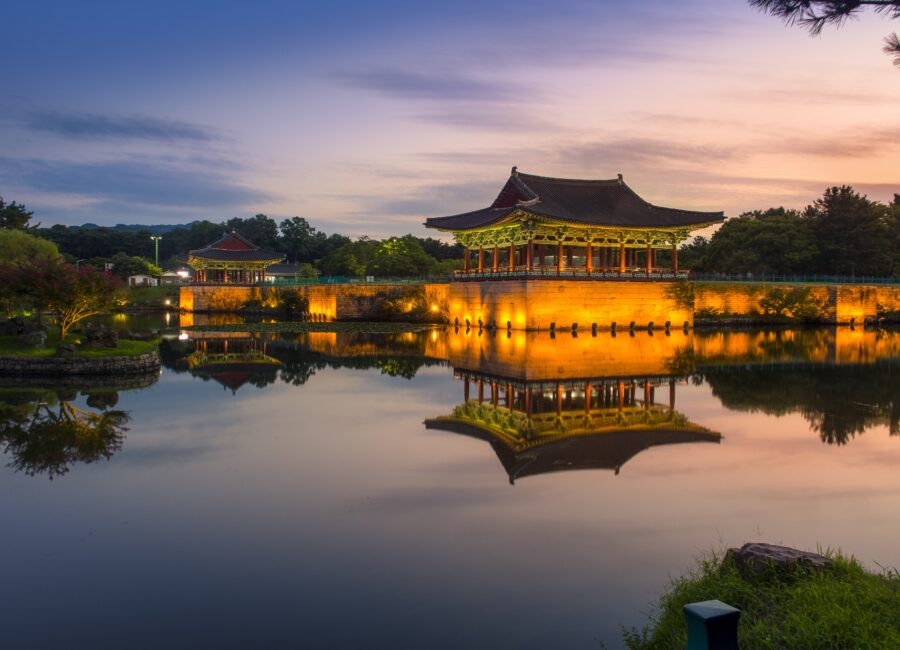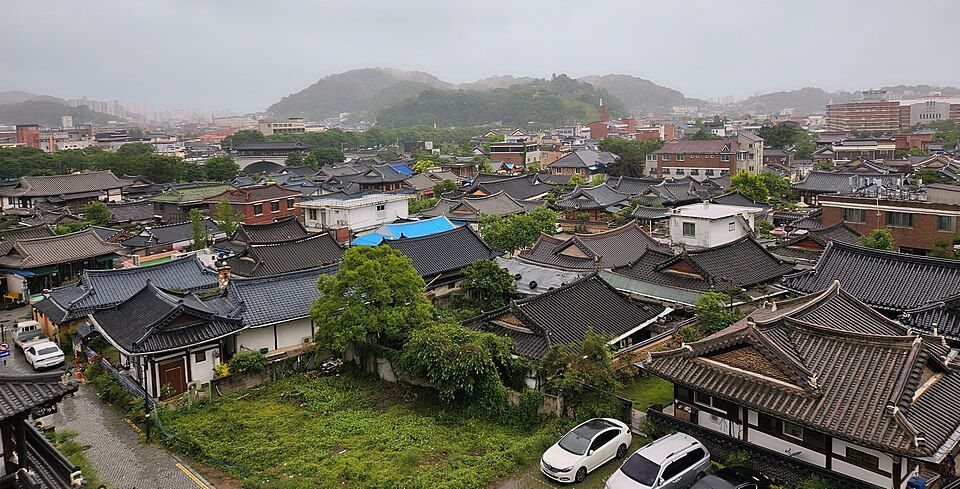
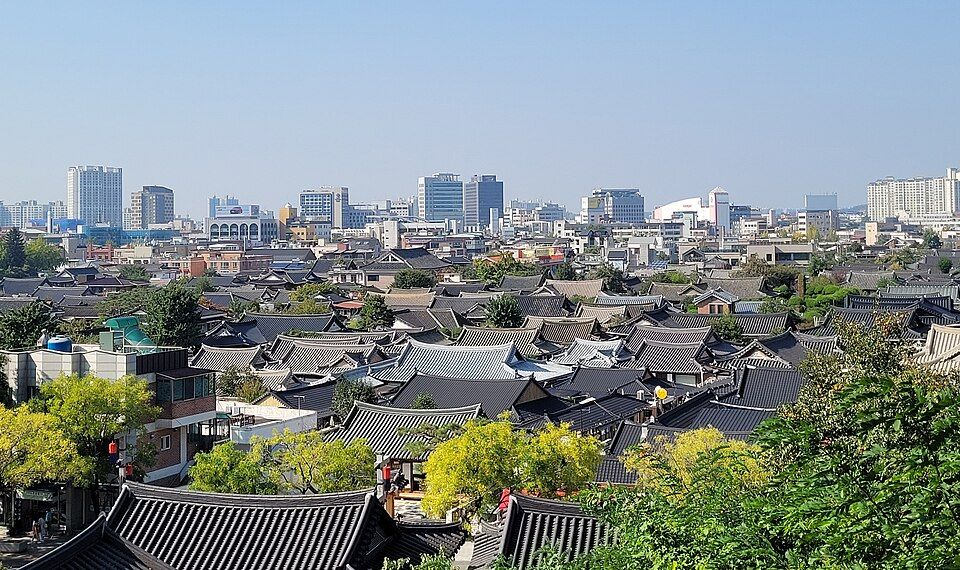
A row of tiled roofs makes a lovely photograph. It does not, by itself, tell you how to spend a day. Jeonju Hanok Village is most rewarding when you decide what you want from it before arriving: a dressed-up afternoon with friends, a closer look at Korean architecture, a craft experience or a quiet night in a courtyard house. Trying to squeeze all four into the same hurried visit is where the outing starts to feel like a checklist.
This is a busy visitor district as well as a place with history. Cafés, rental shops and snack counters are part of the present-day streetscape; a traditional roof is not a promise that the business below it is centuries old. That mixture can be enjoyable if you like wandering and small discoveries. If your main interest is a dense collection of historical objects, give a museum time of its own rather than expecting every shop-lined lane to provide one.
Begin with the buildings, before choosing your treats
The city places the village in Pungnam-dong and Gyo-dong and describes a concentration of more than 700 hanok. Its identity also includes the changes in Korean urban housing from the early twentieth century onward. So read the streets as a layered neighborhood, not an untouched slice of the Joseon period. Look at how low walls, gates, rooflines and small courtyards divide public space from private space. A closed gate is a boundary, even when the view through it would make a beautiful picture.
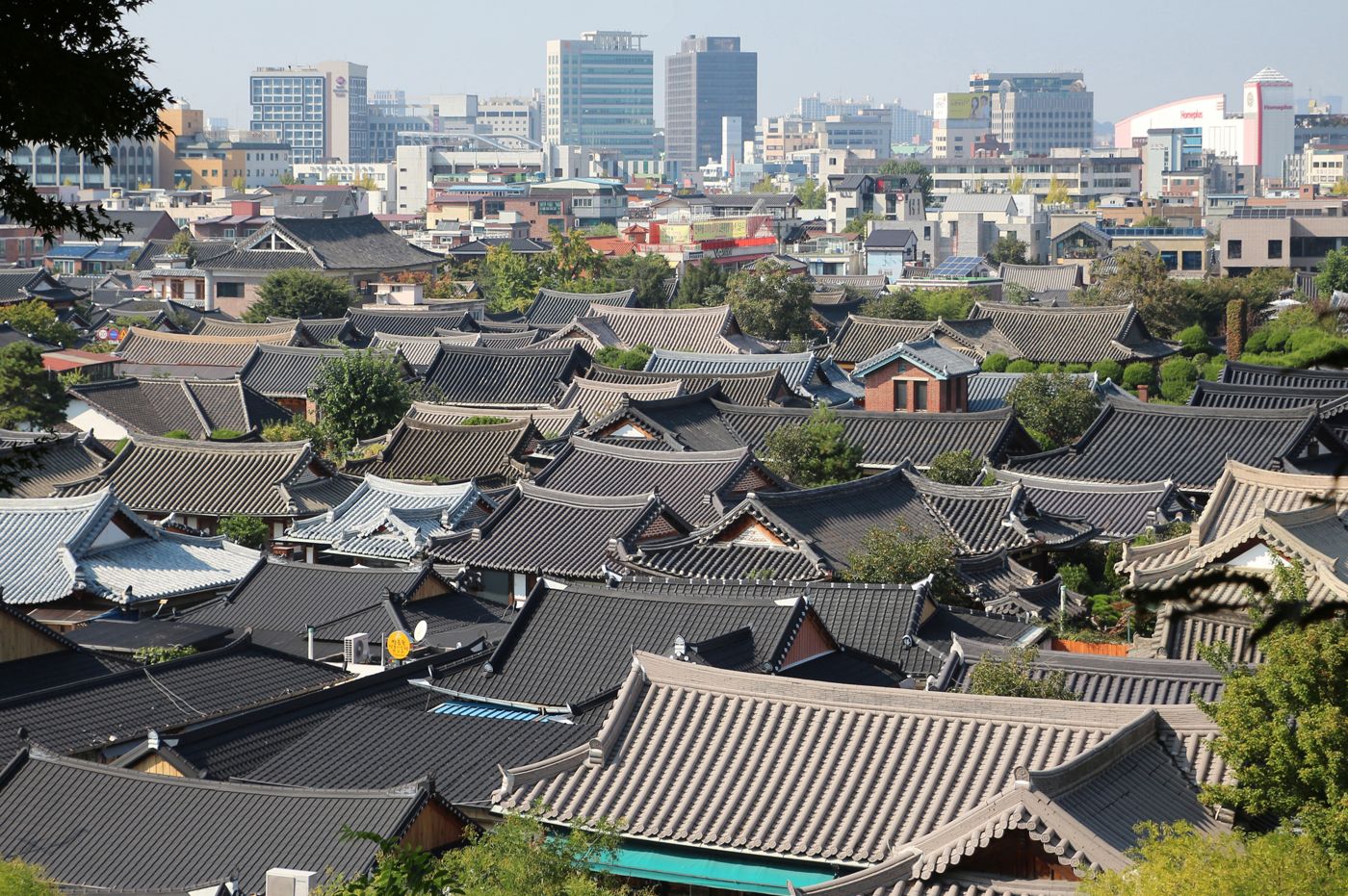
Gyeonggijeon is a useful first stop because it gives the walk a clear historical anchor. Established in 1410 to enshrine a portrait of Taejo, the founder of Joseon, it was rebuilt after wartime destruction. The gateway, open courtyard and main hall change the rhythm from browsing to looking. Notice the sequence of entrances and the space around the shrine before focusing on a single decorative detail. This is a royal portrait shrine, not a royal palace, and that distinction makes the visit easier to understand.
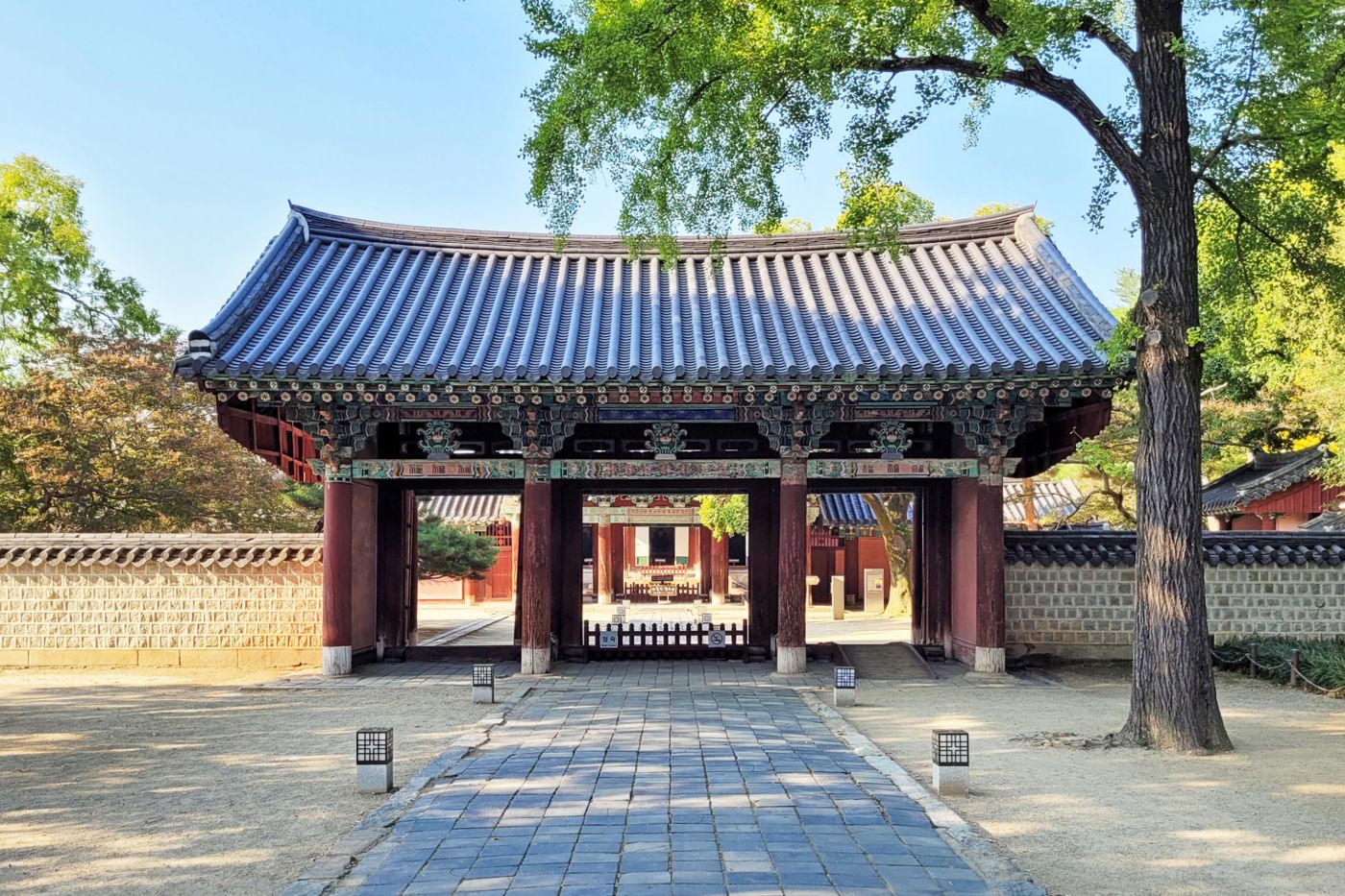
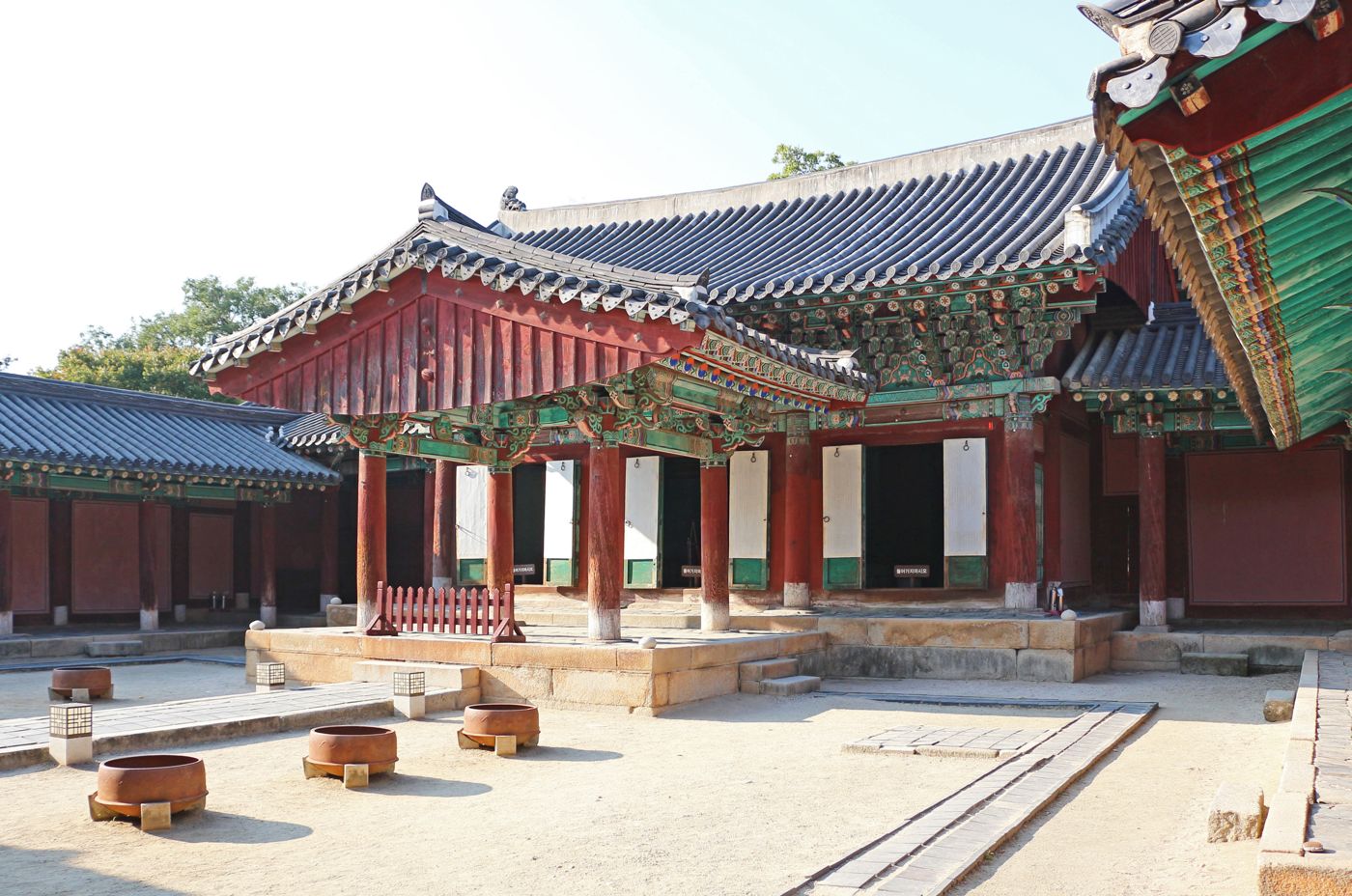
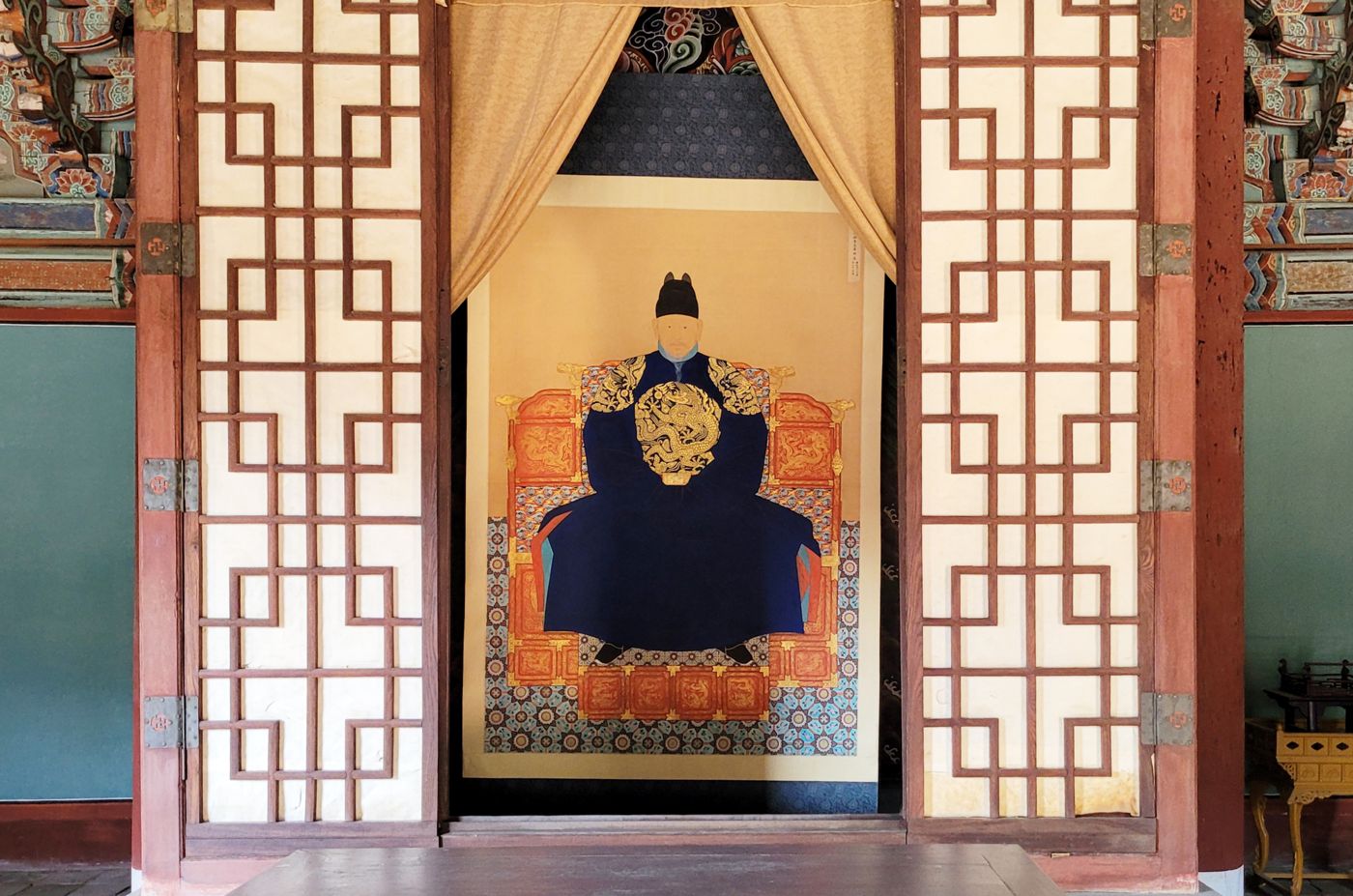
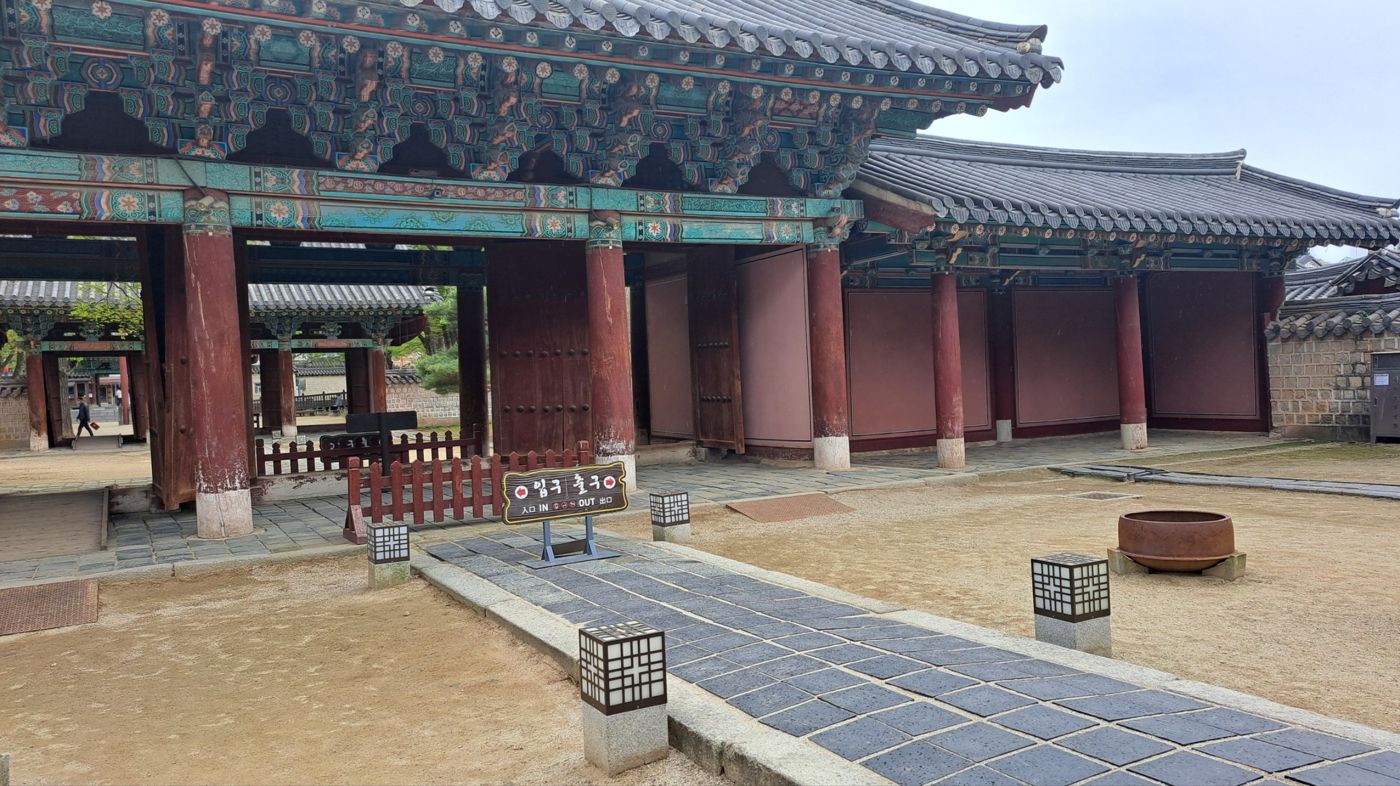
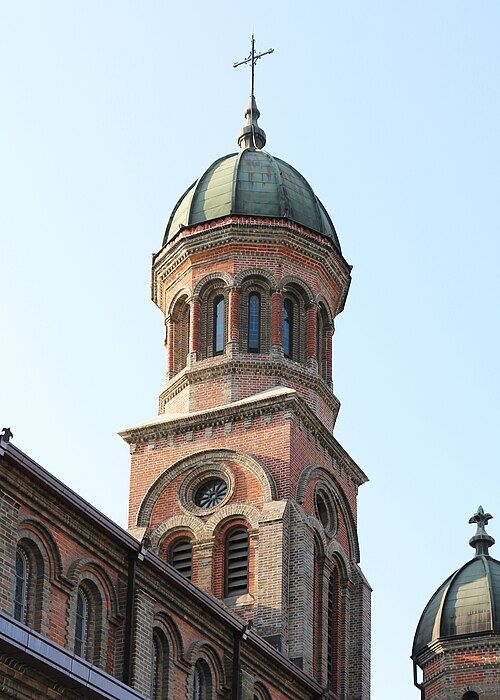
The village’s official English heritage page currently lists Gyeonggijeon at 10:00–18:00 and standard nonresident adult admission at ₩3,000. Check the notice for your date before planning a late arrival: special openings and individual museum arrangements are separate matters. Across the street, Jeondong Cathedral introduces a very different silhouette, with brickwork and rounded towers. It is a place of worship, so an attractive façade does not mean unrestricted access during services. Leave space for worshippers and follow the signs on photography.
A walk with a change of perspective
After the shrine area, follow Taejo-ro toward the village’s eastern side and choose one or two smaller lanes rather than repeatedly covering the same shopping strip. Turning away from a queue often reveals more of the shape of a house: a tiled wall cap, timber framing, a gate set back from the road. Some of these buildings contain businesses; others remain accommodation or private premises. Buy something because you want it, not because every doorway appears to offer an essential cultural experience.
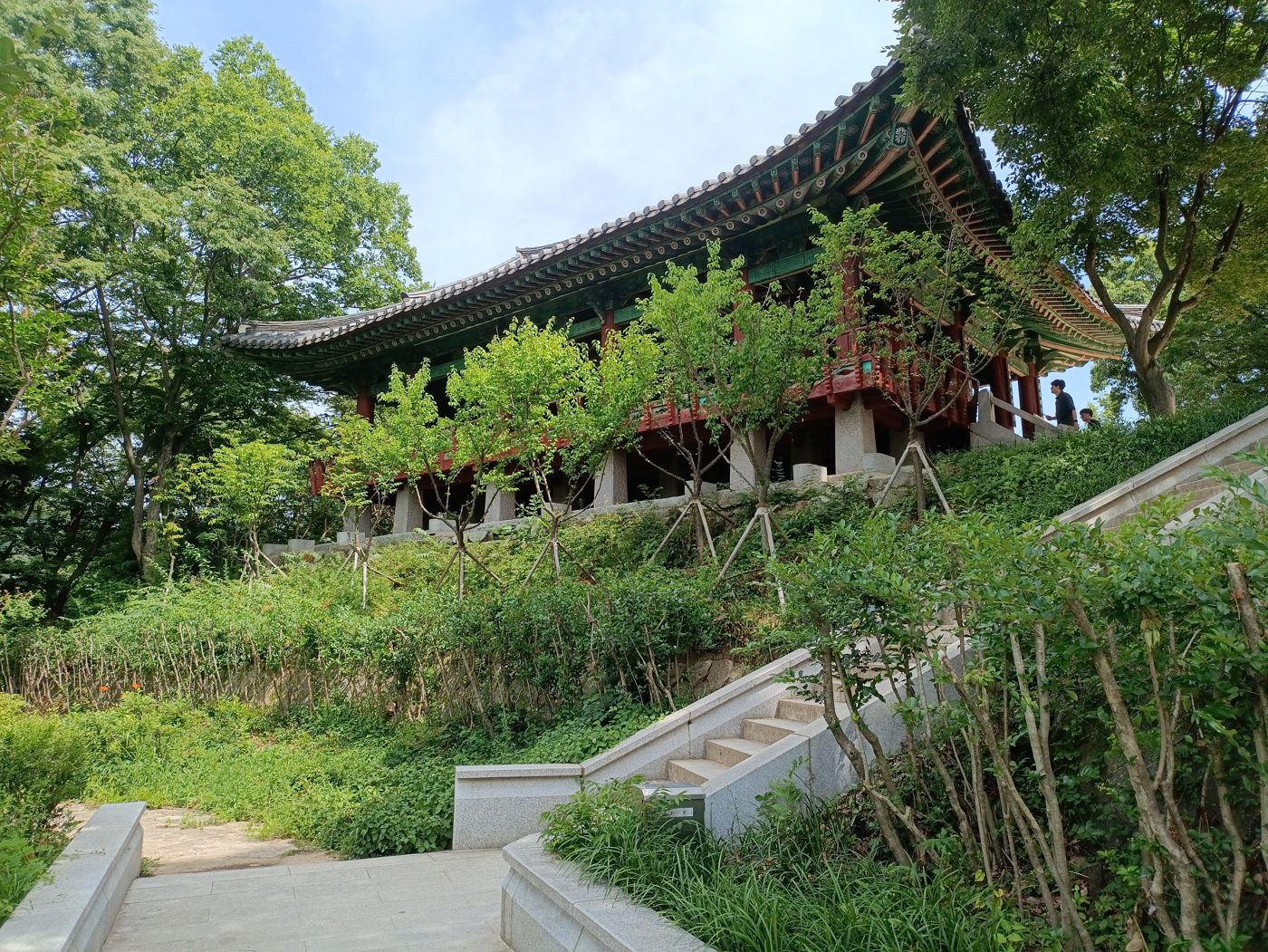
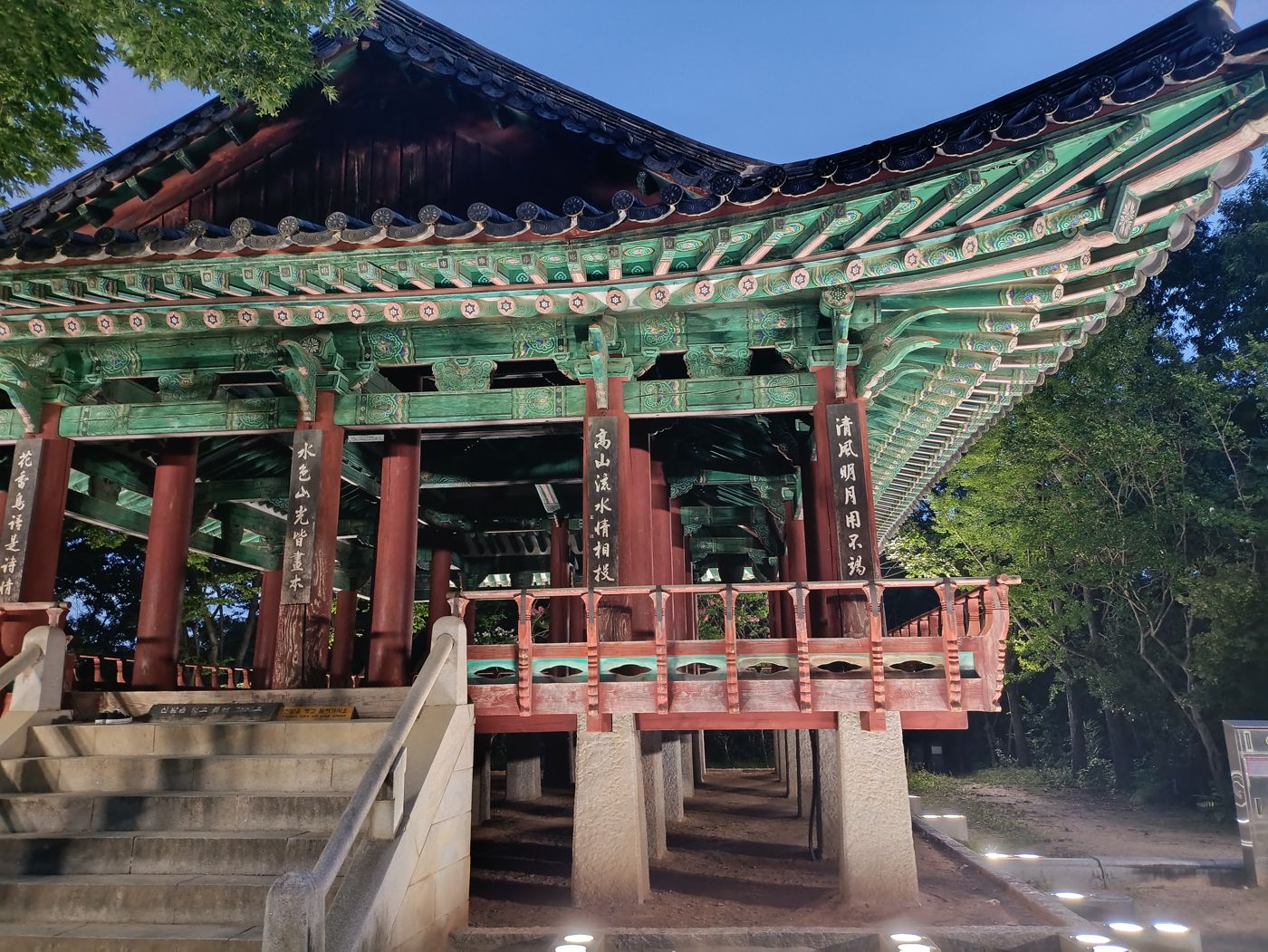
Omokdae is the point at which the walk can become a landscape. The city recommends the surrounding path for views over the village roofs; the climb is short, but there are slopes and steps. Wear shoes you can walk in, particularly if you have rented a long skirt or robe. Rain can make surfaces awkward, and trees or other visitors may interrupt the exact photograph you imagined. Treat the view as a pause rather than a photo guarantee. The pavilion itself is worth noticing after the roofs have captured your attention.
If you still have energy, the nearby Jaman Mural Village offers a different kind of lane, with painted walls and a hillside setting. It is an optional extension, not another obligation. The Confucian school, Jeonju Hyanggyo, and the Jeonjucheon riverside offer other ways to change the tone of the afternoon. Choose one direction that interests you instead of adding every name to a map. A slower route leaves room to sit down, and sitting down is often what turns a collection of sights into an enjoyable day.
For a group, mark a meeting point that everyone can recognize before splitting up: a named entrance or information point is easier than “the café near the roof.” Keep the same map pin for your accommodation and check whether its entrance is on the main road or a side lane. Similar rooflines can make a short distance surprisingly confusing. A photo of the address in Korean is useful when asking for directions. Give late arrivals a place to meet rather than asking them to chase the moving group, and keep gateways clear while waiting.
Spend on the experience you actually want
Hanbok rental works well when dressing up is part of the fun, not a requirement imposed by other people’s photographs. Before paying, ask what the quoted price includes: rental duration, hair accessories, bags, winter layers, late returns and any deposit. Check how comfortably you can climb steps and use a bathroom in the outfit. A simple garment that fits and lets you move can be a better choice than the most elaborate option on the rack. Ask a shop before photographing its displays or other customers.
A craft session can give the day a more personal focus than a string of souvenir stops. The city lists experiences involving traditional crafts, writing, drawing and other hands-on activities. Pick a specific workshop, confirm the language of instruction and ask whether the finished object can go home immediately or needs drying or collection later. A session that needs an advance booking cannot be replaced by turning up at a closed door. Leave enough time around it so a train departure does not turn making something into a race.
Food deserves a decision too. Jeonju is closely associated with bibimbap, but the loudest snack counter is not automatically the best introduction to its cooking. Decide whether you want a proper seated meal or several small tastes, look at the displayed price and portion, and leave room accordingly. Vegetarian-looking toppings do not prove that a dish is free of meat stock, seafood or fish-based seasoning. Explain allergies and dietary requirements directly, including sauces and side dishes, rather than relying on the name of the main ingredient.
Separate your budget into transport, admission, a meal and optional experiences. Walking through the public streets does not require buying a bundle of activities. A rental, workshop and café stop can each look inexpensive alone but add up together, so choose a priority before paying several deposits. Keep booking details and return times where you can find them without searching through messages. Leave enough money and time for the journey back. Spending less on things you did not especially want can leave more room for the one experience you will remember.
Would one night improve your visit?
A hanok stay changes the timing of the experience: you can see the lanes after day visitors leave and again before the busiest part of the next day. It also requires a more practical choice than the courtyard photograph suggests. Some rooms use floor bedding; others have beds. Bathrooms may differ in size and arrangement, and older buildings do not necessarily have strong sound insulation. Check the actual room description, heating and cooling, luggage storage and quiet-hour rules. Romantic does not have to mean uncomfortable.
Choose a night if you enjoy a gentle evening and a slow morning. Choose a day visit if you mainly want the shrine, a meal and a walk, or if changing accommodation would cost more energy than the village gives back. Neither choice makes you a better traveler. A short stay can feel cramped when you arrive late, while two full days may feel repetitive if shopping lanes are your only plan. Reserve the activities you care about first, then let those decisions determine the length of the visit.
Make the journey fit the day
Jeonju has no subway network. If arriving by train, plan the onward journey from Jeonju Station separately; the station is not inside the hanok district. Compare current city-bus directions with a taxi, especially with luggage or several companions. From Seoul, check the actual departure station shown on your train booking rather than assuming every service starts at Seoul Station. Return trains and intercity buses deserve the same attention as the outward trip, particularly on weekends and holidays.
For a relaxed first visit, allow a half-day for the core district and a meal, with extra time for a booked workshop or an overnight stay. This is an editorial planning allowance, not an official tour duration. Put the most time-sensitive attraction first, keep an indoor alternative for bad weather and save the uphill section for when your legs are fresh. If anyone in your group uses a wheelchair or finds steps difficult, confirm the specific route and entrances rather than assuming that a compact neighborhood is uniformly step-free.
Pack for the hours you will actually be outside. A sunny afternoon and a late return can call for different layers, while rain makes a long rented hem less practical. Water, a charged phone and a small bag are more useful than carrying every purchase from the start. Do not plan on entering private courtyards for shelter. If riverside paths are closed after bad weather, follow the closure and keep the walk on open streets; the riverside is an optional part of the day, not something to force into the plan.
The visitor experiences below are useful precisely because they do not all agree. A rainy walk, a busy weekend and an evening in a private courtyard describe different versions of the same district. Someone who wanted museum displays may judge the shopping streets differently from someone who came for clothes and food. When reading a reaction, look for the circumstances that resemble your own plans: the length of the visit, the sleeping arrangement and how far the person explored beyond the main lanes. Those details help more than treating one enthusiastic or disappointed opinion as a universal verdict.
The most useful rule here is to leave a little space between things. Photograph a roof, then notice the doorway beneath it. Try a snack, then decide whether you actually want another. Enjoy the visitor-friendly side of the village without expecting it to stand in for all of Jeonju. With a small number of deliberate choices, the district becomes more than a backdrop: it becomes a place you have had time to look at.
Reviews 7
Rain first, sunshine the next day
Public review · edited
I spent a night in Jeonju and saw two very different moods. Light rain on the first day left the streets quiet; the smell of damp timber and earth made the walk feel especially calm.
Sunshine the following day made the building details easier to see, while people wearing hanbok brought more energy to the streets. This was my first hanok-village visit despite being Korean, and I came away delighted. An overnight stay gave me time to appreciate that change.
Katie · Tripadvisor
Two nights suited us
Public review · edited
For us, two nights felt right: one would have been rushed and three rather long. We found good places to eat and pleasant hanok accommodation that did not feel expensive.
The weekend brought plenty of visitors, and the houses sometimes felt like the backdrop of a themed attraction. Even so, I enjoyed the neighborhood and would consider it a worthwhile stop if there is room in a Korea itinerary.
valero59 · Tripadvisor
I wanted more cultural depth
Public review · edited
I allowed two whole days because I wanted to learn more about Korean culture. I understood the village’s historical importance, but the amount of selling left me disappointed.
Even the museums seemed to devote a lot of space to shops, and I struggled to find the learning experience I had hoped for. For my interests, spending that time visiting museums in Seoul would have been more rewarding.
SnooDucks2149 · Reddit · r/koreatravel
Happy to leave the shops alone
Public review · edited
I like Jeonju even though I recognize how commercial the village is. I enjoy the atmosphere, the street sounds and the food, and simply do not spend my visit going into the commercial shops.
noealz · Reddit · r/koreatravel
The timing made a difference
Public review · edited
I understand why the village can feel very commercial, especially if that is the only part of Jeonju you see. I still think the city is worth visiting for its food, often outside the hanok streets.
My most enjoyable visits to the village have coincided with events such as the summer heritage night festival. The film and Sori festivals give the city other cultural possibilities, so timing changes the experience. For historical objects and museums, I would also look at Iksan, Gongju or Buyeo.
sunny_scene · Reddit · r/koreatravel
My favorite memories were outside the busiest lanes
Public review · edited
I loved exploring Seohakdong Art Village and stopping for coffee, and a riverside samgyeopsal meal near Hanbyeokdang was another highlight. There was more to enjoy once I left the main hanok circuit.
Staying in the village also worked well for me: sitting in our garden with drinks in the quiet evening was even better than the daytime bustle. If I had only walked the central tourist streets, I might have had a different impression.
whateveryouwant1978 · Reddit · r/koreatravel
I loved the stay; my cousin hated the floor bedding
Public review · edited
After living in Korea for years, I still try to visit Jeonju annually, and autumn is my favorite season. I have plenty to do and eat there. When my college-age cousin visited, I chose Jeonju as one of our trips, and she seemed to enjoy the city.
The floor mats at our hanok accommodation were the exception: I like that sleeping arrangement, but she really disliked it and would have preferred a hotel. I had told her a floor-bedding stay was optional, so it is worth choosing for your own comfort.
kimchiandsweettea · Reddit · r/koreatravel
A little closer to Korea.
Thank you for reading.