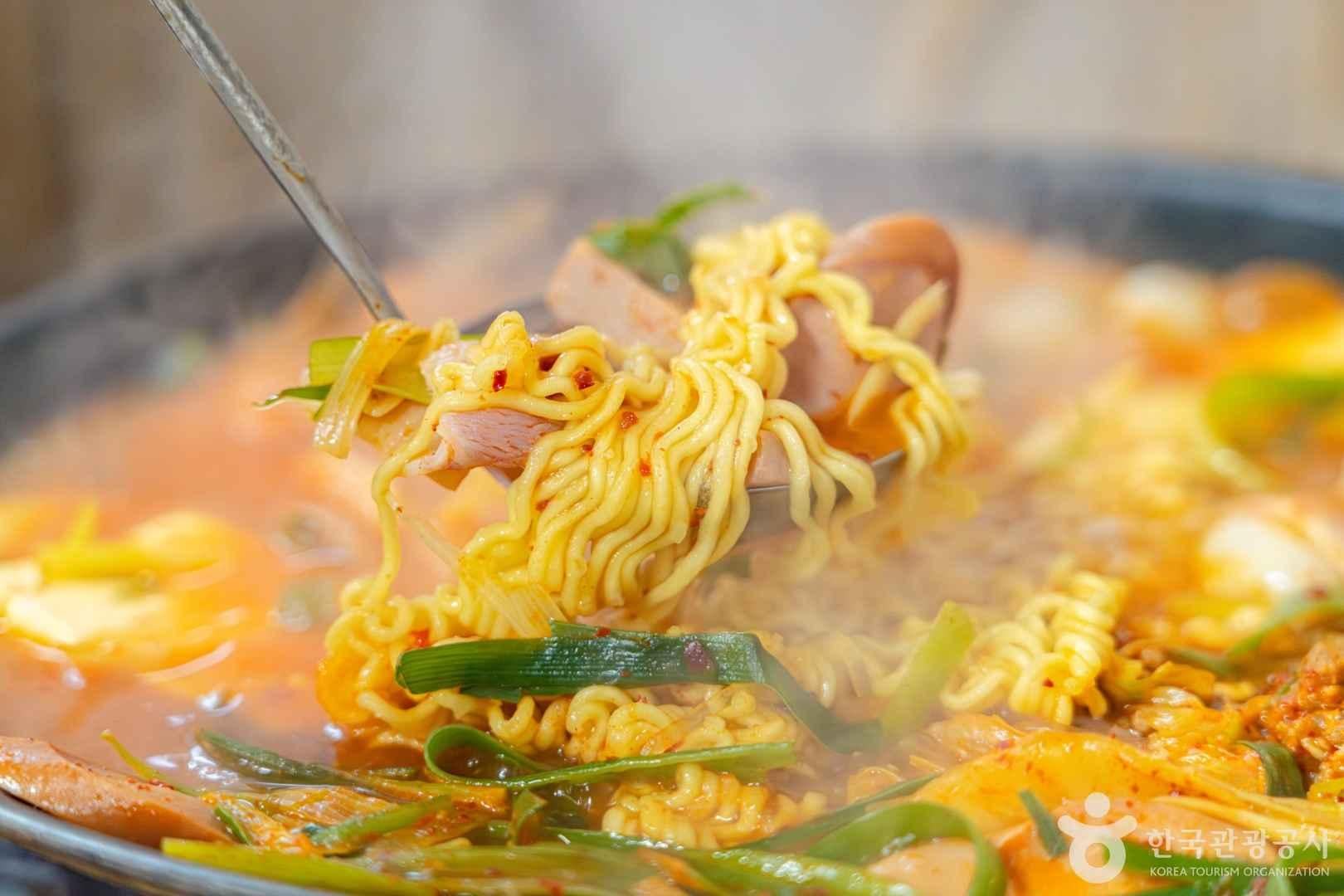
A square of instant noodles, slices of sausage, kimchi and a busy red broth: budae-jjigae can look like a meal whose appeal is already obvious. Yet the most interesting thing about it is not how much fits in the pot. It is how the meal changes while you eat. The noodles soften, the broth reduces, the rice gives you a quieter mouthful, and a shared table keeps making small decisions about what to add or scoop out next.
For younger travellers, that combination can be welcoming: several ingredients look familiar, while the setting and flavour structure introduce a distinctly Korean way of eating. Familiar does not mean mild, however, and a generous-looking pot does not automatically mean the best version. This is an editorial guide based on documented food history, restaurant information and actual public experiences. It is not a claim that we visited every restaurant or tasted every regional style.
The name deserves more than a novelty story
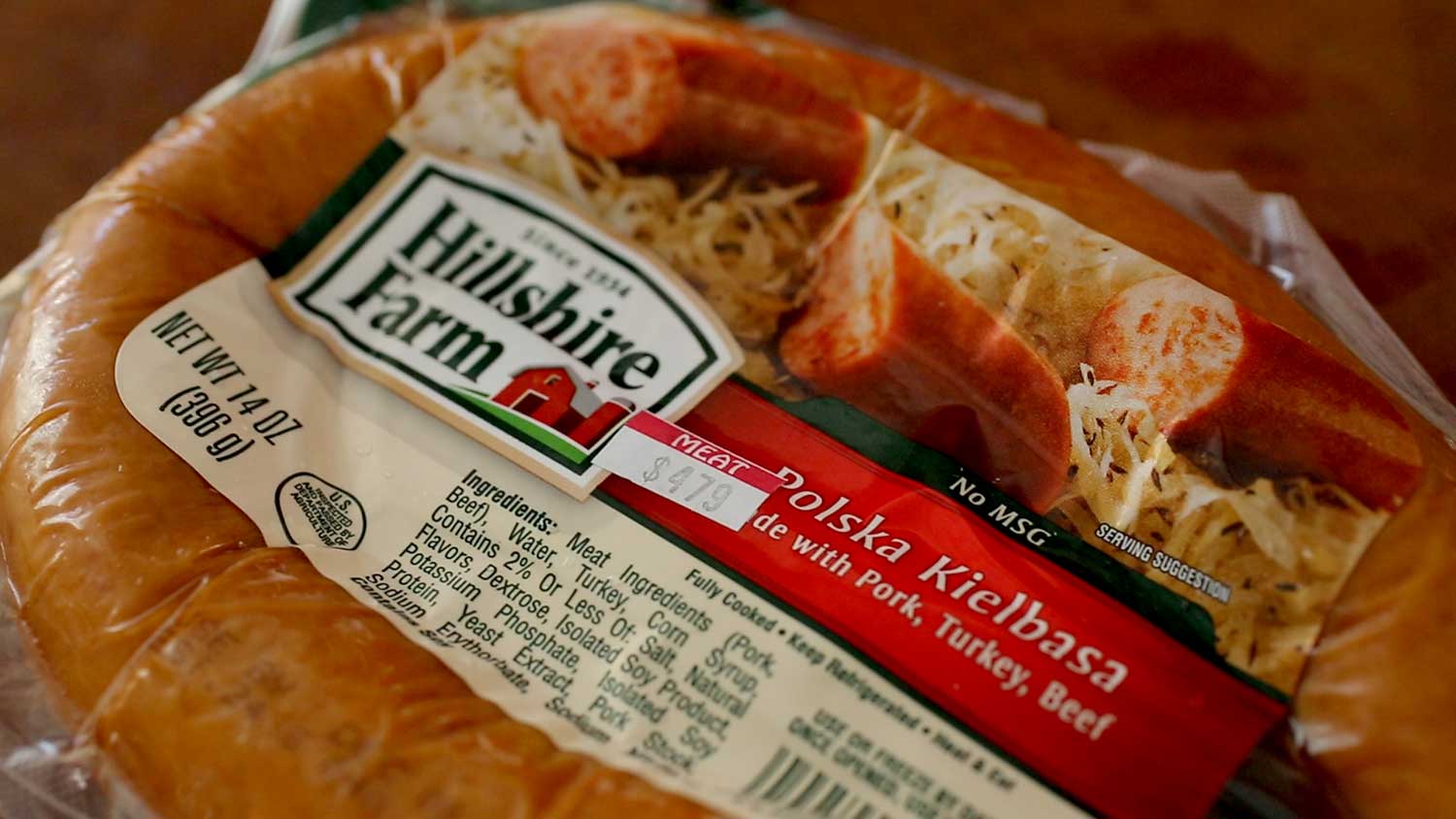
Budae means a military unit or base; jjigae is stew. The dish is tied to the difficult years following the Korean War and to ingredients circulating around American military bases. Uijeongbu is especially associated with it, while Songtan and other base communities have their own histories. Processed meats became part of a Korean stew shaped by kimchi and seasoning. Calling it simply a funny mix of American food misses the scarcity and adaptation behind its development.
Accounts of particular founders and the first version vary, so a visitor does not need to settle a single invention claim to appreciate the dish. A more useful distinction is between its origins and the food served today. Present-day restaurants prepare a menu item deliberately; the historical story is not a description of the sourcing of your current dinner. Nor should an ordinary modern meal become a joke about the hardship that helped create it.
The lasting attraction is the way imported ingredients were made to work inside a Korean meal. The cured-meat flavour is not merely added to a neutral soup: it meets sourness, chilli, vegetables and rice. That makes budae-jjigae a particularly interesting first encounter with Korean food if you are willing to look beyond the noodles on top. Its history gives the pot context, but the quality of the meal still has to stand on balance and execution.
Judge the broth, then the ingredients
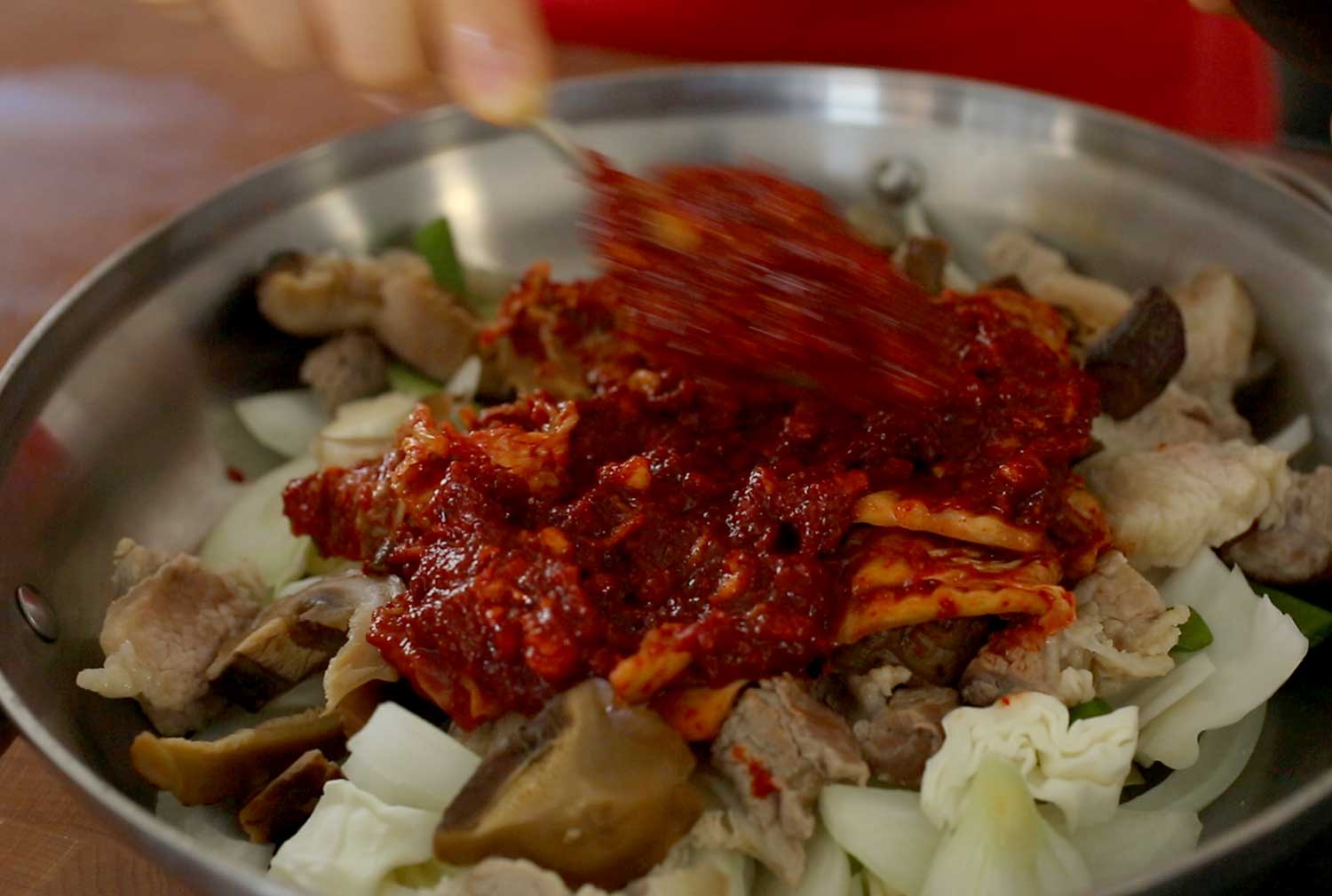
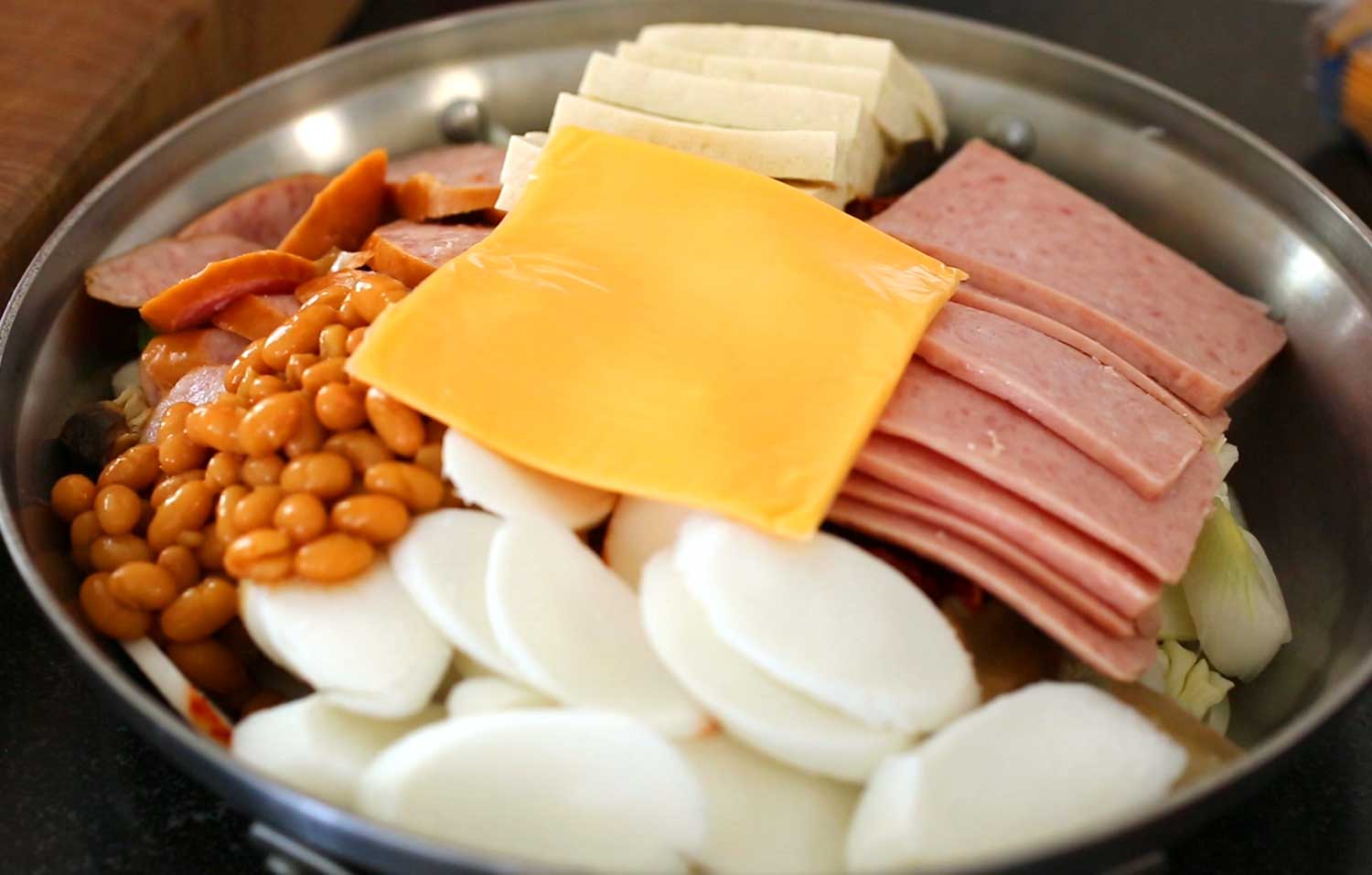
Start by paying attention to the broth rather than counting sausage slices. Kimchi brings fermented acidity; processed meats contribute their particular savoury, salty character; vegetables and the chosen stock change the background. Recipes and restaurants differ, so there is no promise that every pot will contain the same beans, cheese, tofu or noodles. A photograph is not a complete ingredient list. Ask what the version in front of you includes.

The most useful question is whether the components remain enjoyable together. Is there enough acidity to keep the meat-heavy combination interesting? Does the broth have flavour beyond chilli heat? Can you still appreciate a piece of tofu or a vegetable, rather than everything tasting identically salty? These are suggested ways to evaluate a meal, not results of a taste test we performed. More toppings do not answer them on their own.
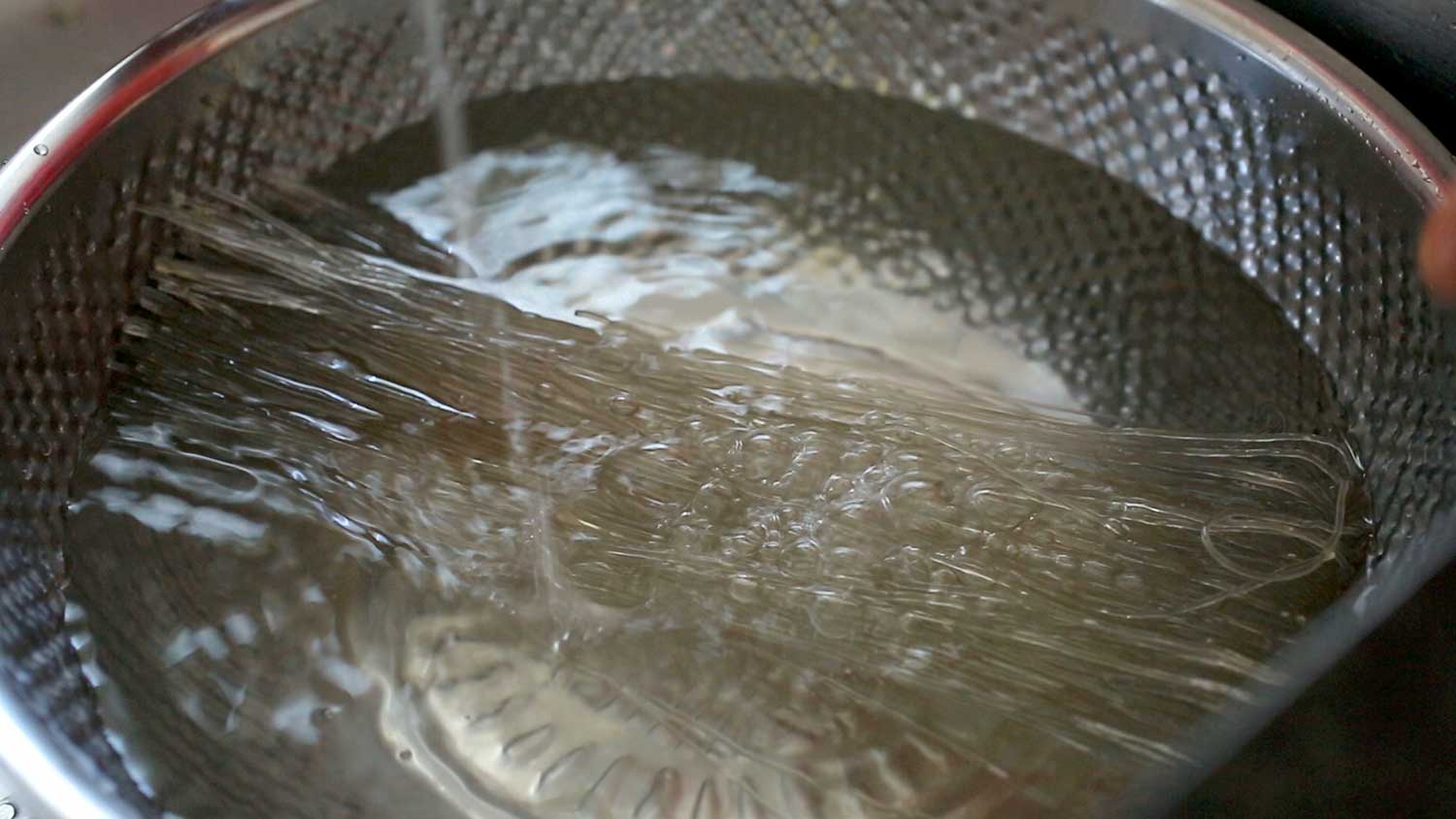
Cheese and noodles also change the direction of a pot. Cheese can move the experience toward a richer, softer-tasting mixture; noodles add a substantial starch element and absorb liquid as they cook. Neither is compulsory proof of authenticity. If you want to understand the broth, try it before adding every optional extra. You can decide later whether the next bowl needs more heft, or whether rice alongside is already enough.
Ordering is part of the meal
Before ordering, check whether the listed price is per person, per pot or for a set. Ask about any minimum number of servings and whether rice is included. A menu photograph of a large shared pot does not tell a solo traveller what they will actually receive or pay. The same applies to noodle refills and extra meat: find out what is included before treating every item placed near the table as free.
Keep the first order manageable. A group can choose the basic pot and discuss one or two additions, instead of agreeing to every topping before seeing the portion. Someone who dislikes processed meat is unlikely to be persuaded simply by adding more of it. Someone who enjoys a spicy, savoury shared stew may find the basic combination satisfying. The right order fits the people at the table, not the largest photograph on the menu.
Dietary requirements need a direct conversation with the restaurant. Removing visible sausage does not establish that the stock or kimchi suits a vegetarian diet. Meat, fish-based ingredients, wheat, soy or dairy may be present depending on the recipe and packaged products used. Do not assume a dish is suitable for an allergy or a religious dietary requirement from its appearance or English name. Ask about the actual ingredients and preparation before ordering, and choose another meal if the answer is unclear.
A small vocabulary, and a clearer plan
A few menu words make the conversation easier. Inbun (인분) means a serving or portion; it is not a statement that every appetite will find that amount sufficient. Sari (사리) refers to an added ingredient such as noodles in this context. Gonggibap (공깃밥) is a bowl of rice, and yuksu (육수) is stock or broth. Pointing to the menu and asking which of those are included is often more useful than memorising a long sentence. You can show “밥이 포함되어 있나요?” to ask whether rice is included, or “1인분 주문할 수 있나요?” to ask whether ordering one serving is possible. These questions request information; they do not imply that every restaurant must offer the same arrangement.
For a shared meal, settle three things before the pot arrives: how many servings are being ordered, which additions everyone actually wants, and whether any diner cannot eat a particular ingredient. A basic per-person price and a two-person set are not automatically comparable, because one may include rice or extra ingredients that the other does not. Look at the contents, not just the bold number. If you are dining alone, a restaurant that clearly offers a suitable single portion may be more convenient than a famous place whose minimum order does not fit. There is nothing less legitimate about choosing a meal you can comfortably finish.
Spice preferences are worth discussing before the kitchen begins. Ask whether the version can be made less spicy rather than assuming that adding cheese will solve a problem for everyone. Even a milder-looking bowl can still carry a strong salty or fermented flavour. A dining companion who wants intense heat and one who does not may need to choose a different shared dish or separate orders. Treat that as a practical preference, not a challenge to prove who can tolerate more. The point of the table is enjoying the meal together.
If you try the dish again on another day, make the comparison specific. Keep track of whether you preferred a more noticeable kimchi sourness, more vegetables, a lighter-feeling broth or a particular noodle texture. Compare the same stage of the meal: a fresh pot and one that has reduced for a long time are not equivalent. A photograph can remind you of the ingredients, but a short note about what you enjoyed is more useful than simply recording that the bowl was large. This turns a second visit into a more informed choice instead of another search for the most crowded pot.
Let the pot set the pace
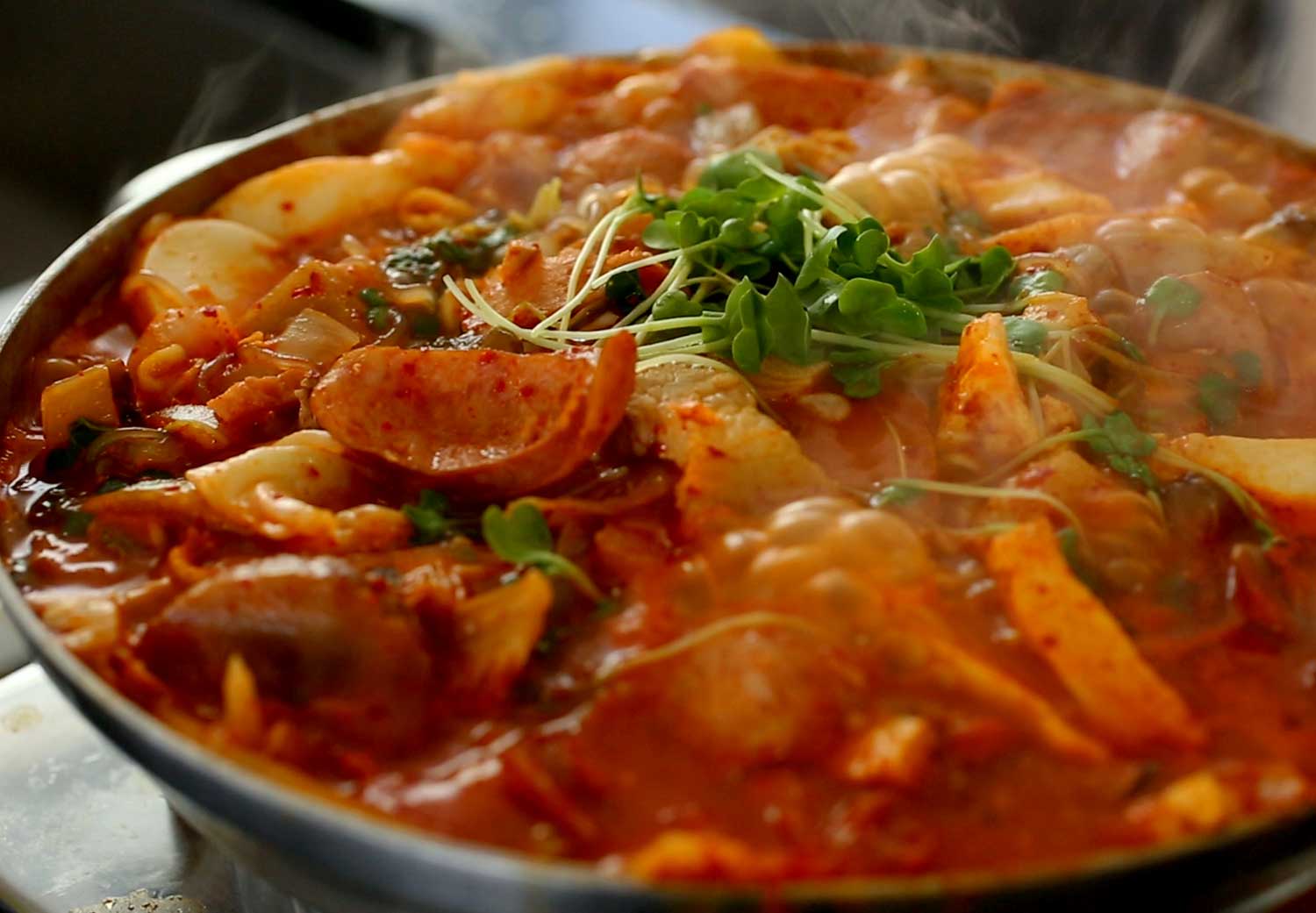
When a pot is heated at the table, take the restaurant’s instructions about the burner and readiness seriously. A bubbling surface is not a reason to guess whether every ingredient is ready. Let staff guide the first serving where appropriate, use the serving utensils provided, and transfer manageable portions to your own bowl. Keep bags, sleeves and phones away from the hot cooking area. The attractive steam is also a practical reminder that dinner is still cooking.
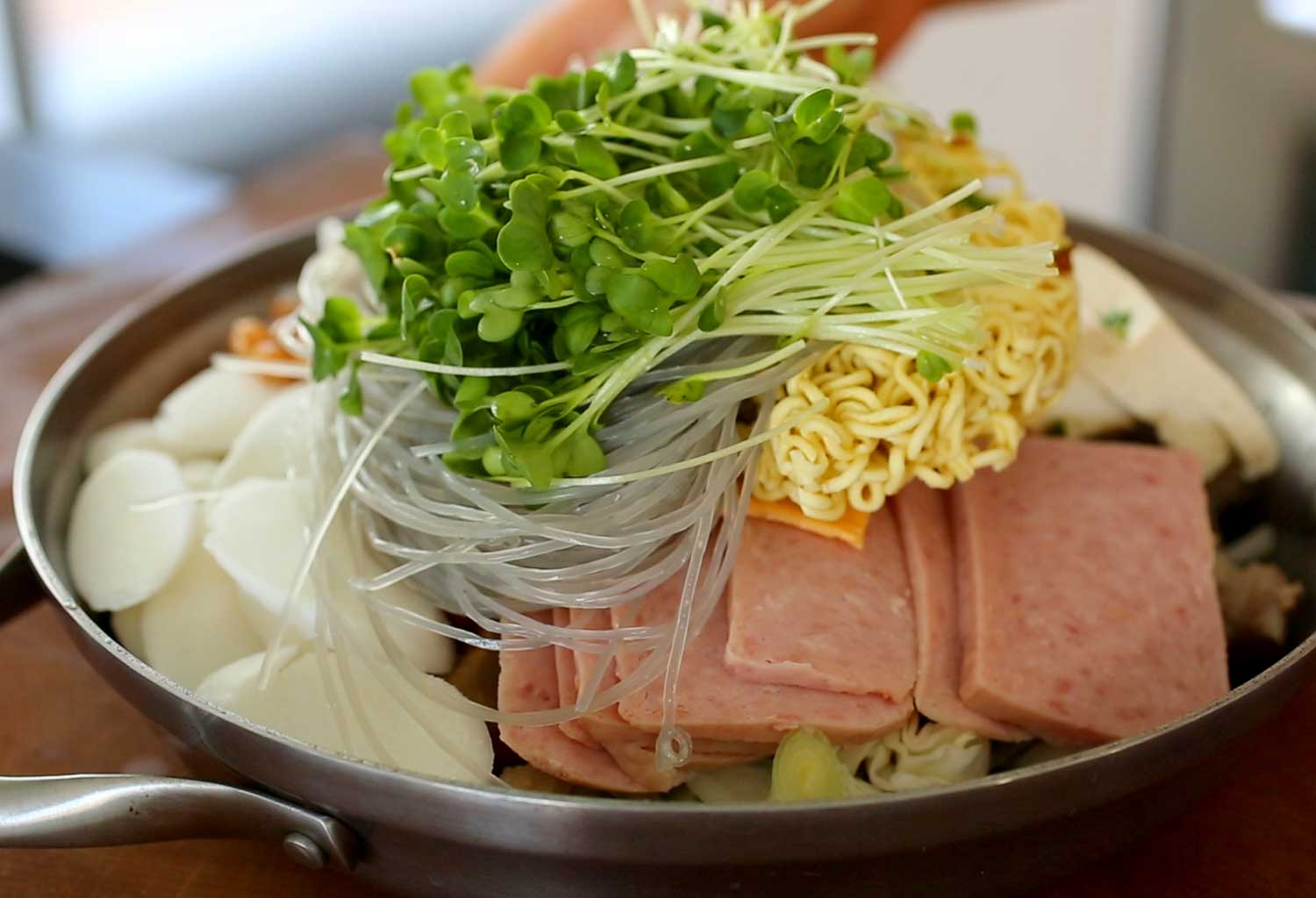
Noodles are a timing decision. If everyone wants them, agree when to add them and begin eating them once they are ready rather than letting them sit indefinitely while the table takes photographs. If the broth reduces, ask staff about adding stock rather than turning the heat up in the hope of improving it. A pot becoming thicker and saltier is not necessarily becoming better. You can enjoy the shared cooking rhythm without treating the burner as a toy.
Rice makes the meal easier to pace. Alternate a spoonful of stew with rice instead of trying to make every mouthful the strongest possible combination. Take turns with the serving ladle and leave enough space for other diners to reach the pot comfortably. There is no need to rush because the dish looks informal. A short pause to talk, adjust the heat with staff guidance or decide on another addition is part of the pleasure of a shared stew.
Uijeongbu or a convenient Seoul dinner?
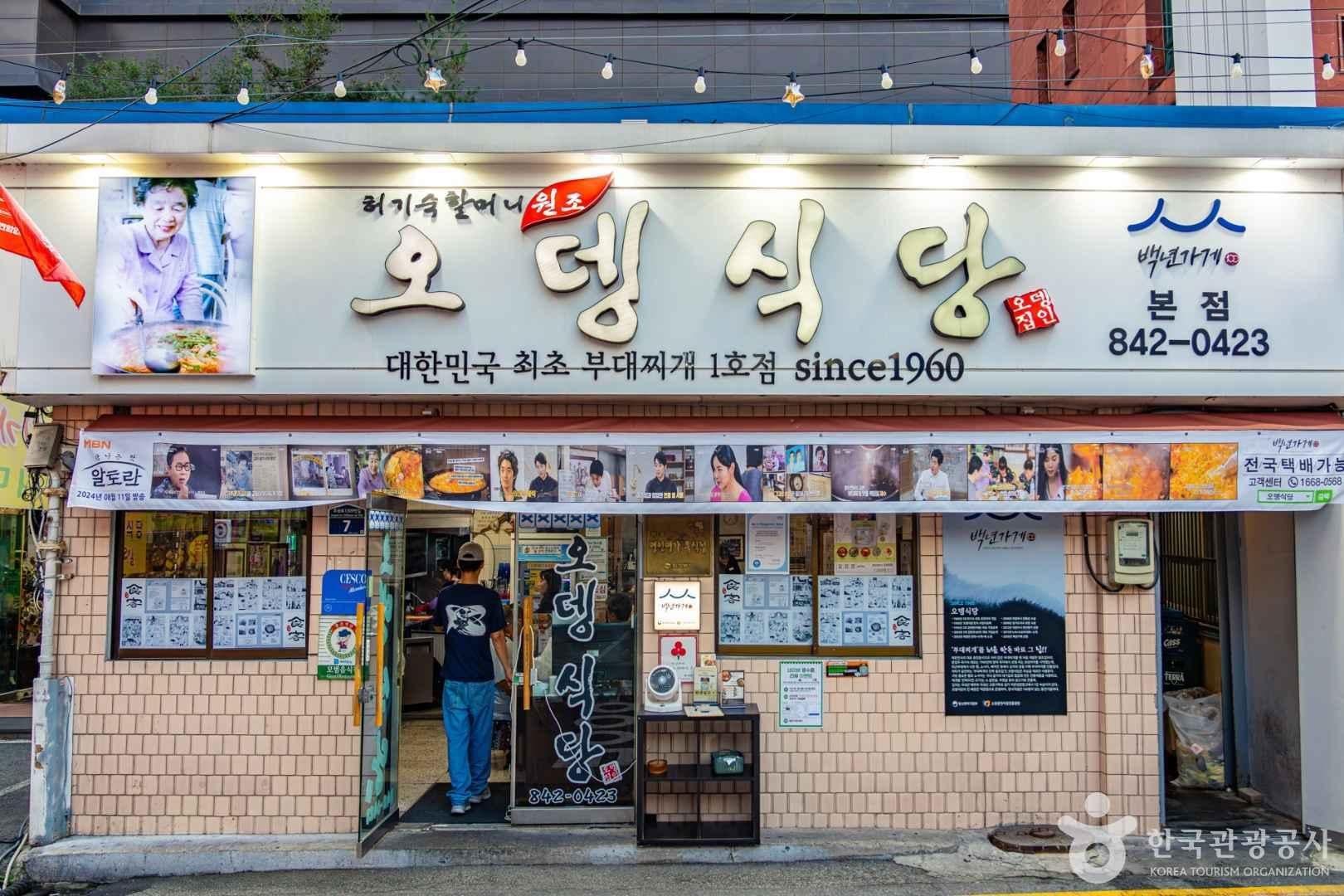
For a food-focused outing, Uijeongbu Budaejjigae Street gives the dish a geographical setting rather than just a place on a menu. The Korea Tourism Organization places the street near Exit 2 of Uijeongbu Jung-ang Station on the U Line. Odeng Sikdang’s main branch is listed at 7 Hoguk-ro 1309beon-gil, close to that exit. Use the exact Korean station name, 의정부중앙역, when planning; it is not the same stop as Uijeongbu Station on Line 1.
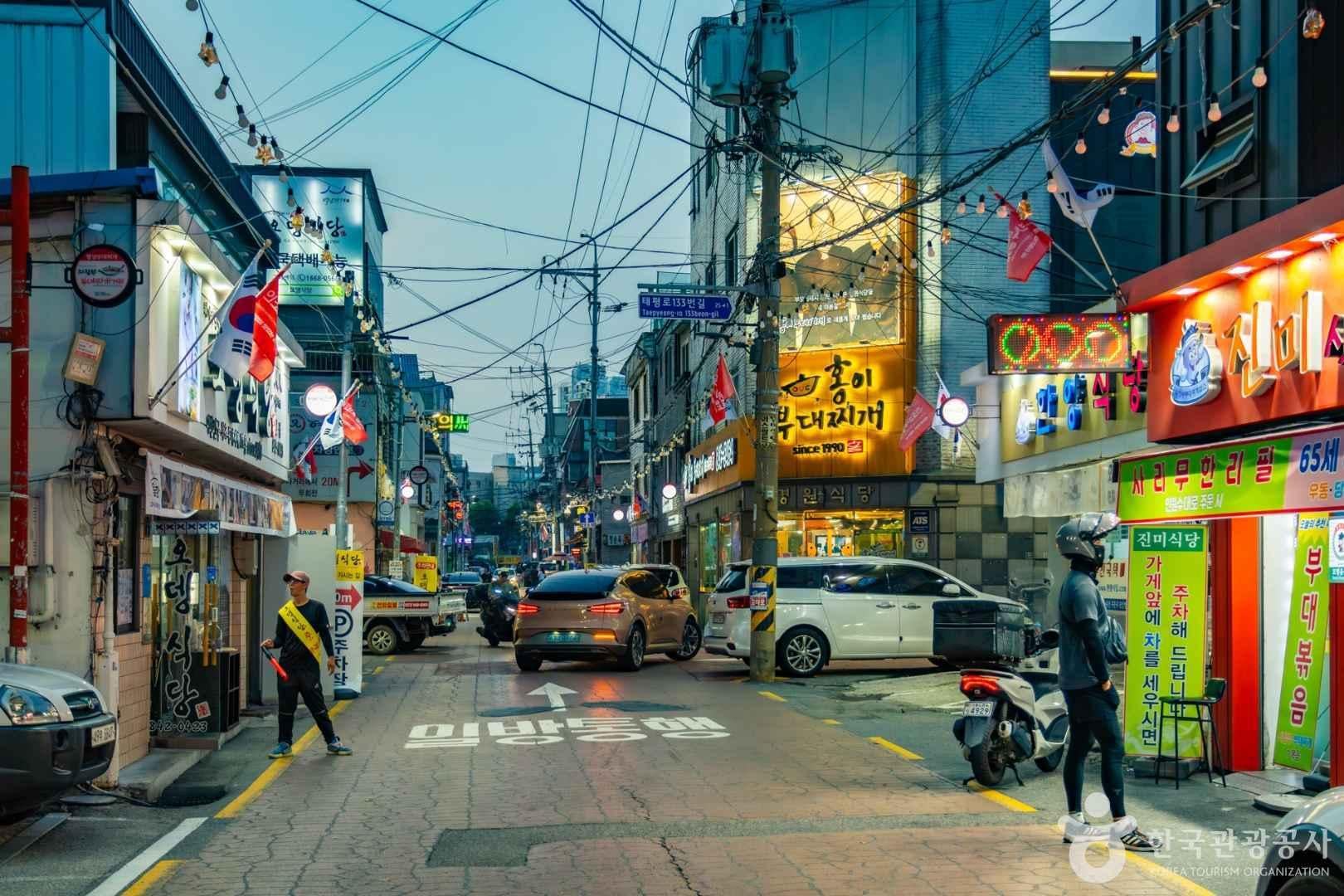
Build the journey around the meal you actually want. Check your current route and the restaurant’s opening information before leaving, then leave room for a wait rather than making a tightly timed connection afterward. Being on a famous street does not make every restaurant interchangeable. Compare menus, portion rules and the kind of pot on offer. Some places also serve budaebokkeum, a stir-fried preparation, so make sure you are choosing the stew if that is what brought you there.
You do not have to travel north solely to try the dish. Seoul’s official tourism listing includes Myeongdong Budae Jjigae at 25-7 Myeongdong-gil, with access described from Euljiro 1-ga Station Exit 6. Treat a listing as a starting point and reconfirm current operation and the entrance before visiting. For a short trip, a convenient dinner that leaves you time to eat calmly may be a better decision than a long detour made only to claim you found the original.
What makes it worth returning to
Budae-jjigae suits a group that likes a warm, robust meal and enjoys choosing together. Its attraction is less compelling for someone seeking a delicate broth, avoiding processed meat or unable to resolve an ingredient restriction with the kitchen. That is not a flaw in the traveller or the dish. It is simply a useful match to make before spending a meal on something that does not fit.
The public experiences collected below include home cooks as well as someone who orders the dish when dining out; they are labelled accordingly rather than presented as reviews of the Uijeongbu restaurants above. They show different reasons for enjoying the stew, from a cold-evening meal to a preference for cheese. Keep those individual choices in perspective. A good first pot is not the one with the greatest number of add-ons, but the one whose broth, portions and changing textures make you want to keep eating together.
Reviews 4
Home cooking after a cold run
Public review · edited
I made it with extra mushrooms and added blanched nettles at the end. The recipe was easy to follow. Autumn had turned very cold where I live, and this stew was just what I wanted after a run in the freezing evening. It really warmed me up.
BeelzeBabe · Maangchi
Home cooking with dashi and cheese
Public review · edited
It turned out delicious. I took a shortcut with dashi stock because I was too hungry to make the stock that time. I especially liked adding cheese: it made the soup thicker and gave it a milky flavour.
celes73 · Maangchi
An approachable recipe
Public review · edited
I found the recipe easy to follow. I had not tried budae-jjigae in a Korean restaurant and was curious about its taste. I liked it.
wlfong · Maangchi
A regular restaurant choice
Public review · edited
When I go out for good Korean food, this is one of the dishes I most often want to order.
David A · Maangchi
A little closer to Korea.
Thank you for reading.