Quiet clothes depend on neckline and length
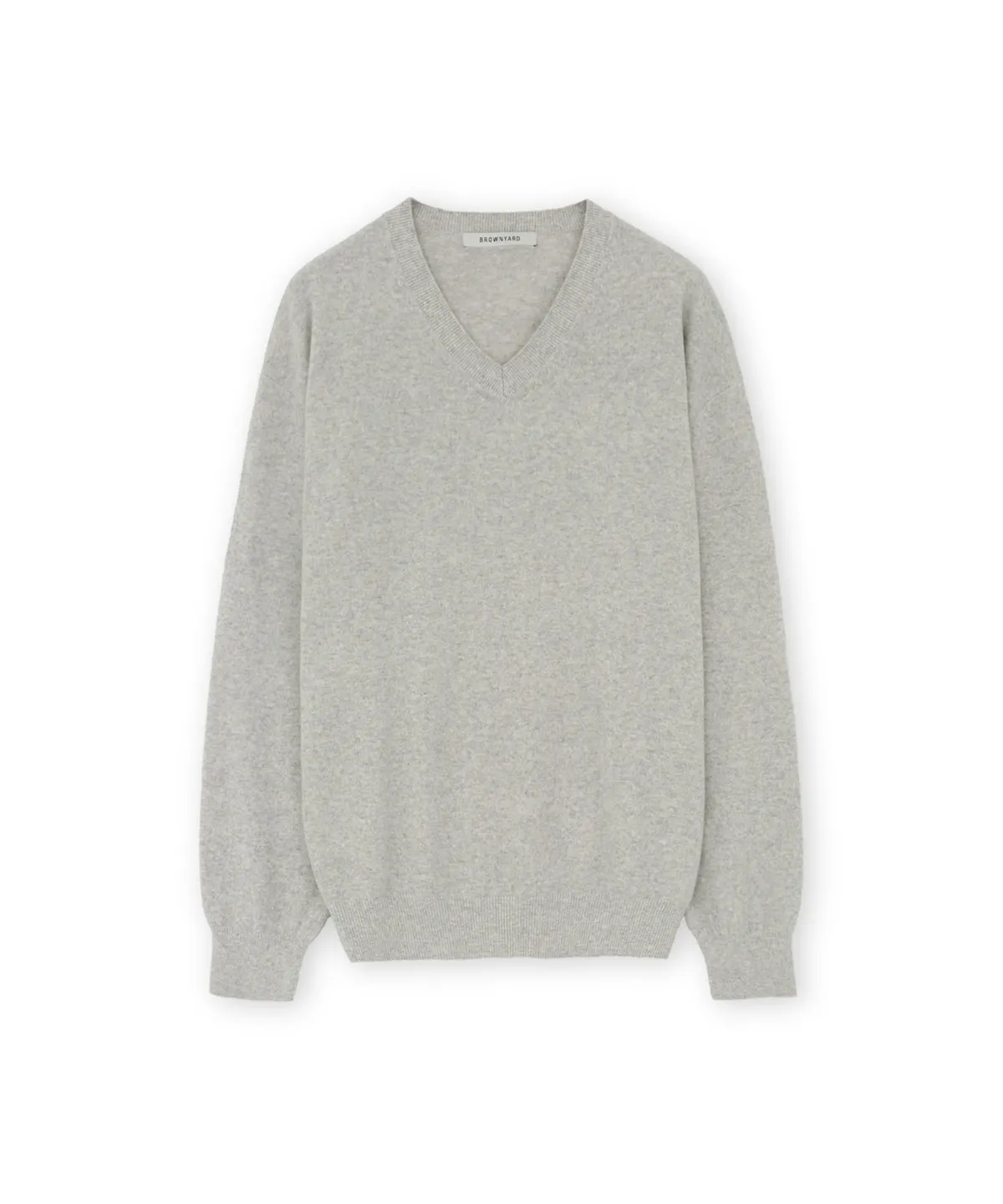
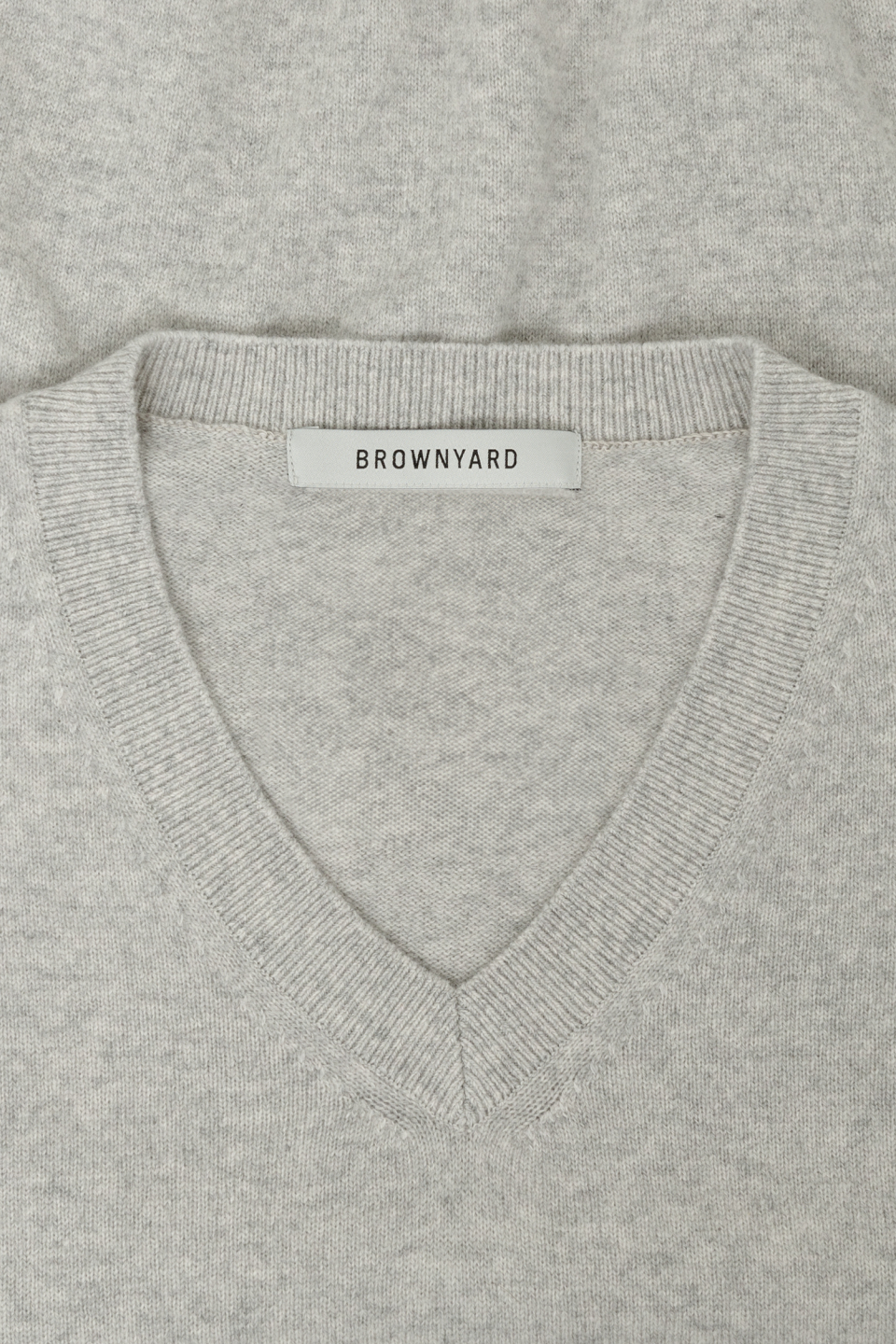
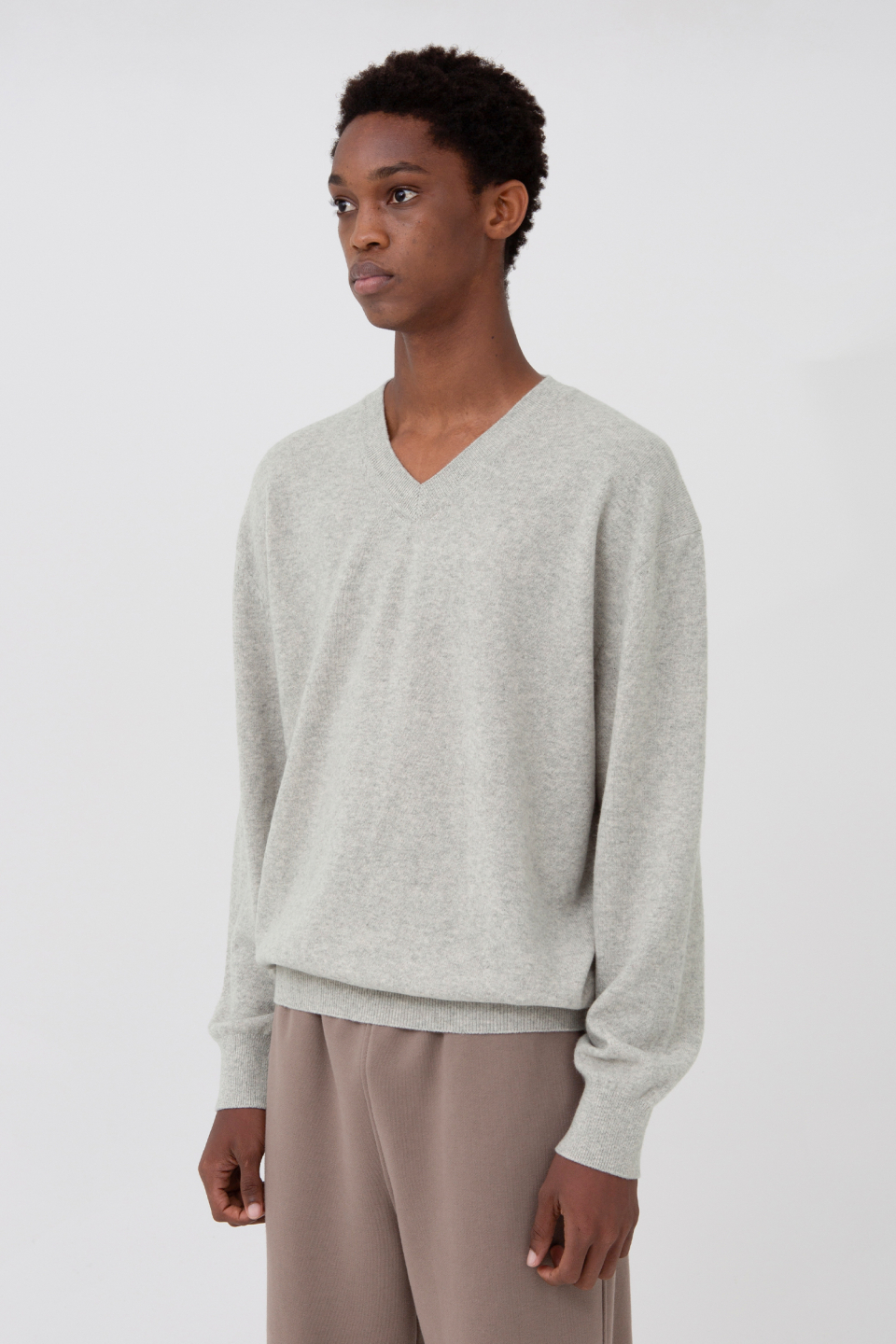
BROWNYARD’s Extra Super Fine V-Neck Knit does not rely on a large logo or an elaborate pattern. The light-grey body, V opening and ribbed cuffs and hem create most of its identity. In a small product photograph, that can make it difficult to distinguish from other grey sweaters. Start by looking at the space below the neck, the way the sleeves fall from the shoulders and the hem gathering near the waist. These relationships explain why changing the layer underneath can alter the impression of the same knit.
The piece examined here is the Light Grey Extra Super Fine V-Neck Knit, listed under product code BY007KNVNS001LG. Distinguish it from similarly named crewnecks, the W line and other colour versions. Rather than treating it as an outfit that requires a new wardrobe, consider what it can do between T-shirts, shirts and trousers you already own. If you want a change in neckline and texture without rebuilding your usual style, start with combinations you would repeat, not a single elaborate look.
The V-neck brings the underlayer into the design
A V-neck naturally reveals part of the clothing beneath it. Where a crewneck closes the area with one rounded line, this shape leaves room for another colour and outline. A white T-shirt inserts a curved edge inside the triangle; a shirt adds a collar and a vertical button line. Either changes the overall effect compared with viewing the knit alone. When shopping, look at both the depth of the V and how high the necklines of your usual underlayers sit. The relationship between those two shapes matters more than choosing an inner layer in isolation.
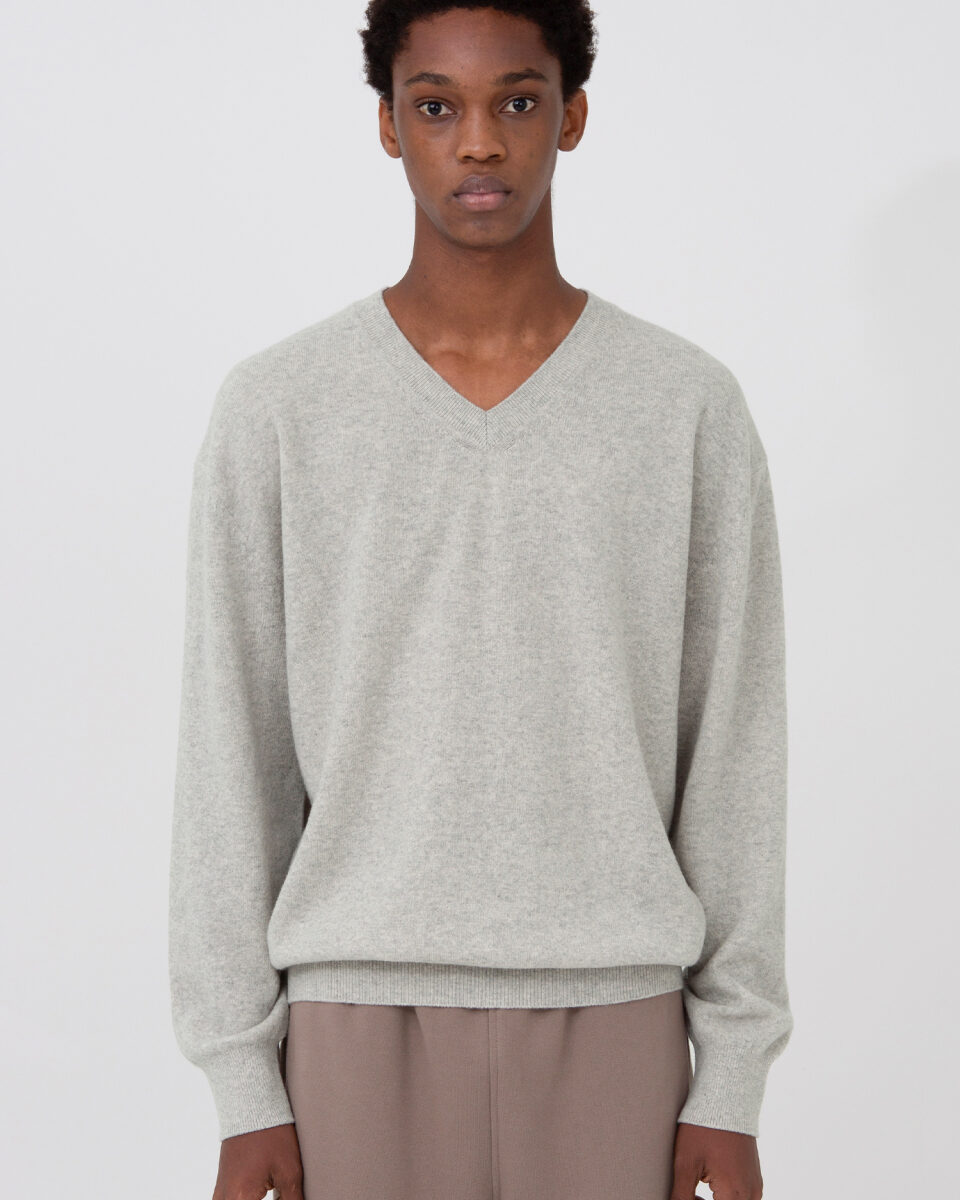
The close-up shows a narrow rib following the V and meeting at its lower point. With little other decoration, folds or clashes with the clothing beneath can become quite visible. A thick underlayer may gather around the neck, while a very open one may show less than you intended. There is no single compulsory white T-shirt. The useful test is whether your own layer feels comfortable and appears in the proportion you want. Where possible, compare the sweater with something you actually wear frequently rather than buying a new inner top just to imitate a photograph.
Why choose light grey?
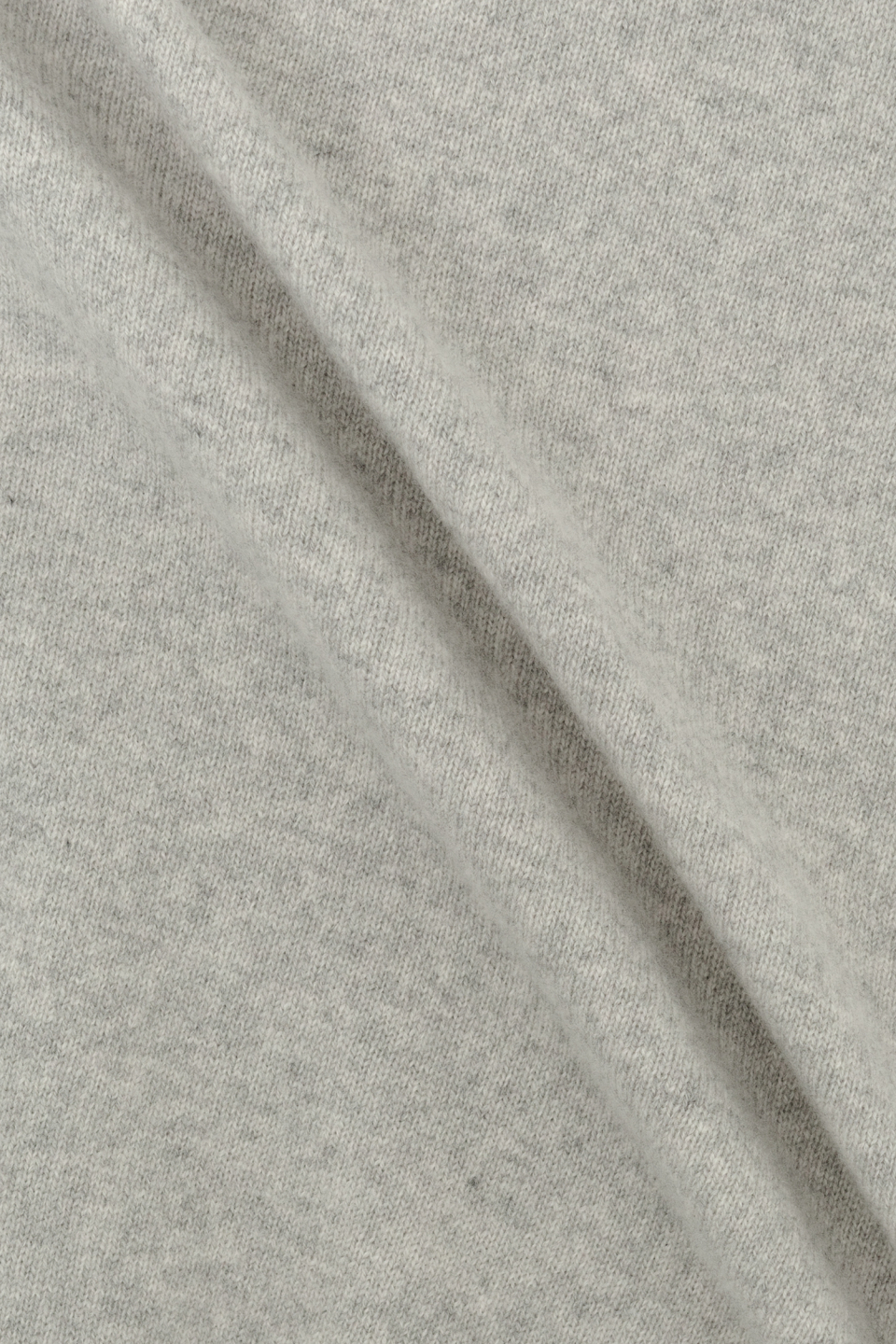
Light grey sits between the sharper outline of black and the brightness of white. In the photographs, its surface has small variations of tone rather than the appearance of a completely smooth, solid colour. A white underlayer makes the neckline transition gentle; black trousers create a more definite division between upper and lower body. If this is your first grey knit, do not assume the colour works automatically for everyone. Ask how much brightness you want to introduce between your existing trousers and outerwear.
Beige or pale-brown trousers soften the boundary between the two halves, while dark navy or black makes the neckline and body shape more distinct. With grey trousers, small differences in shade may be more noticeable than expected, so do not rely on separate product photographs to promise a perfect match. Screen brightness and indoor lighting also affect the impression. Once the piece arrives, compare it with clothes you own in natural daylight. That often reveals useful combinations without requiring another purchase.
Understanding 100% wool and the Extra Super Fine name
The stated material is EXTRA SUPER FINE WOOL 100%, and the retail information lists Korean manufacture. For someone seeking a wool-knit surface rather than a cotton or synthetic sweatshirt, that composition is a meaningful starting point. The brand describes fine yarn and a soft touch. However, the name does not supply an unpublished numerical fibre diameter or establish that every wearer will find it irritation-free against bare skin. If direct contact matters to you, pay particular attention to the neck and wrists, where the material is most likely to touch.
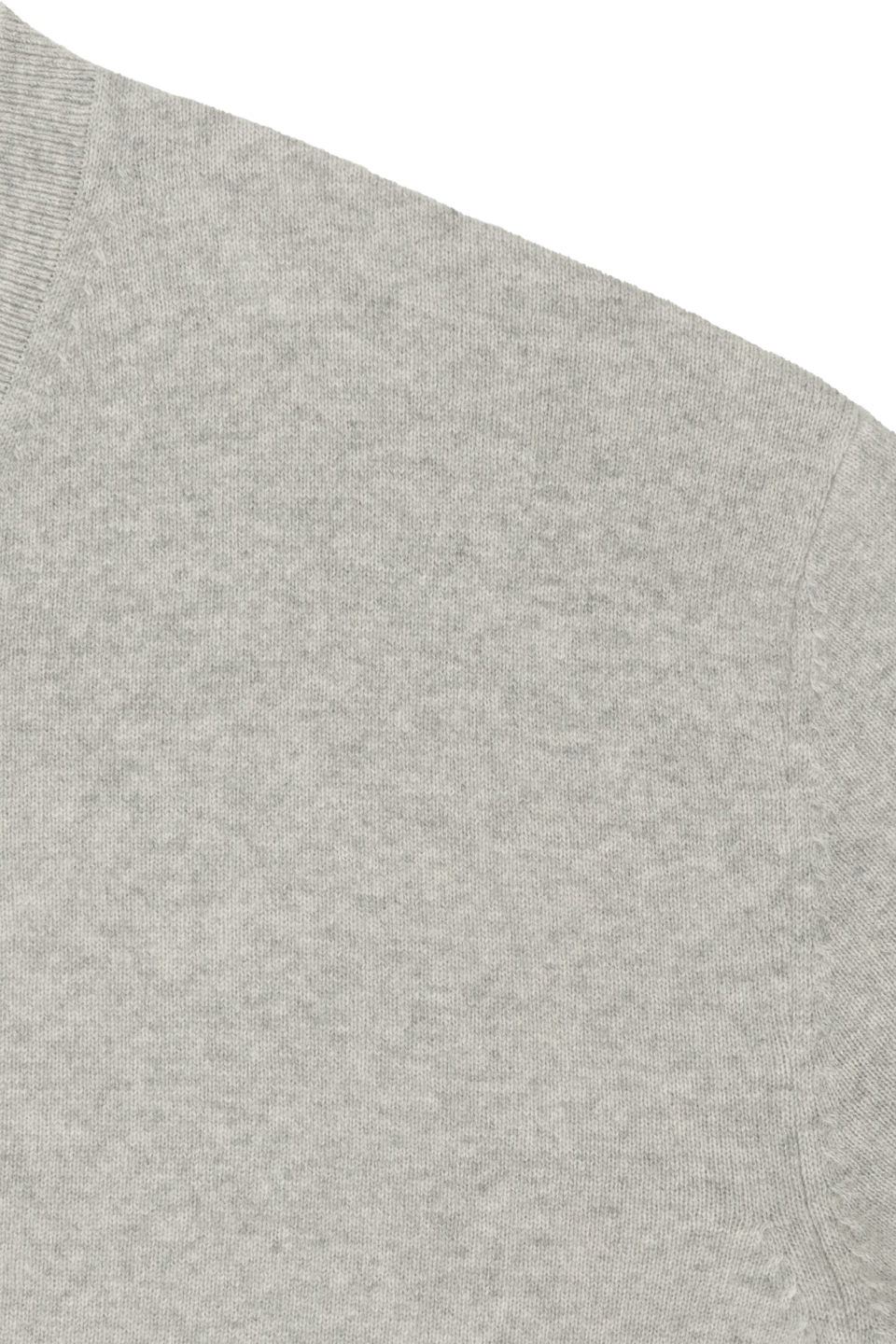
The close-up photographs show the light-grey tonal variation and knitted surface. They help explain colour and construction, but cannot replace feeling the fabric’s resilience or wearing it through a day. If you plan a thin inner layer, consider the combined thickness of the two garments. Whether it is sufficient on its own in winter depends on the weather and your outerwear, not just the fibre name. A 100% wool composition can be a reason to look more closely; it becomes useful when the garment also suits your setting and care habits.
The sleeves and ribbed hem shape the silhouette
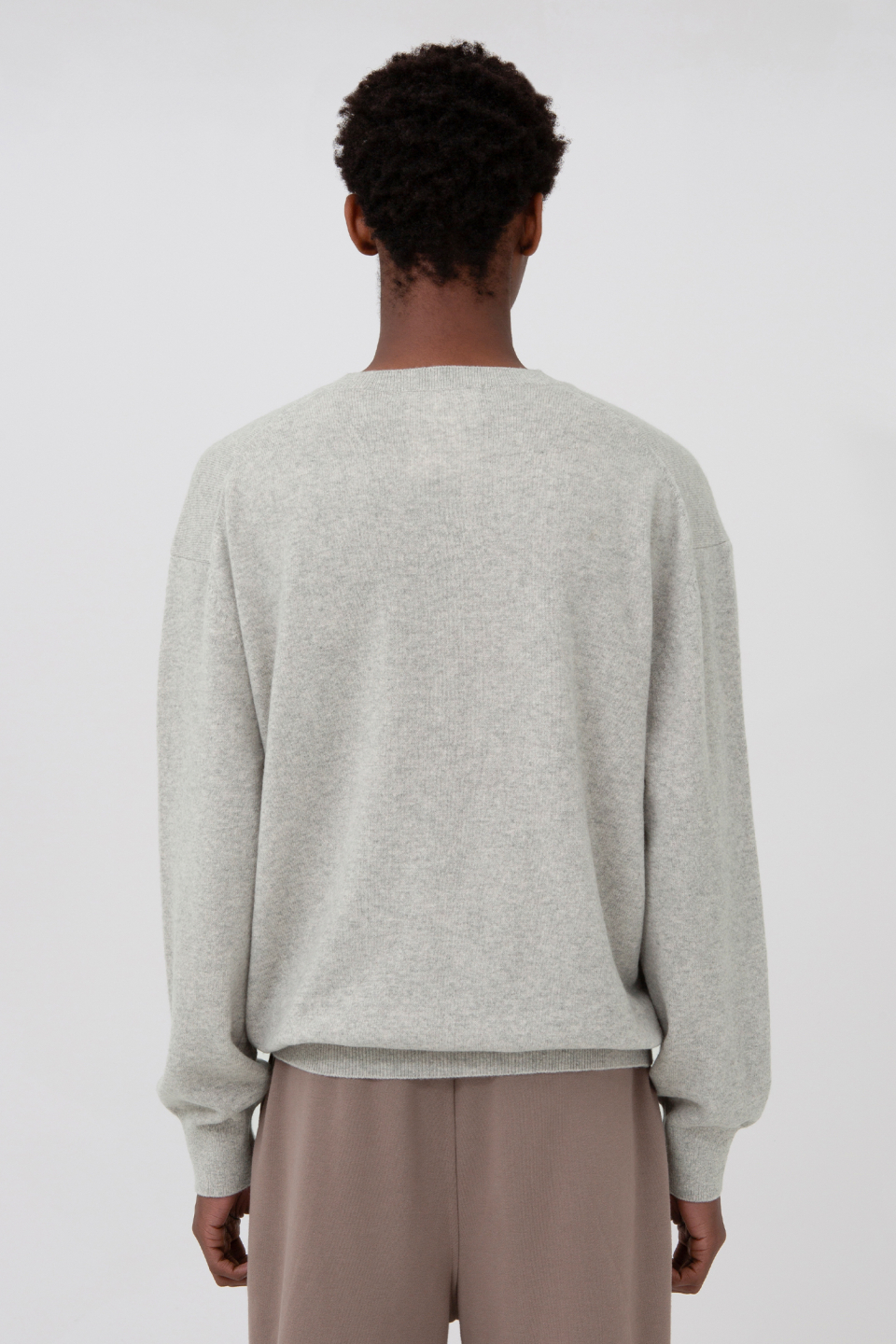
The brand describes a standard silhouette with room to move. In the worn photographs, the sleeves fall naturally from the shoulder and the body gathers slightly into the rib near the waist. It is therefore unhelpful to imagine either a tightly fitted formal sweater or an indiscriminately oversized piece. The chosen size and the trousers beneath it can move the result between a more ordered outline and a relaxed one. Looking at that structure is more informative than applying a single broad fit label.
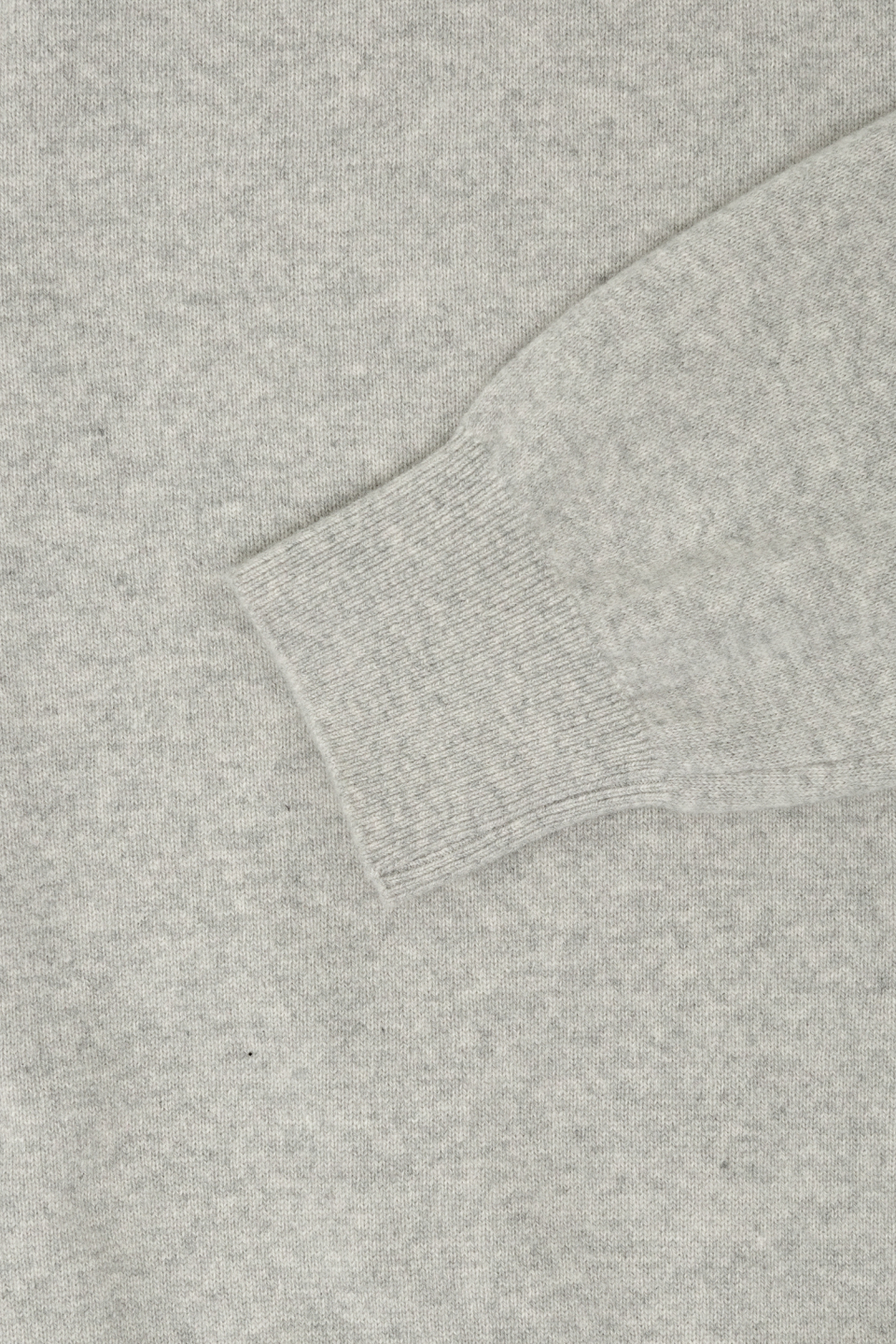
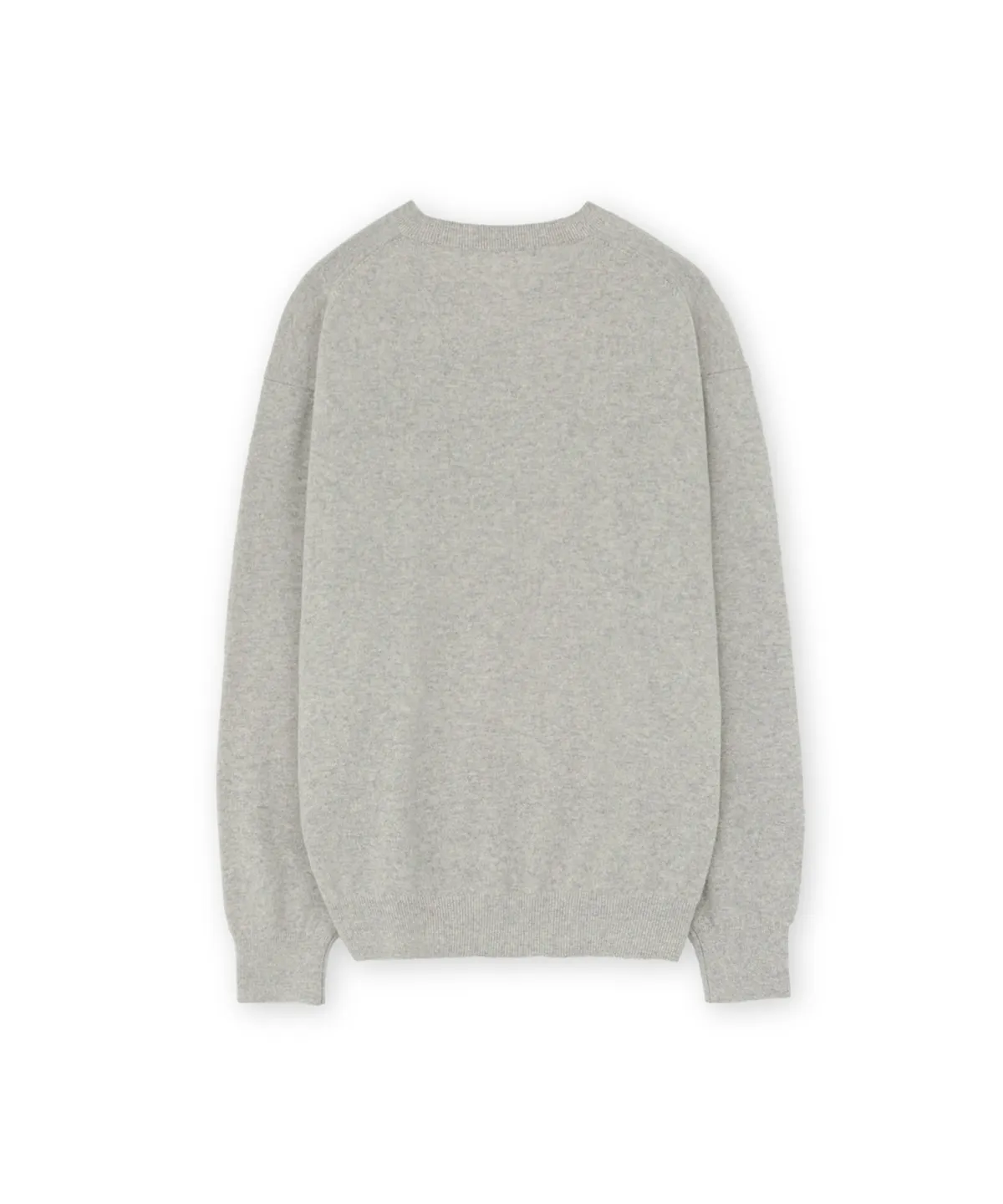
The elastic rib at the cuffs and hem creates a boundary distinct from the body’s knit. Where you place the hem changes the apparent length, so the chart’s measurement should not be imagined as a straight vertical line hanging unchanged on the body. Cuffs gathered at the wrists also leave room through the sleeves. Compare the rear and side views with the front to see where the garment follows the body and where it stands away. If it will sit under a jacket, check whether that extra room gathers awkwardly inside the outer layer.
Compare sizes 3, 4, 5 and 6 with actual measurements
The following measurements are in centimetres, taken flat. Size 3 has a body length of 65, shoulder width of 51.5, chest width of 57 and sleeve length of 59.5. Size 4 measures 67, 53.5, 59.5 and 60.5 in the same order. Size 5 is 69, 55.5, 62 and 61.5; size 6 is 71, 57.5, 64.5 and 62.5. Do not automatically equate 3 with your usual S or assign 6 to a particular body measurement. Compare an existing knit that fits well. In particular, chest width is a flat garment measurement, not your chest circumference.
Each size step adds 2 centimetres to the length and shoulders, 2.5 to the chest width and 1 to the sleeves. Sizing up solely for extra length also changes room across the upper body. The brand allows a measuring variation of up to 2 centimetres. Keep that tolerance in mind, and remember that sleeve length alone does not determine cuff position when the shoulder line falls away from the body. Start with length, shoulder and chest, then consider your underlayer and arm movement together. Comparing the endpoints, size 6 adds 6 centimetres to both length and shoulders, 7.5 to chest width and 3 to sleeves relative to size 3. Three size steps therefore represent different changes in different places. If extra chest room is your goal, check whether the accompanying increases in body and sleeve length also work for you.
Three movements worth trying before choosing
If you can try it on, look at the front while standing, then reach forward, sit down and add a light jacket. These checks reveal whether the back and shoulders pull, where the hem gathers when seated and how much fabric overlaps inside outerwear. The front neckline matters with a V-neck, but choosing from that single pose can miss practical differences. If you regularly wear a shirt underneath, reproduce that combination rather than judging the fit only over a thin T-shirt.
For an online purchase, measure the length, shoulder and chest of a knit laid flat at home. Also note what feels right or wrong about it. Perhaps the length works but the chest is restrictive, or the shoulders are comfortable while the sleeves are too long. Those observations tell you which dimensions deserve attention. Your familiar clothing offers a more repeatable comparison than matching a model’s height. Instead of choosing the largest size simply to look relaxed, identify whether you need additional space in the body, shoulders or sleeves. Lay the comparison garment with its shoulders and body resting naturally rather than pulling the knit to remove every fold. A hem folded or gathered in a styled photograph can make the visible body look shorter than its flat length. Use worn images for the overall impression and measurements taken in the same way for the length comparison; the two kinds of information serve different purposes.
The simplest combination: a white T-shirt underneath
A white crewneck T-shirt is an accessible way to take the knit in an everyday direction. Its curved edge fills part of the V and contrasts with the sweater’s lines. The amount that shows is the key variable. A higher neckline creates a larger light area; a lower one gives more emphasis to the V itself. Choose the balance that feels comfortable around your face and neck. A large T-shirt logo partly cut off by the opening may look busier than intended, so a plain layer provides an easier starting comparison.
Dark jeans or straight black trousers can complete the combination. The knit and T-shirt carry the lighter tones while the trousers organise the lower half, without requiring several changes of footwear or bag. If you want the T-shirt hem to show as well, compare the two body lengths. Exposing a lot at both neck and hem emphasises the layers; showing only a little at the neckline is more restrained. These are adjustment tools, not rules. Choose what works for the places you actually go, whether commuting, visiting a café or spending a day in transit.
With a shirt, collar size makes a difference
A shirt introduces both a collar and a vertical button line inside the V, creating a more structured impression. A small collar fills the space quietly; a large one spreads farther over the knit and becomes a stronger feature. White connects smoothly with light grey, while pale blue can add colour without a sharp contrast. How many buttons you fasten also changes the open space around the neck. For work or a particular occasion, assess the complete combination against the setting’s dress expectations rather than assuming the sweater alone determines suitability.
Checks and stripes are possible too, but decide how much pattern you want visible. Emphasising collar, cuffs and hem together makes the shirt more prominent and moves the knit into the background. Showing just a little collar keeps the V-neck’s outline central. With a substantial shirt, check arm and underarm movement as well as chest width. Two garments that look roomy enough separately may overlap uncomfortably. Finding a combination that permits movement and keeps the neckline orderly matters more than reproducing a styled image exactly.
Three directions: denim, tailored trousers and pale bottoms
The plain front makes it easy to change the outfit through the trousers. Dark denim supplies a casual base; trousers with cleaner lines move it towards a quieter, more ordered look. Pale brown or beige reduces the contrast between upper and lower body. If you expect to wear the knit repeatedly, identify two existing pairs of trousers that take it in different directions. The useful question is whether changing what you already own creates a different impression, rather than how many additional pieces you can buy around it.
With wide trousers, the relationship changes according to whether the rib gathers near the waist or the body sits lower. You can give a broad lower half a shorter-looking top, or continue a loose line through the whole outfit. Shoes finish that choice: simple trainers can keep it casual, while a more defined leather shoe can add structure. These are possibilities, not fixed rules. Settle the upper and lower lengths and widths first, then select footwear, instead of changing every element at once and losing sight of what improved the result.
Repeated wear between travel and everyday life
For a Korea trip, one advantage is the ability to change its appearance through the neckline and layers instead of a conspicuous print. Alternating a T-shirt and shirt beneath the same grey knit creates different impressions without a large increase in luggage. Build a small wardrobe around two comfortable pairs of trousers and outerwear appropriate to the weather. Think beyond photographs to long journeys, shifts between indoor and outdoor temperatures, and what happens when you remove the sweater and have to carry it.
If your priority is putting clothes through a washing machine and wearing them again the next day, check the care requirement first. This garment is labelled for dry cleaning, so it should not be treated like a T-shirt that can be casually washed during a trip. On a longer itinerary, you might plan changes of underlayer and days when the knit rests. Cold weather still requires suitable outerwear, while warm interiors may favour a removable combination. Building layers around your actual movements is more useful than expecting guaranteed warmth at a particular temperature.
Dry cleaning and storage are part of the purchase
The official care instruction specifies dry cleaning. Do not replace that with a general assumption that wool can be hand-washed at home; check the actual garment label and pass its instructions to the cleaner. Light grey makes marks relatively easy to notice. If food or drink lands on the knit, avoid immediately rubbing hard and seek treatment appropriate to the material and label. For a frequently worn item, the time and cost of care belong in the buying decision. Liking a fabric and being able to maintain it in your routine are connected considerations.
For longer periods without wear, the brand advises a well-ventilated place away from direct sunlight. Folding the knit helps avoid the shoulder tension that can arise from hanging. Check its condition before storage rather than forcing it into a crowded space or sealing it away damp. After wear, look for odours or marks and distinguish a piece needing cleaning from one that simply needs arranging. Pilling or changes of shape can vary with use; if a specific problem develops, consult the label or seller before using an aggressive tool in an attempt to fix it.
Assessing ₩198,000 and checking an order
On 30 October 2026, the Korean official store displayed ₩198,000. This is not a universal international checkout total incorporating local currency, discounts and shipping. Overseas buyers should check their own final amount and delivery and return conditions. Assess the price through neckline, fit, layering and care as well as the 100% wool wording. If you already have a similar grey knit, ask what this one adds. If you do not, ask whether it immediately works with your current trousers and jackets.
Before ordering, recheck Light Grey, the product code and the selected size from 3 to 6. Avoid mixing measurements from another colour or the W line. On arrival, inspect the front and back, V-neck, cuffs, hem and construction before removing tags or cleaning. For measurements, lay it comfortably flat without pulling; allow the stated tolerance, but contact the seller before continued wear if there is a significant discrepancy. When buying during a trip, also consider whether arrival and any relevant exchange window fit within your itinerary.
The wardrobe it suits—and the needs it may not meet
This piece deserves consideration if you want a regularly worn knit whose effect changes through neckline, fabric and layering, rather than one large graphic. Its role becomes clearer if you already use white T-shirts and shirts, alternate denim and tailored trousers, and can connect light grey to your existing outerwear. Reading the measurements from 3 to 6 and comparing your own clothing gives a more useful basis for choosing length and ease than following the brand’s numbers without context.
If your priorities are a close-fitting shoulder, a conspicuous print or easy washing during travel, this design may point in another direction. Bring three questions together before deciding: which inner layer will sit in the V, which body length and chest width do you need, and can you accommodate dry cleaning? Specific answers make the new knit easier to integrate with familiar clothes. A good basic is not a garment without characteristics; it is one you return to for the same useful reasons in everyday life.
A little closer to Korea.
Thank you for reading.