Start with the shape and the material
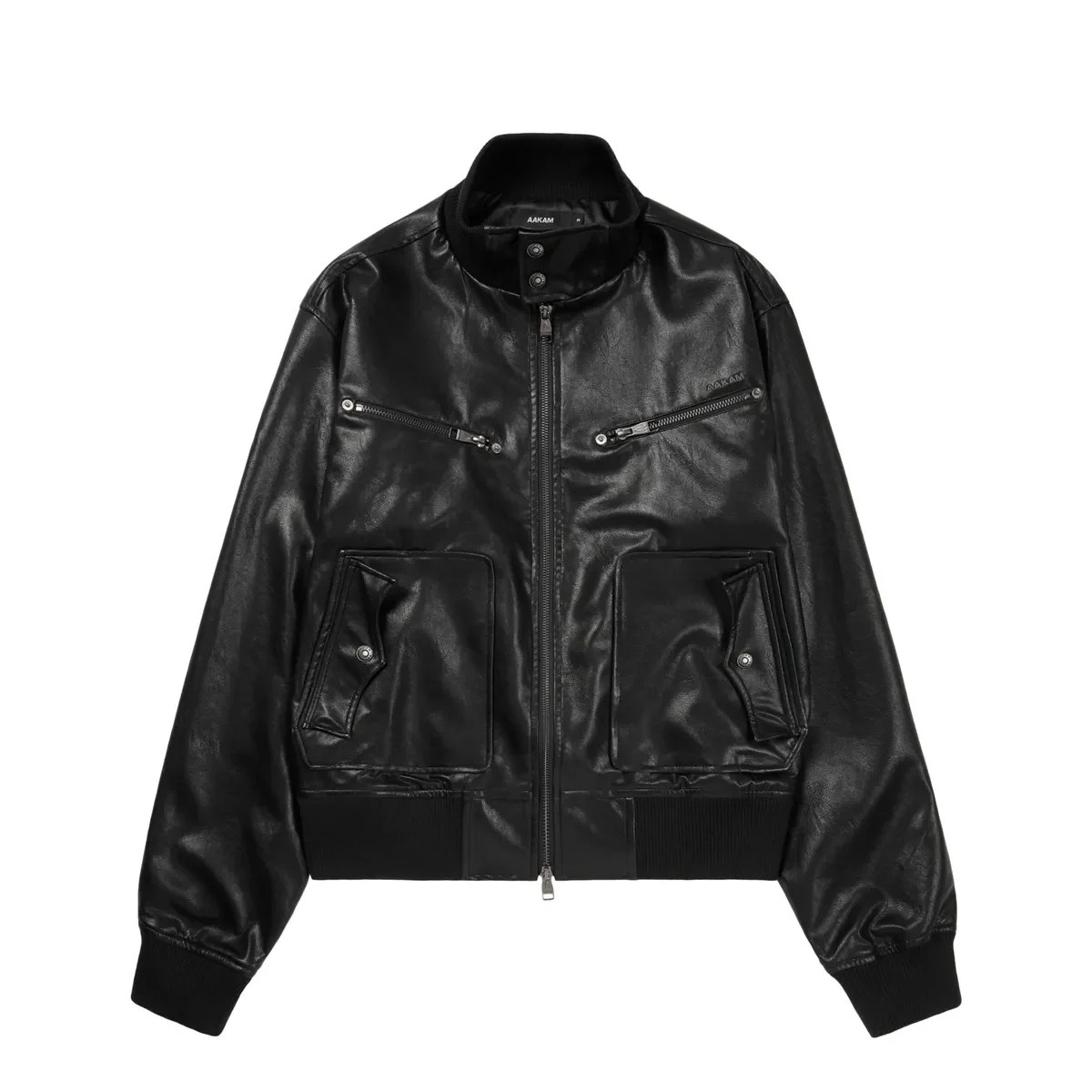
The AAKAM High-Neck Leather Jacket in black combines a tall stand collar, zipped chest pockets, lower flap pockets and ribbed edges in a compact blouson shape. Horizontal metal lines across the chest intersect with the central zip, while the sleeves and body gather into narrower cuffs and hem. Although the colour is an everyday black, the result has more of a workwear and biker character than a quiet tailored jacket. It makes sense for someone who wants a clear upper-body outline even when the rest of an outfit is simply a T-shirt and jeans. The short shape, rather than black alone, is what gives this jacket its particular role.
Read the word “leather” alongside the composition. Product code AK25OT27BK lists a 100% polyurethane shell and a 100% polyester lining, with manufacture in China. The useful question is whether you want this leather-like surface and compact proportion, rather than which grade or thickness of natural hide it uses. Photographs reveal the sheen, folds and construction, but cannot establish the weight, feel or temperature at which you will be comfortable. The advice here is based on those visible details and the stated measurements; it does not claim a long-term personal wear test or a performance result that the product information does not establish.
Two ways to wear the high collar
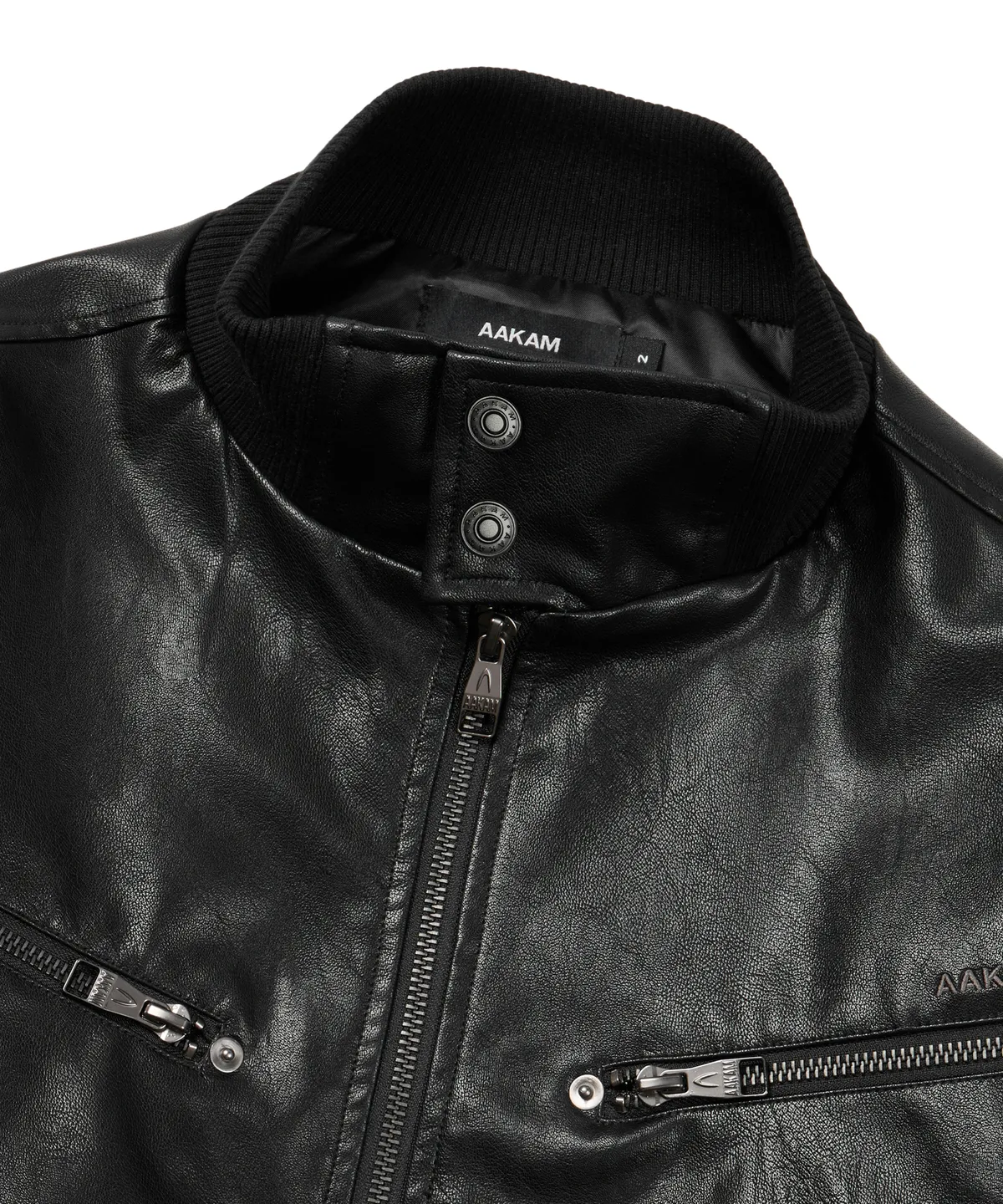
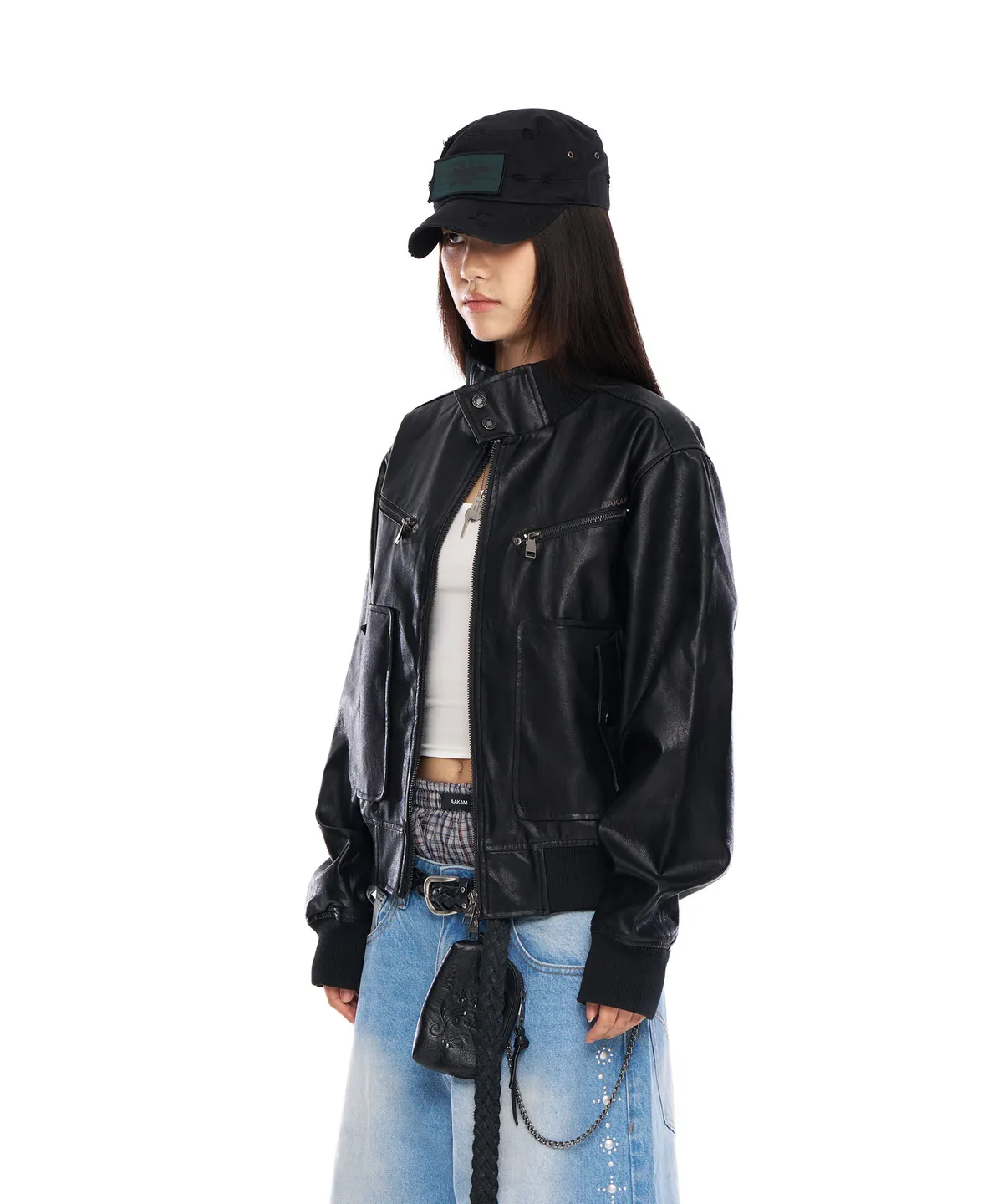
With the collar upright and its two press studs fastened, the line around the neck becomes narrow and structured. In the closed-front photographs, the collar and chest pockets make the upper body read as a continuous black shape. Neck comfort, the space around the face and the width of the trousers then matter more than the colour of the hidden T-shirt. A large hood or several necklaces can crowd an area that already contains a tall collar and metal fastenings. Start with a low crew neck or a fine inner layer to see the jacket’s outline clearly before adding more pieces around the neck.
Opening the front lets the collar fall apart and introduces a strip of the layer underneath. The grey top and pale jeans in the photographs make this change particularly easy to understand. If you intend to use both the neat closed version and the looser open version, check the collar around your throat and chin in both positions. Having plenty of chest room does not solve a collar that requires force to fasten or catches your chin whenever you look down. For someone who consistently dislikes high necklines, this is a defining feature to reconsider rather than a small detail that will disappear once the rest of the outfit is right.
The central zip and the gathered hem
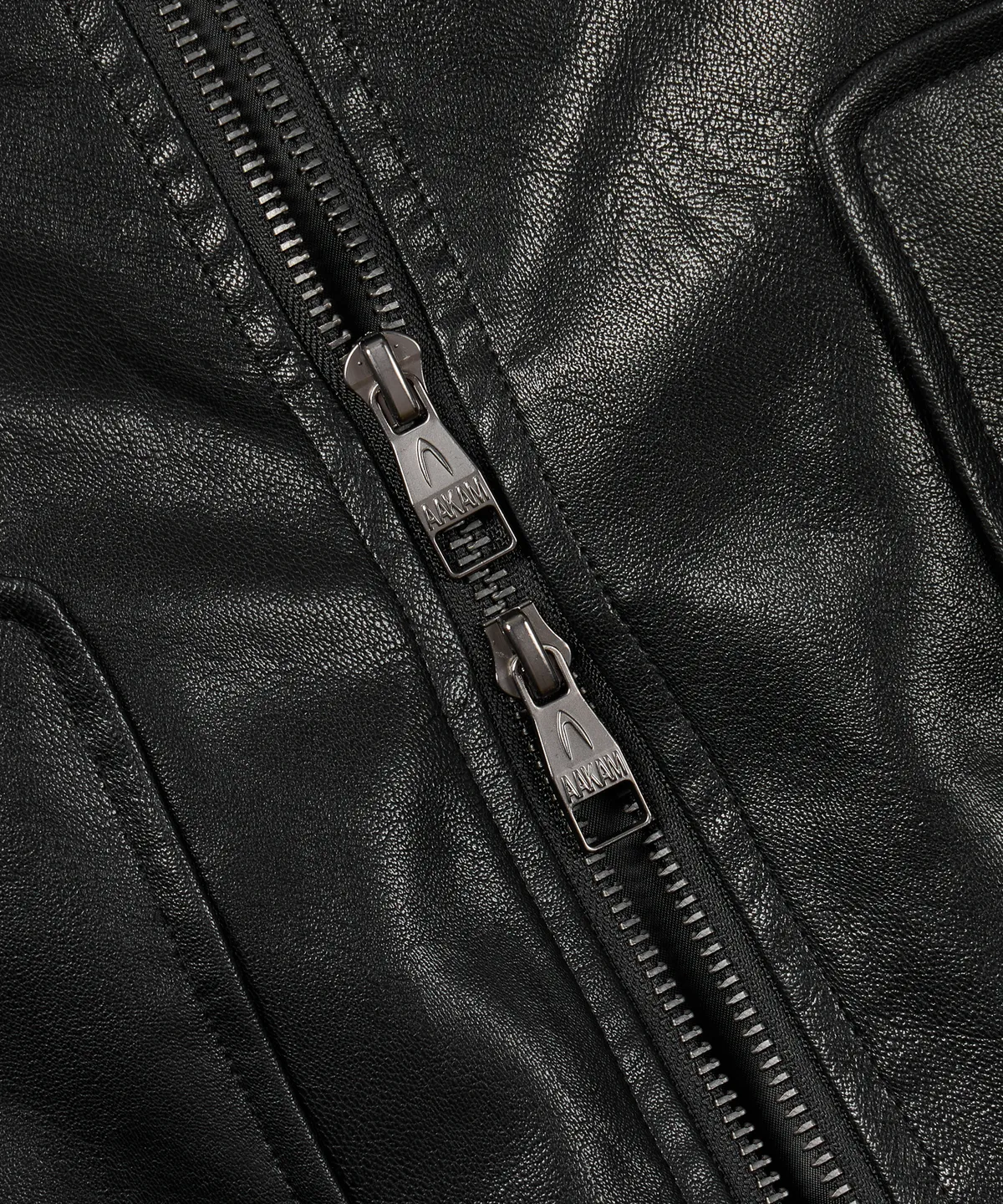
Two pulls are visible on the central fastening: this is a two-way zip. Keeping the upper front closed while opening a little space from the bottom gives a way to adjust the fabric over a belt or when sitting. That is a useful construction detail, but it cannot make every size fit every body. When operating it, align the lower components properly and keep nearby fabric clear before moving the sliders. Pulling harder is not a substitute for sufficient room. During a fitting, try the lower opening in the posture you actually use on a chair rather than judging it only from a standing mirror view.
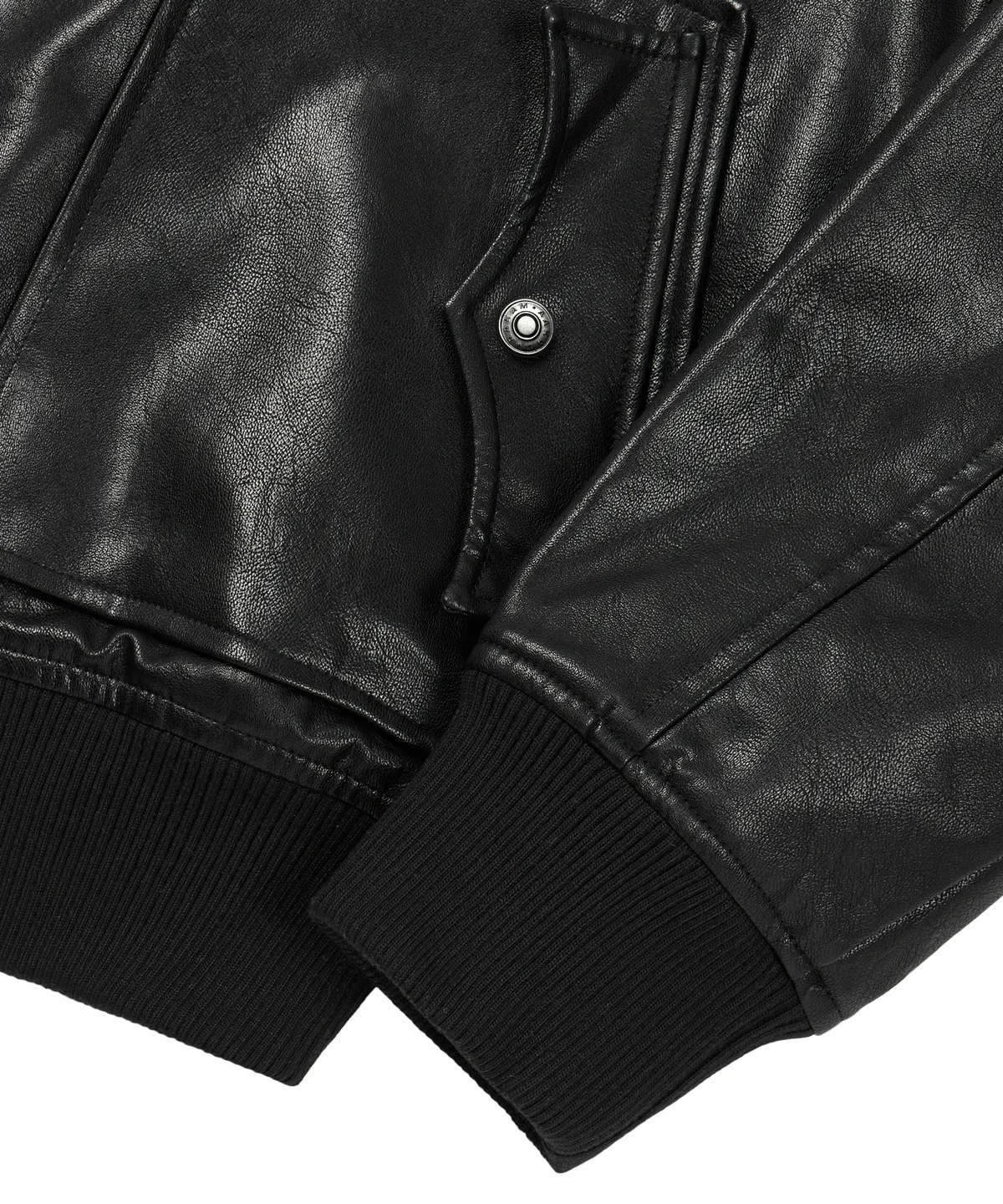
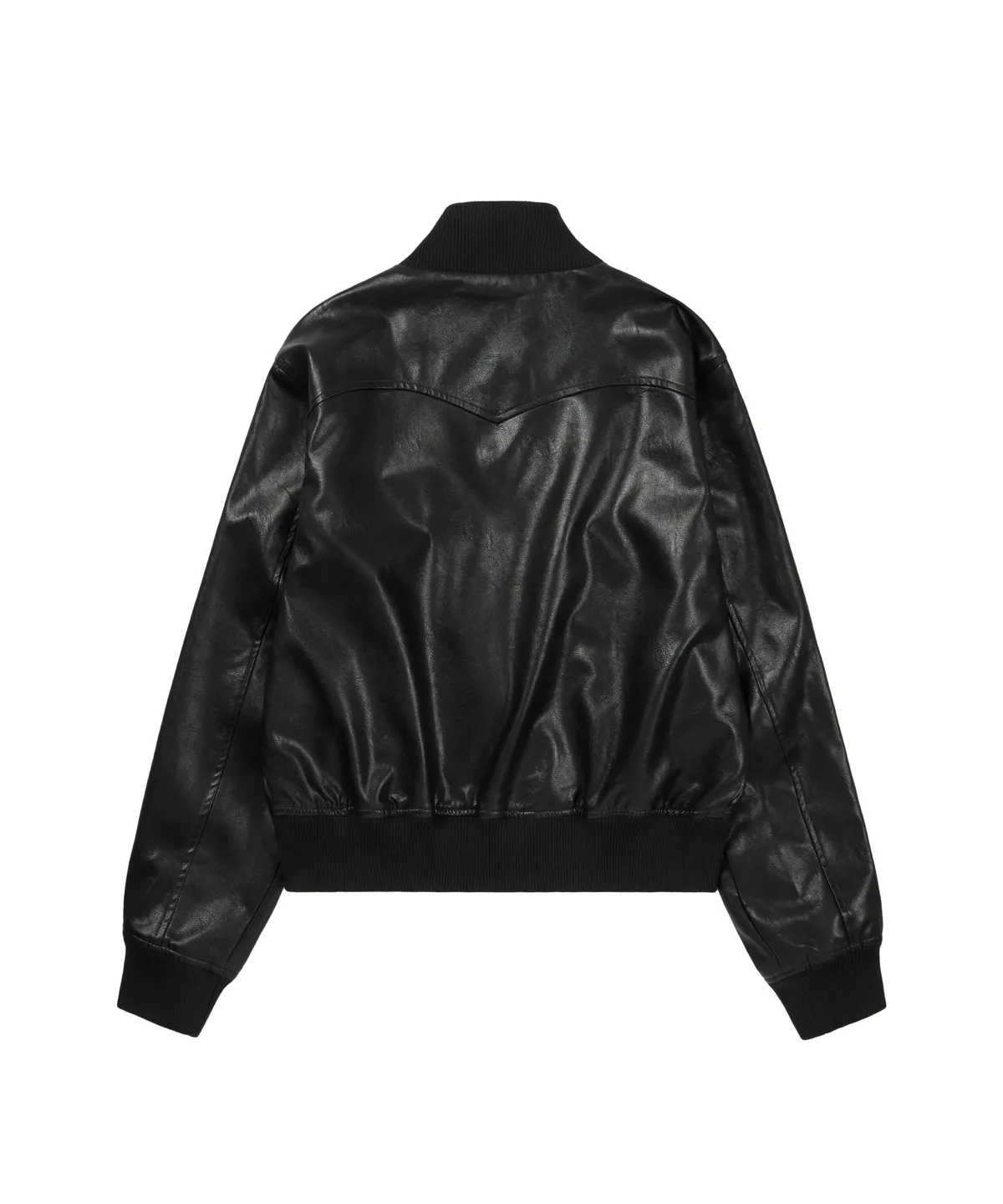
The ribbing at the cuffs and hem contrasts with the smooth shell and draws the volume inward. Where the hem meets your trouser waistband affects whether the same jacket length looks compact or balloons around the stomach. If you prefer an untucked T-shirt, adjust the length showing below the jacket before adding another visible layer. Several unrelated horizontal hems can obscure the clean short proportion. Similarly, a photograph with sleeves pushed up does not establish that the sleeve length is right for you. Let your arms rest at your sides and check where the cuffs finish before deciding how you will wear them pushed back.
What the four pockets contribute
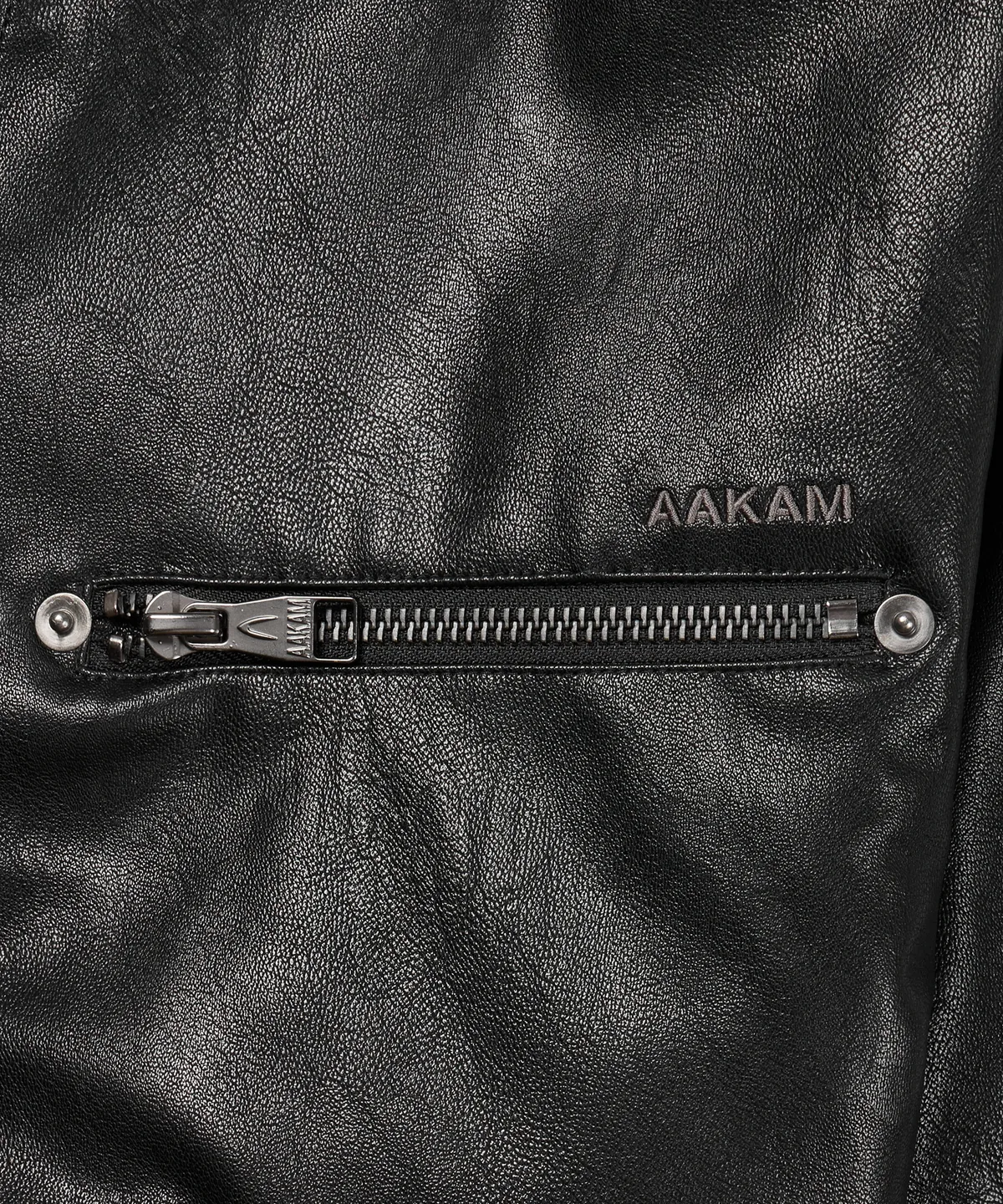
The pair of chest pockets is defined by bright zip openings, while the lower pair uses flaps and press studs. Straight metal lines and fuller pocket flaps give different textures within the same black front, so the jacket already carries a substantial amount of detail. You do not need a large printed T-shirt, heavy chain and highly decorated bag at the same time to make it interesting. A plain inner layer makes the pocket positions and panel seams easier to read. It also lets you choose whether the jacket itself or an accessory is the focal point, instead of having several competing features across the torso.
Separate a pocket’s visible shape from its usable capacity. Without a confirmed internal depth, a photograph cannot promise that a particular phone will fit fully inside. Heavy objects concentrated on one side of the chest may pull the front unevenly, while overfilled lower pockets can add bulk immediately above the gathered hem. Before buying, consider the dimensions of the things you routinely carry. During a fitting, open and close the zips and snaps and check whether your hands approach them comfortably. The presence of four pockets is a useful design fact; their convenience for your own belongings still needs a practical check.
A realistic view of the synthetic shell
The polyurethane shell and polyester lining are the clearest distinction between this product and a natural-leather jacket. Advice about hide grades, patina or oil treatments should not simply be transferred to it. More useful questions are whether you like the particular shine and folds, how the lining moves over your chosen layer, and whether the feel at bending points suits you. Those require contact with the actual garment. The word “synthetic” alone is not enough to conclude that it will be especially light, unusually heavy or durable for a specified number of years. Composition identifies the material; it does not replace a full assessment.
A seller’s regular-fit or thickness category also does not prescribe a comfortable outdoor temperature for every wearer. This should not be presented as an insulated winter garment, a waterproof shell or certified motorcycle protection when those specifications have not been established. If you need one of those functions, check the relevant purpose-built specifications separately. Plan this piece as a fashion outer layer for everyday city outfits and think about travel time, the clothes underneath and where you can remove it indoors. A firm-looking surface and substantial styling are visual qualities; they are not evidence of protective performance or a measured warmth rating.
Size 1 and size 2 differ substantially
The brand’s centimetre chart gives size 1 a length of 59.5, flat chest width of 55.5, flat hem width of 41, shoulder width of 45.5 and sleeve length of 63. For size 2, the same sequence is 65, 60, 43, 50.5 and 67. A flat chest measurement describes the garment laid out, not the wearer’s chest circumference. Doubling it is not enough to guarantee a comfortable fit. Compare it with a jacket you already wear comfortably over a similar inner layer, measured in the same way. The brand also notes a possible 1–2 cm variation depending on the measuring method, so avoid treating a tiny numerical difference as decisive.
Moving to size 2 adds 5.5 cm in length, 5 cm across the shoulders, 4.5 cm in flat chest width and 4 cm in sleeve length, but only 2 cm at the flat hem. It therefore changes much more than a little extra body room: the shoulder line, wrist position and lower edge all move. If the short proportion is the main attraction, check whether the longer size still achieves it. If you want to wear a substantial hoodie underneath, consider shoulders and sleeves as well as chest space. Treating size 1 as automatically women’s and size 2 as automatically men’s is less informative than comparing your desired shape with these actual measurements.
Turning model photographs into useful comparisons
The brand identifies the black-jacket model in size 1 as 172 cm and 46 kg, and the black-jacket model in size 2 as 181 cm and 64 kg. These figures help interpret the pictured proportions; they are not a size recommendation for everyone of the same height. Shoulder breadth, arm length, torso circumference and the thickness underneath can change the result considerably. Look for specific reference points, such as the relationship between the hem and the trouser waistband, then compare those with a familiar jacket. The aim is to learn what to measure rather than to assume that matching one of the model’s numbers reproduces the image.
When trying it on, do more than stand with your arms down. Reach both arms forward, cross them gently and sit on a chair. A roomy body can still feel restrictive across the back or under the arms. Turn your head with the collar closed, then open the zip and see how the front panels settle. If you are still deciding whether to return the garment, keep this a brief, clean indoor fitting over an inner layer and retain the tags and packaging. Everyday movement usually offers more relevant information than a single flattering pose. In particular, check the position you will use at a desk or on your usual commute.
Light denim softens the visual weight
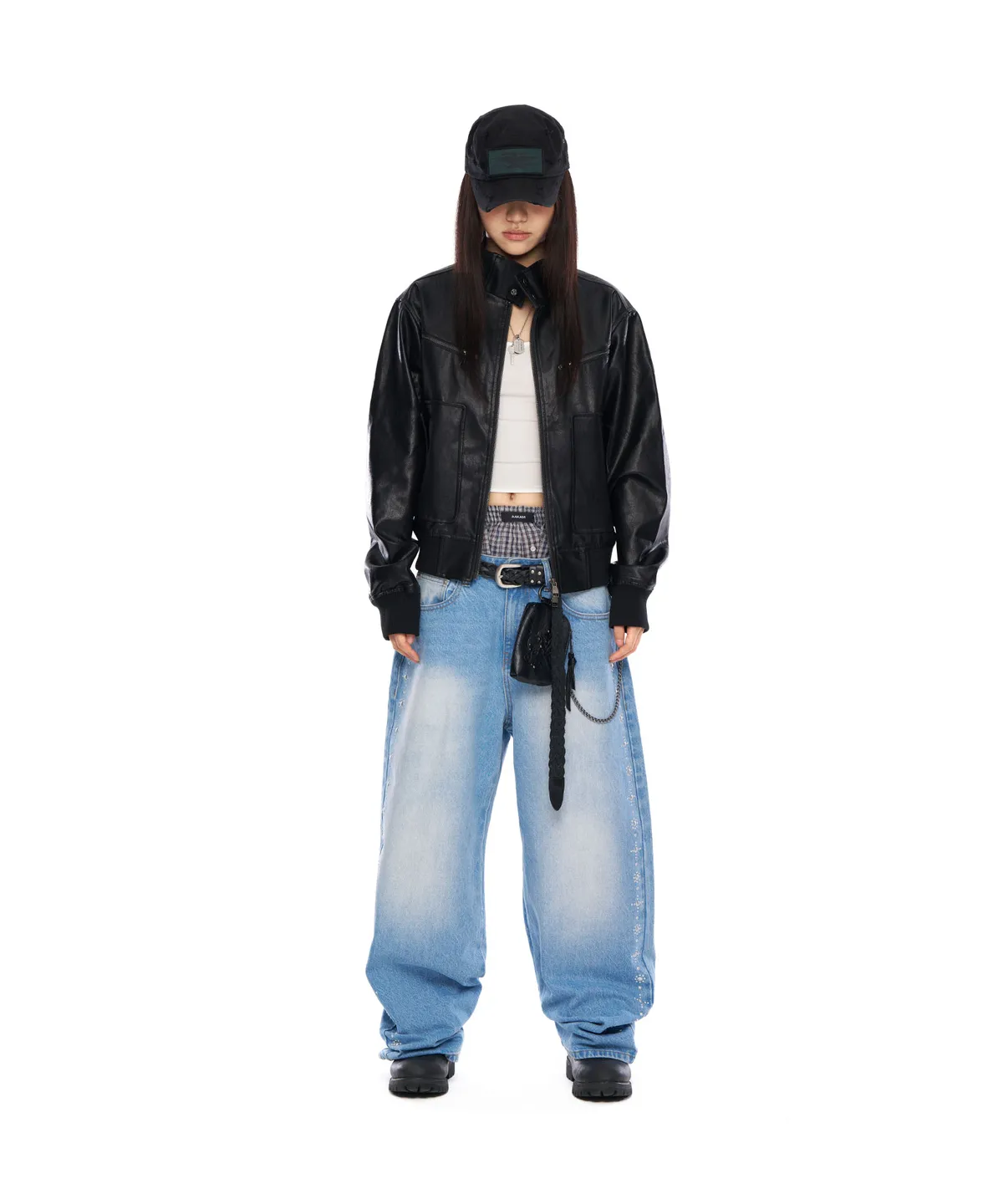
In the photographs with pale wide jeans and a grey top, the black shell stands clearly apart from the trousers. An open front creates a vertical strip of inner colour, while the wide denim falls below the short upper section. You can borrow that relationship without copying every accessory in the photograph. Light straight-leg jeans or moderately wide jeans and a plain or small-logo T-shirt preserve the essential contrast. Start with trousers and shoes you already know you like; this makes it easier to decide whether the jacket genuinely extends your wardrobe rather than requiring an entirely new outfit to look convincing.
Pay attention to the denim at the floor. A great deal of pooling can make the lower half look heavy beside the jacket’s compact outline. Compare a hem that lightly meets the shoe with a deliberately longer break, and choose a length that lets you walk comfortably. A white T-shirt creates a sharper contrast, while grey makes the transition softer. Once the jacket is zipped closed, the inner colour plays a smaller part, so the brightness of the jeans and the volume of the shoes become more noticeable. Adjusting these elements one at a time creates different open and closed looks without assuming you need several new purchases.
All black benefits from different textures
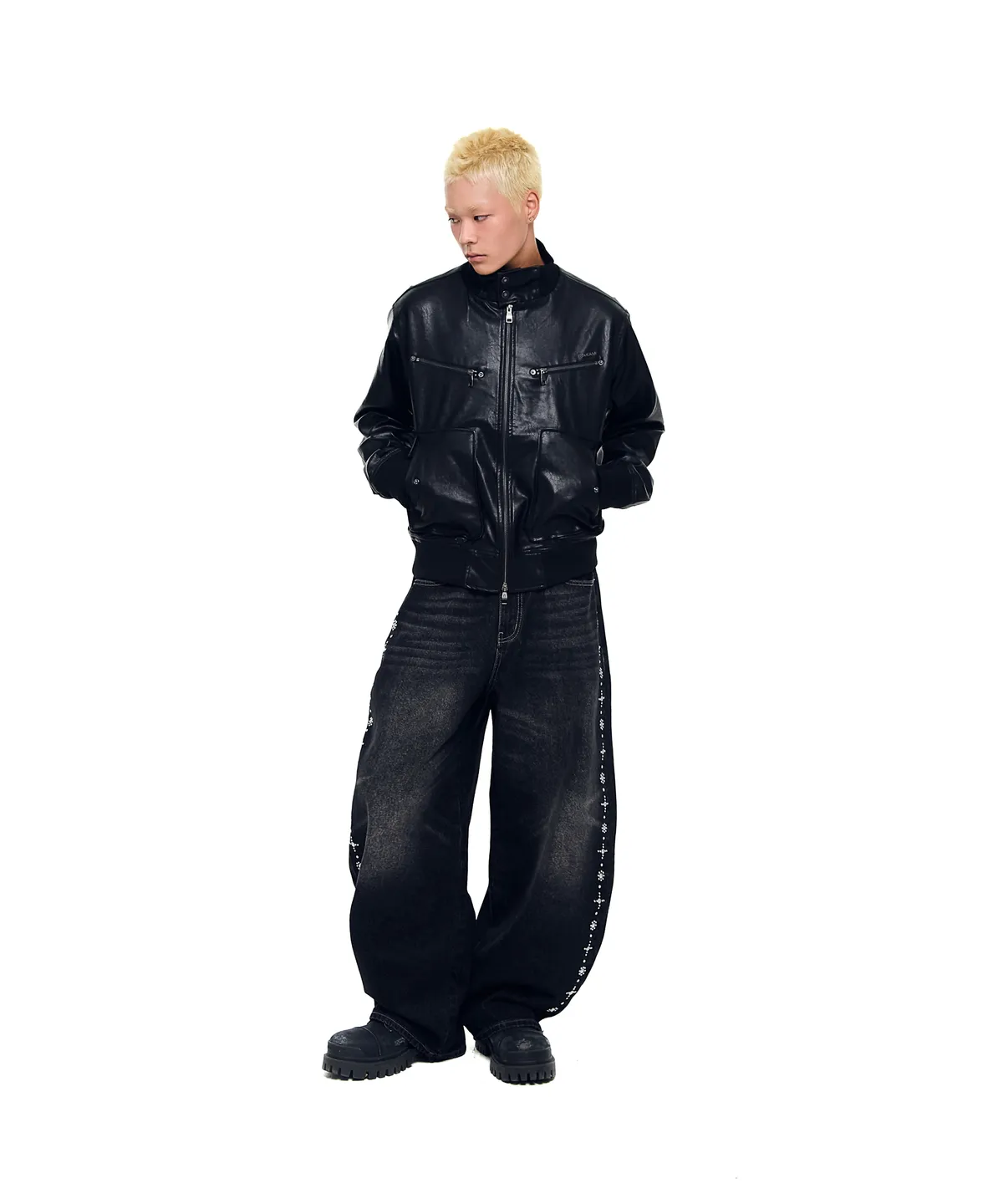
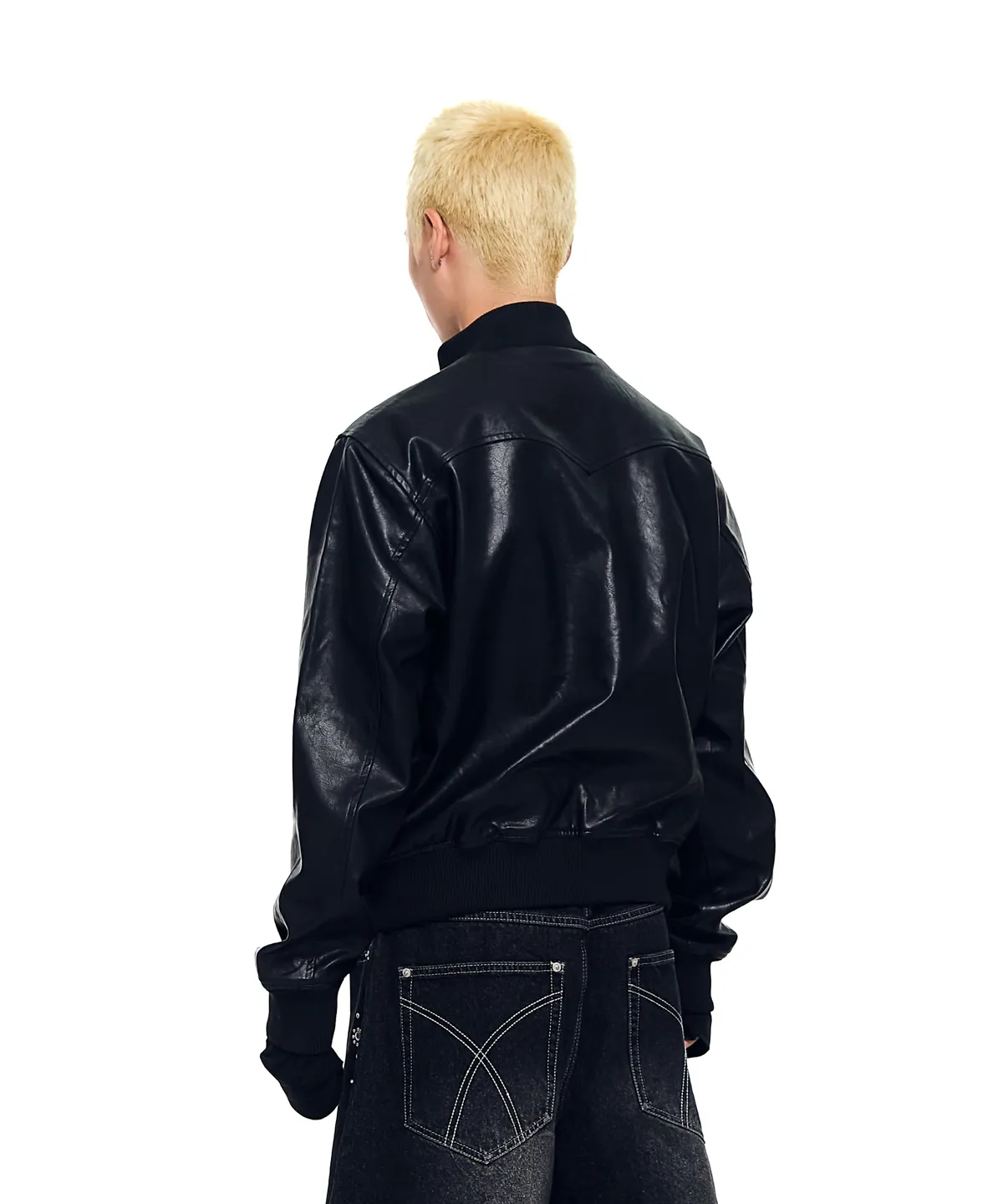
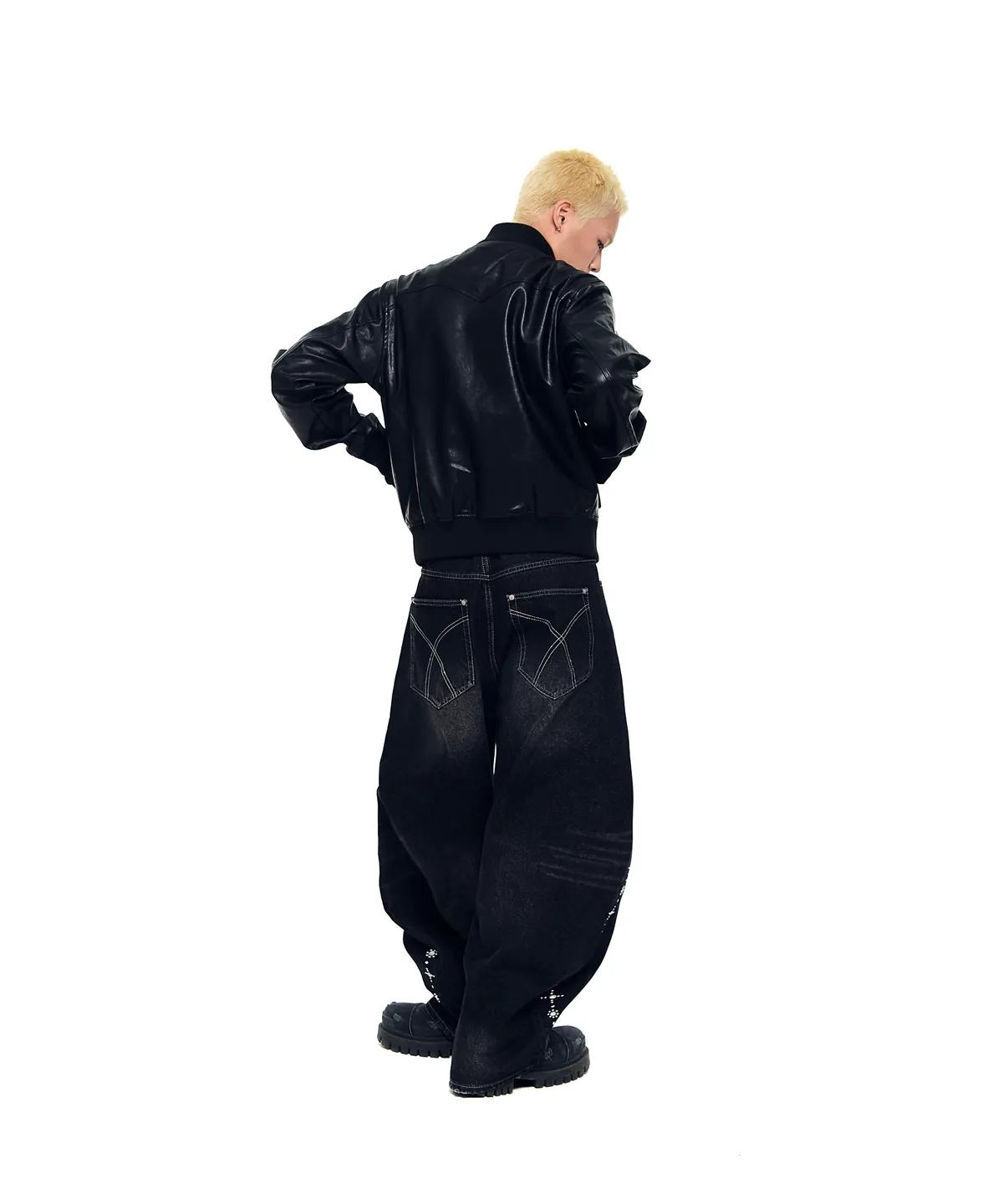
The photographs with black wide trousers and the collar fastened show how much the zips and surface stand out when colour is reduced. Black-on-black may seem straightforward, but differences in sheen, depth of colour and fabric thickness mean the pieces rarely form one identical plane. Matte denim or cotton trousers beneath this jacket make that distinction clear in a natural way. Combining it with another strongly glossy fabric is a more emphatic choice. For a first everyday outfit, matte trousers provide an easier reference point: you can see the shell’s texture without making the entire look depend on shine.
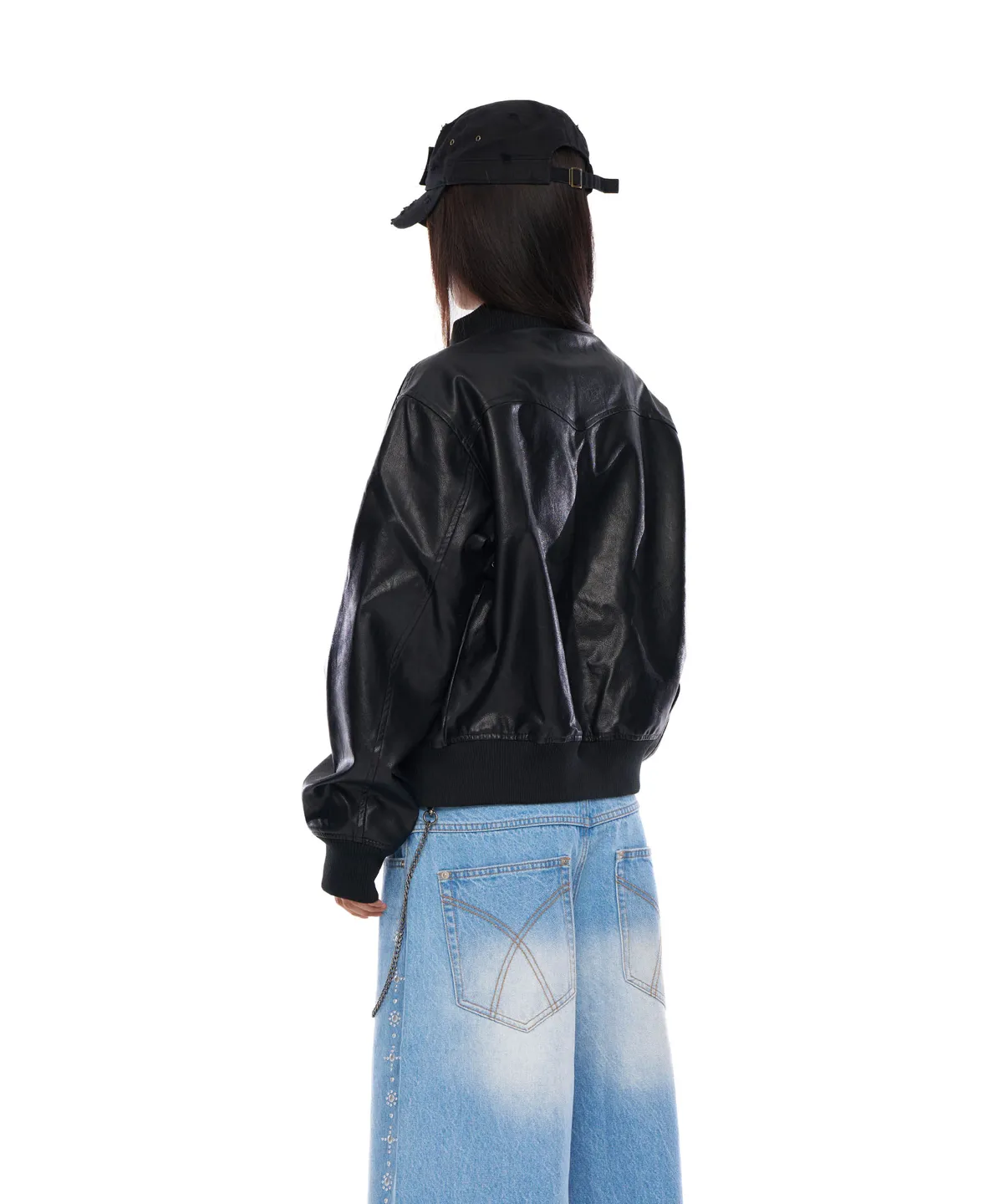
Check the silhouette from the side and back as well as the front. Panel seams, sleeve folds and the volume above the ribbed hem shape the rear view; this is not a design that relies on a huge back logo. With a small crossbody bag, notice where the strap crosses the chest zips. With a backpack, consider whether sustained pressure around the shoulders feels comfortable. Black shoes can continue the dark vertical line, while deep grey shoes gently separate the base of the outfit. There is already considerable metal detail on the jacket, so the amount of additional jewellery can remain a deliberate personal choice rather than an automatic requirement.
Bringing in tailored trousers or a skirt
To move beyond denim, consider charcoal or dark grey trousers with a relatively clean front. The jacket’s lower flap pockets create volume near the waist, so check whether prominent trouser pleats also spread at the same level. A fine knit or plain T-shirt underneath and loafers or understated trainers can bring the hardware into an everyday setting. These are styling suggestions rather than claims that an unpictured combination was photographed or personally tested. A familiar pair of trousers is a useful starting point because you can judge the change caused by the jacket instead of trying to assess several unfamiliar garments at once.
With a skirt, compare not only length but also where fullness begins at the waist. A straight midi shape contrasts with the short jacket, while a flared skirt adds volume to an upper half that already gathers at the hem. The stopping point of that ribbing therefore matters. Opening the jacket slightly to reveal another colour can separate the upper and lower sections. You do not have to limit yourself to cropped inner tops, but several long hems can complicate a front already filled with pockets and zips. Keep one familiar skirt and vary the inner-layer length first; that makes the effect of each adjustment easier to see.
Choose layers around your actual day
The high collar surrounds the neck, but this alone does not establish the jacket as deep-winter clothing. Wearing it over a thin T-shirt, adding knitwear and spending a long time outside are different situations. Rather than assigning a universal temperature range, think about your own sensitivity to cold and your mode of travel. On a day with frequent indoor stops, check whether the open front hangs naturally and whether carrying the removed jacket is manageable. These are questions to answer with the actual garment. An untested assumption about warmth should not become the main reason for choosing it for a particular season.
A hoodie first adds bulk around the shoulders, underarms and the point where its hood exits behind the collar. Plenty of chest width does not guarantee space for every hoodie thickness. Start with a thinner hooded layer or a low-neck knit, and avoid crowding a fastened collar with a bulky scarf. If you often carry a work bag or camera bag, consider its strap width and usual load during your fit assessment. A short jacket can suit one routine better than another, so look at your existing inner layers and daily movements together. This is more useful than choosing a size only to imitate a styled photograph.
Compare it with the black jackets you already own
A biker jacket built around a diagonal zip and broad lapels frames the neck differently. Here, the central zip and stand collar establish symmetry, with the chest pockets adding horizontal lines. Your choice depends partly on whether you want an open, wide neckline or a contained upright collar when fastened. The gathered cuffs and hem give this piece a clear blouson character, but its reflective shell and pocket arrangement differ from a smooth nylon bomber. If you already own a black blouson, identify the actual new element you would gain: the collar, the surface or the front-pocket composition, rather than just another black outer layer.
With wool outerwear, the comparison is better framed around texture and care than a universal ranking. If you want a soft matte surface, this jacket’s sheen represents a different direction; if you want leather-like visual tension, that difference may be the appeal. When comparing with natural leather, assess composition, weight, permitted cleaning methods and repair support separately instead of letting price alone stand in for quality. Try naming three pairs of trousers and two pairs of shoes you already own that would work with it. That concrete exercise predicts usefulness more clearly than simply finding the product photograph attractive.
Read the care label before choosing a cleaning method
The product information checked does not establish a specific cleaning method for this jacket. It would therefore be wrong to label it hand-washable, machine-washable or dry-clean-only by assumption. Read the sewn care label on the delivered garment first, and ask the brand with the product code if any instruction is unclear. Do not assume a natural-leather oil or conditioner is suitable for this synthetic shell. If a stain appears, repeatedly rubbing it or experimenting with different detergents may create a new problem; first establish the appropriate treatment for both the surface and the lining.
For storage, reduce sustained crushing and contact with sharp objects. A hanger that supports the shoulders and some space around the garment are practical starting points. Leaving it folded beneath heavy luggage can put unnecessary pressure on the surface. Follow the label for drying as well, and avoid bringing a hot appliance close or placing an iron directly on the shell in an attempt to speed things up. Empty the pockets and check around the zips and snaps for trapped debris before putting it away. Specific care instructions must come from the garment’s requirements, not from the broad material name or a routine borrowed from a different jacket.
A final check before ordering
Before ordering, confirm the black colour, product code and selected size 1 or 2, then reread the current price, dispatch schedule and return terms on the seller’s page. An old preorder heading or promotional price may no longer describe the present order. Measurements and model details narrow the choice, but if option names differ between sellers, clarify the intended item before paying. On arrival, inspect more than surface marks: check zip alignment, the snaps, pocket interiors and sleeve ends in good light. This gives a concrete basis for deciding whether the delivered garment matches the condition and specification you expected.
The most useful outfits start by acknowledging the high collar and short length, then keeping some of the surrounding pieces simple. Light denim creates contrast; matte black trousers separate textures; inner-layer length and the degree of zip opening change the overall impression. If you need a long jacket that covers the hips, or only feel comfortable in a low neckline, another shape may suit your routine better. Understand the synthetic composition, accept the substantial length difference between sizes and test the connection with trousers you already wear often. Those choices make the decision more durable than relying on the mood of a single fashion image.
A little closer to Korea.
Thank you for reading.