A beach worth more than a sunset stop
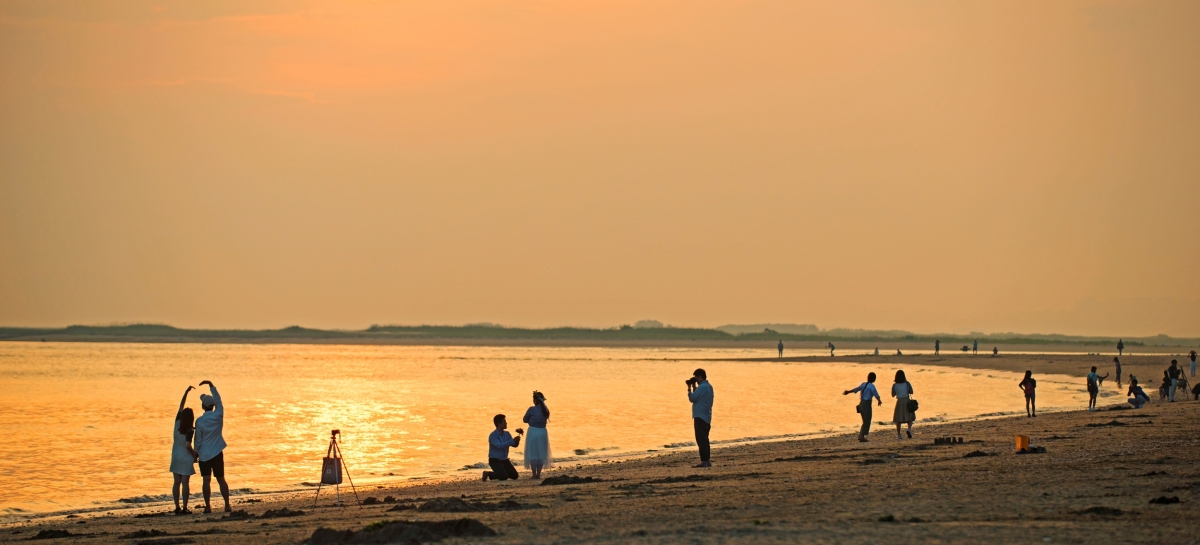
Dadaepo Beach deserves more than the few minutes when the sun disappears. Walk from the metro through the park and onto the sand, and the sky opens beyond the buildings while the waterline can seem surprisingly far away. People move at different speeds here: some follow the shore, others sit on dry sand, and others stop to watch light lingering where the water has retreated. Rather than collecting a sequence of designated photo spots, move between the park, the sand and the edge of the sea, comparing the scale and texture of each. Let sunset be the closing scene of that visit, with enough time beforehand to understand the setting.
Allow a generous journey if you are coming directly from Busan’s eastern beaches. Dadaepo lies in Saha-gu, on the western side of the city, and treating it as a quick extra stop near Haeundae can leave much of the outing devoted to travel. For a first visit, plan roughly two hours around the beach and Gouni Ecological Trail. With half a day, add either Molundae or Amisan Observatory. These are suggested arrangements, not fixed tour durations; adjust them to your pace and breaks. Giving yourself time to sit down before sunset is more rewarding than squeezing every nearby attraction into the same afternoon.
Sand carried by the river, a shore reshaped by the tide
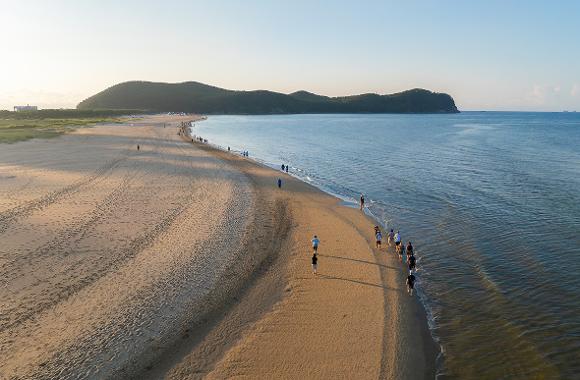
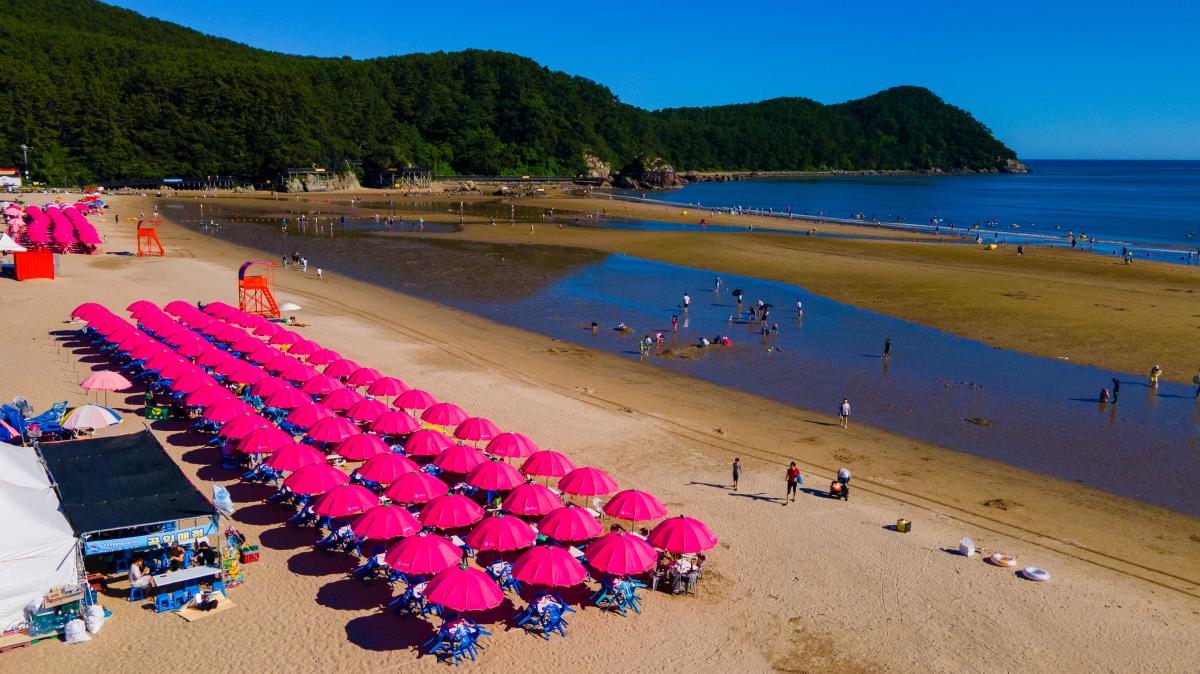
Dadaepo’s position near the Nakdong River estuary explains its expansive sand. Sediment carried downstream accumulated along this coast, while incoming and outgoing water changes the band between land and sea. The western beach is described as approximately 850 metres long, but its breadth can make the stronger impression when you arrive. From the same place, the water may appear far away on one visit and much closer on another. A photograph therefore records a particular combination of tide and light, rather than a scene available unchanged at a fixed hour. Look at the conditions in front of you instead of trying to reproduce a familiar image exactly.
Compare the surfaces as you walk: pale dry sand reflecting the sun, damp ground holding clear footprints, and thin sheets of water mirroring the sky. Each can create a different composition without requiring a long walk towards the sea. Exposed flats are not automatically safe paths, and shallow-looking water in an estuary remains part of a changing tidal environment. Stay within the permitted access areas rather than following a strip of uncovered ground indefinitely. Even close to the usual walking area, the differences in colour, texture and reflection reveal a beach that is being redrawn. This is an engaging way to look at the landscape without turning observation into an unnecessary excursion offshore.
Arriving at the end of Metro Line 1
Your destination is Dadaepo Beach Station on Metro Line 1, not the similarly named Dadaepo Harbor Station. From Nampo, Jagalchi, Busan Station or Seomyeon, take Line 1 towards Dadaepo Beach, which makes the area convenient to combine with a western Busan itinerary. Exit 2 is the usual reference point for the walk towards the beach park. Visitor guides give walking estimates ranging from about four to eight minutes. The park entrance and the waterline are different destinations, so allow additional time to cross the grounds and find your preferred stretch of sand, especially on a first visit.
Save “다대포해수욕장” and “부산 사하구 몰운대1길 14” in your map application; the English address is 14, Morundae 1-gil, Saha-gu, Busan. Keeping both the Korean and English station names can also help when asking for directions. Beach admission is free, while parking and other paid services are separate. If travelling with a wheelchair or stroller, follow the station’s lift signs rather than assuming the shortest exit route is the most suitable. Reaching a paved park path and moving over soft sand are very different tasks. Check the return service and any necessary connections for your own destination before settling in for sunset.
West and east: two different Dadaepo beaches
The western beach is the main setting for the broad sands, beach park and Gouni Ecological Trail that visitors commonly associate with Dadaepo. Molundae’s wooded headland frames one side, while water and sand spread across the foreground. Make this your starting point if you are visiting for the first time or coming primarily for a late-afternoon walk. As well as looking straight out to sea, turn along the shoreline and notice its curve. Footprints nearby, the changing water’s edge and the distant trees create layers of depth that a simple horizon photograph may not capture. You need not cover the entire beach to appreciate this arrangement.
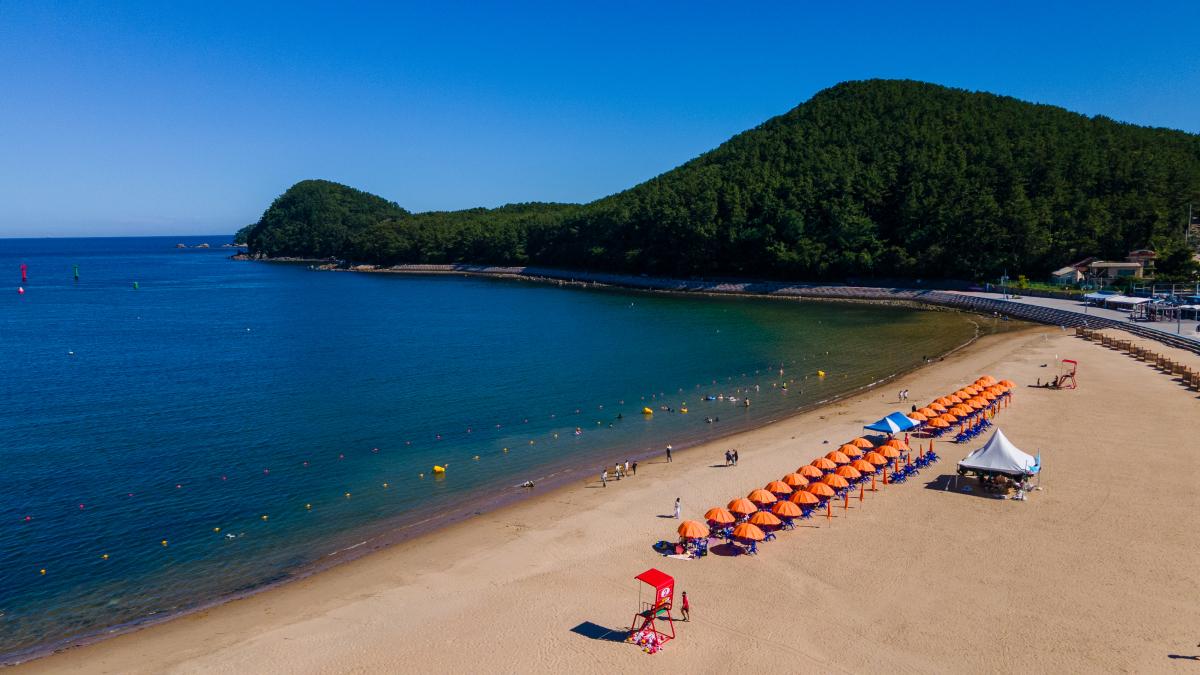
The eastern beach is a separate stretch on the other side of Molundae. Both the eastern and western beaches operated for the 2026 bathing season from 1 July to 31 August, a useful correction to older descriptions that discuss the eastern shore only as closed or undergoing restoration. Their shared name does not mean you can simply continue across the western sands and arrive directly on the eastern beach: they sit on opposite sides of a wooded headland. Check each entrance and the connecting route on a map. For a short visit, enjoy the western side properly; compare the eastern shore when you have additional time rather than making it a compulsory detour.
Slowing down in the beach park
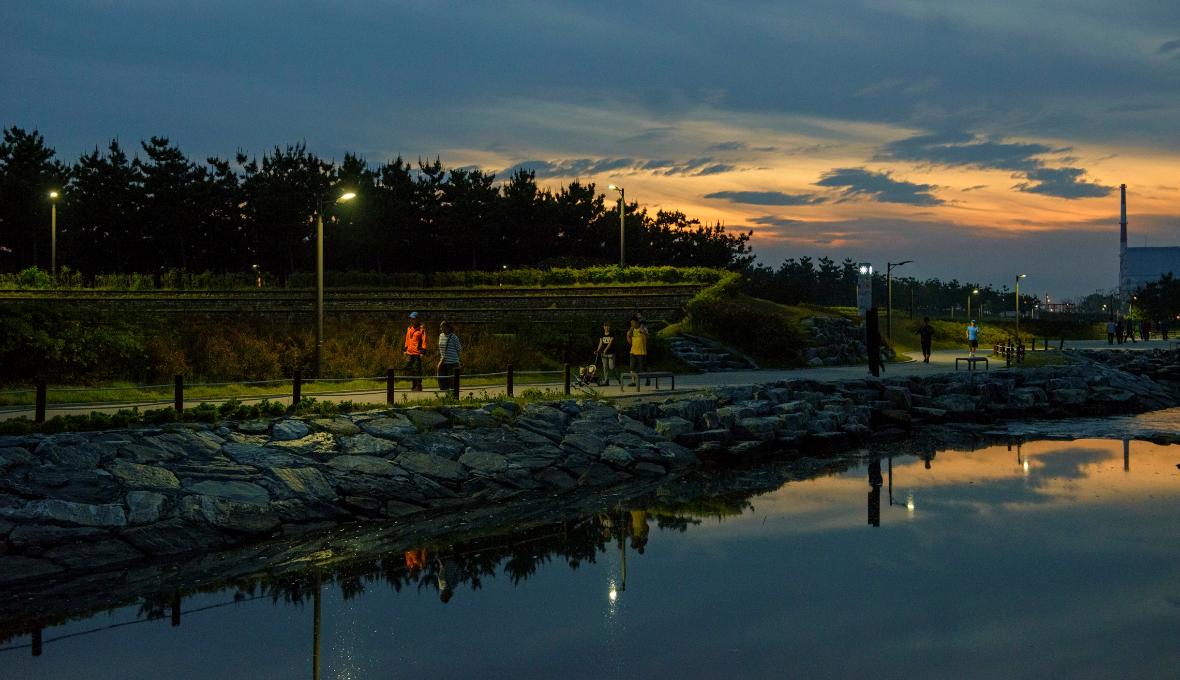
Created in 2015, Dadaepo Beach Park is more than a space to hurry through on the way to the sea. Lawns, paths and a seawater channel give the area behind the beach its own character. Around the channel, low stone edges and trees reflected in the water make quieter compositions than the open shore. Alternating between the sea’s broad horizon and this more intimate waterway adds variety to a walk. After spending time on the sand, use the park for your return route. Even when covering a similar distance, a different setting makes the journey feel less repetitive and gives the visit a more gradual finish.
The park is useful when companions want different things from the afternoon. Agree on a meeting point if some people want to walk on the sand while others prefer a paved path or a rest. With children, it can provide a break between longer crossings of the beach. Toilets, foot-washing points and showers are among the facilities, but do not assume every service operates in the same way throughout the year. In particular, confirm the day’s arrangements for seasonal showers and rental facilities. Taking a moment to remove sand and sort out footwear before returning to the park makes the onward walk to a café or the station more comfortable.
Looking closely at the wetland on Gouni Ecological Trail
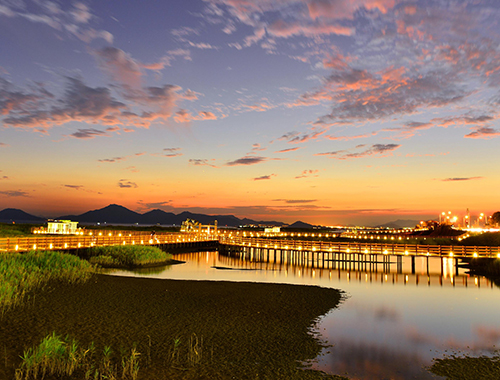
Gouni Ecological Trail takes you through Dadaepo’s wetland on wooden decking. After looking across the sea, your attention shifts towards reeds, water margins and small movements beneath the walkway. What appears from a distance to be a single reed bed becomes a mixture of leaning stems, patches of water and traces of wind. Pause to listen, or look down at the near landscape before lifting your gaze again. The interest lies in observing the habitat available that day, rather than expecting a particular animal to appear on cue. This change of scale makes the trail a worthwhile part of the beach visit in its own right.
Evening photographs often show the walkway lights and coloured sky reflected together in the water. Daylight makes the vegetation and structure of the route easier to study, while dusk brings a more subdued palette; each has a different appeal. There is no need to step off the deck into the reeds or throw food to attract birds. In narrow sections, finish your photograph and leave room for others to pass. Follow signs if access changes because of maintenance or water conditions. Likewise, a picture of the illuminated trail is not a promise that its lights will operate to the same timetable every night.
Finding a place before the sunset begins
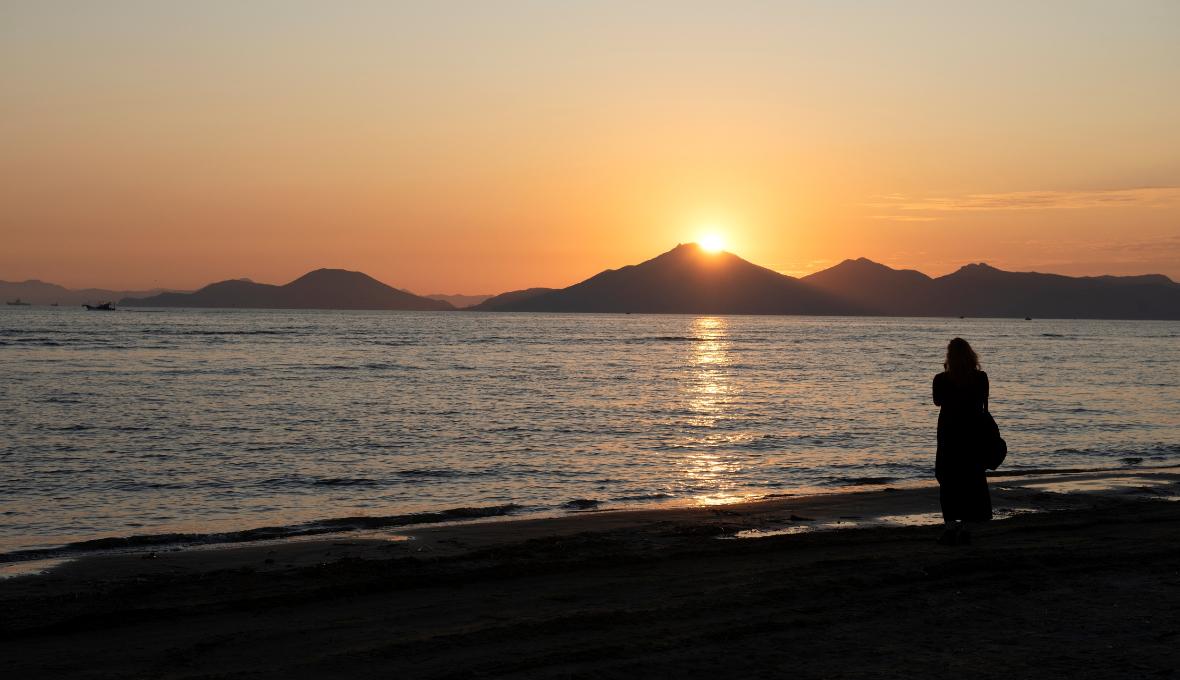
For sunset, aim to reach the beach about 45 minutes to an hour before the sun is due to set. This is a planning suggestion, not an official viewing period: it gives you time to choose a place and watch the light develop. First find an accessible, permitted spot on dry sand or an open walking route, then look at the direction of the sun’s reflection. As it lowers, the same water separates into bright paths and darker bands. Long shadows cast by people nearby can signal the beginning of the evening scene well before the sun itself reaches the horizon.
Do not expect the sun always to drop into a completely unobstructed line of sea. Its position changes with the season and your viewpoint, and distant hills or island outlines can overlap the scene. Thick cloud may hide the sun while the overall brightness changes gradually. On those days, look for overlapping blues and greys, soft cloud edges and the quieter tones of the shore instead of waiting only for a red sky. If one spectacular photograph becomes the condition for a successful visit, the weather ends up judging your trip. Watching the gradual loss of light offers a more flexible pleasure, including on an overcast evening.
Three ways to photograph the beach with a phone
Give your photographs a sense of sequence by alternating a wide view, movement at a middle distance and a close surface detail. Start with a level horizon to show the scale of the beach. Then include a companion walking by the sea as a small figure within the landscape. Finally, frame footprints or a reflection in wet sand for a different sense of the same place. If reflections are hard to capture, try lowering the phone slightly while remaining in the permitted area, rather than continually moving further towards the water. You do not need to put your camera on the sand to change the perspective.
For sunset photographs, slightly reducing exposure against the bright sky can help retain colour, whereas brightening a face may wash out the background. Decide which matters more in that particular image. If you want a portrait with visible expression, try light coming from the side instead of positioning the person directly against the sun. Ask before publicly sharing a close, recognisable image of another visitor, and keep bags and tripods out of the walking route. A composition found from a comfortable, open spot fits the memory of the afternoon better than one obtained by trampling wetland plants or crossing a closed boundary.
Adding the woodland of Molundae
If you would like more than sand and sea, put a Molundae walk before your time on the beach. This wooded headland beside Dadaepo offers a contrast: trees frame the route until a view of the water opens up. The name is associated with a place disappearing into mist and cloud. Cultural heritage sites, including Dadaejin Dongheon and the memorial to Jeong Un, add local history to the landscape. There is no requirement to pass every feature within the woodland for the walk to feel worthwhile. Choose a route according to the remaining daylight and the energy of your group, rather than treating each point as another box to tick.
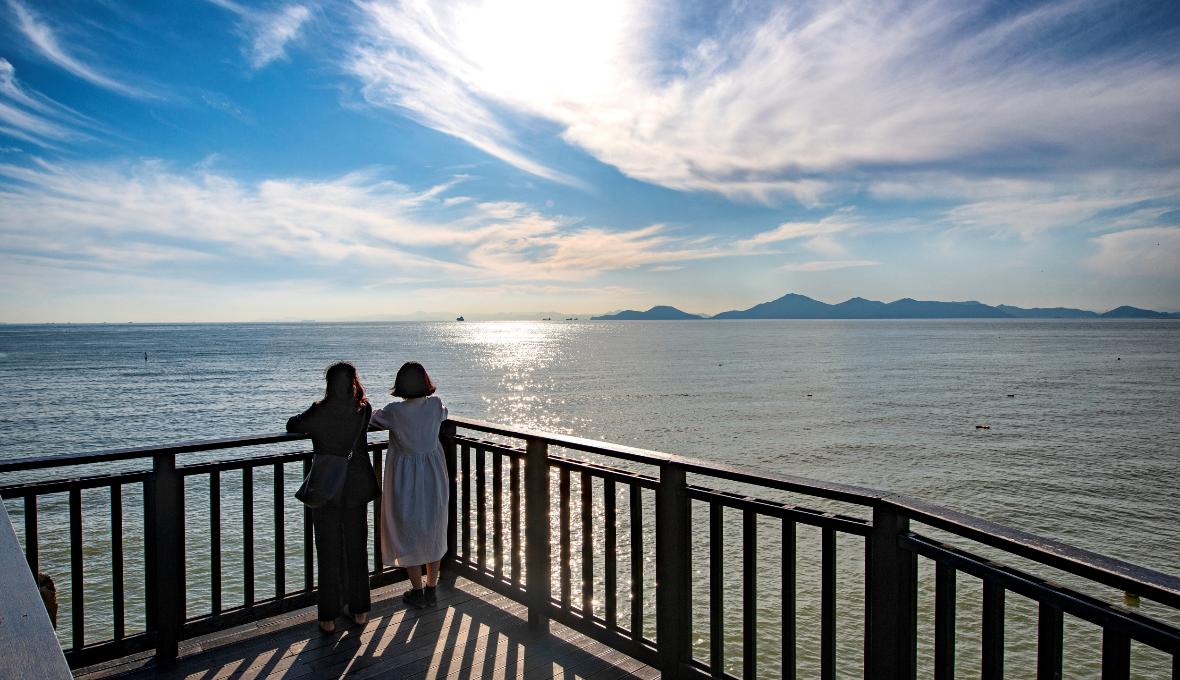
A wooden viewing section on the western coast offers another perspective on the sea. Including its railing and the water in a photograph changes the sense of height and depth from an image taken on the beach. Looking towards Molundae from the sands and then back out to sea from the wooded side is the simple appeal of this combination. If you arrive late in the afternoon, concentrate on the beach and save a longer woodland visit for another day. Steps and gradients in the forest differ from the park’s flatter paths, and a blocked section is not an invitation to improvise a route down over coastal rocks.
Seeing the wider estuary from Amisan Observatory
Amisan Observatory suits visitors who want to understand the larger landscape after seeing Dadaepo’s sand and water at close range. Its elevated view takes in sand islands and channels around the Nakdong estuary, while indoor displays introduce the area’s ecology and formation. Shapes partly hidden by water from beach level become more legible as islands and bands of land when seen from above. The combination encourages you to remember Dadaepo as a place where river and sea interact, as well as a beach with attractive evening light. It offers context rather than simply another version of the same shoreline photograph.
The observatory is separate from the level walking area in Beach Park. Check the route and elevation change, and consider visiting the indoor exhibits first before coming down towards the beach for the evening. Published visiting hours are 09:00–18:00, with last admission at 17:00; Mondays and 1 January are closure days. Check holiday arrangements and special notices before travelling. In seasons with a late sunset, the end of indoor opening hours may not coincide with the moment you want to watch. Rather than forcing both Molundae and the observatory into a tight afternoon, choose between walking in woodland and gaining a broad view of the estuary.
The fountain depends on the season and the year
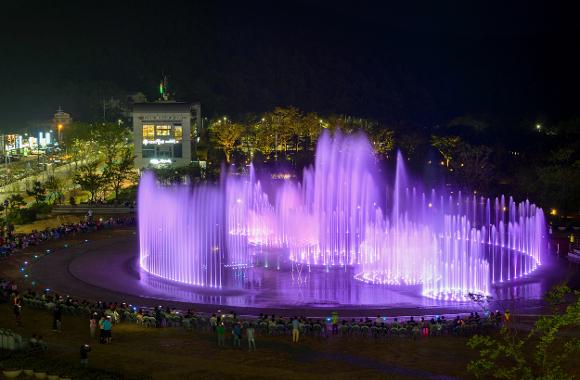
At the Dadaepo Sunset Fountain of Dreams, jets change height and pattern to music and coloured lights. The move from natural evening light to the illuminated plaza can be enjoyable, but this is not a year-round nightly attraction. The 2026 season ran from 24 April to 30 September, ending in September because facility works were scheduled from October. Visitors travelling from October 2026 onwards should therefore not build a confirmed fountain performance into their itinerary. A general description in an older guide saying “April to October” is less useful than the operating notice for the year of your visit.
Under the 2026 timetable, Mondays were closed, including public holidays falling on Monday. From April to August, the musical show began at 20:00, with an additional 21:00 performance on weekends and public holidays; in September, those times moved to 19:30 and 20:30. Each performance lasted 20 minutes. Interactive water sessions followed a separate programme, so do not confuse watching the musical display with permission to enter its jets. For a future season, confirm the new timetable and weather cancellations before arranging dinner around a show. Fountain enquiries are available on 051-220-5896. On non-performance days, the beach and park still provide the basis for an enjoyable evening walk.
Choosing a two-hour walk or a half-day visit
With roughly two hours, walk from the station through Beach Park, establish where the shoreline lies, explore the park and Gouni trail, then return to the place where you want to watch the evening light. You might spend the first 20–30 minutes getting oriented, the next 30–40 minutes on the ecological trail and surrounding views, and the remaining time on the sand or a short shoreline walk. These are flexible suggestions allowing for photographs and rests, not measured journey guarantees. Start with the actual sunset time for your date and work backwards to choose an arrival time; this makes the plan useful across different seasons.
For half a day, begin with either Molundae or Amisan Observatory, pause for food or a café, and continue with Beach Park, the wetland trail and sunset. This separates places best seen in daylight from the later part of the visit. Add the fountain only during an operating season when that day’s performance is confirmed. In winter or during a closure period, dinner after sunset is a perfectly complete ending. Allow extra travel time if adding the eastern beach. Giving up the idea of walking every possible direction leaves real space for conversation and simply watching the water, rather than treating those moments as gaps in an otherwise crowded schedule.
Matching the visit to the season
Summer brings bathing and a livelier beach, but use the designated swimming areas during the authorised season. The 2026 dates should not be carried over automatically to another year, and a general description of shallow water is not a safety guarantee for every location or tide. If entering the sea, follow the flags and lifeguards’ directions; switch to a walk if wind or waves make conditions unsuitable. A small towel and a bag for wet clothing make the return journey easier. For tidal-flat activities, check the available organised experience and permitted area rather than assuming unrestricted collecting is part of every beach visit.
Spring and autumn leave more room for walking and observing the landscape. In winter, arrive earlier to account for shorter days and plan for the wind. Clothing chosen only for the daytime temperature may feel inadequate while standing still at sunset, so bring a light windproof layer or something to put on over your clothes. Wooden decking can be slippery after rain; stop walking before reviewing photographs. With children, agree on a meeting place in the park. If a companion finds long walks difficult, reduce the sand crossings and use a park-focused route. A shared visit does not require everyone to cover exactly the same distance.
Leaving time for a meal and the journey back
Look at menus and prices before choosing somewhere to eat near the beach. Hoe means raw fish, so visitors who prefer cooked food should ask about alternatives such as spicy fish stew or grilled dishes. Ingredients, spice levels and whether a stew is included with a fish order vary by restaurant. Explain allergies or dietary restrictions in short, clear terms, using a translation app if needed; do not infer every ingredient from a photograph on a Korean menu. If sunset matters to you, place a leisurely meal before or after it. A drink or a simple snack can bridge the waiting period without turning dinner into a race against the light.
Before leaving, remove sand from your shoes and return along the park’s well-lit paths towards the station. Beach enquiries are on 051-220-4912, and the Korean address to save is 부산 사하구 몰운대1길 14. A memorable Dadaepo visit does not require every performance or the reddest possible sky. Its character emerges from walking over river-borne sand, looking closely at the wetland from the deck, considering the meeting of woodland and sea, and waiting as the evening changes. Protect a little time at the end of the trip. The pleasure of a beach where you can stay without immediately rushing to another attraction may be what makes you want to return.
Reviews 1
A quiet sunset
Public visitor review summary
I enjoyed a peaceful sunset among local walkers, despite the lengthy metro journey.
A little closer to Korea.
Thank you for reading.