A different side of Busan, close to Seomyeon
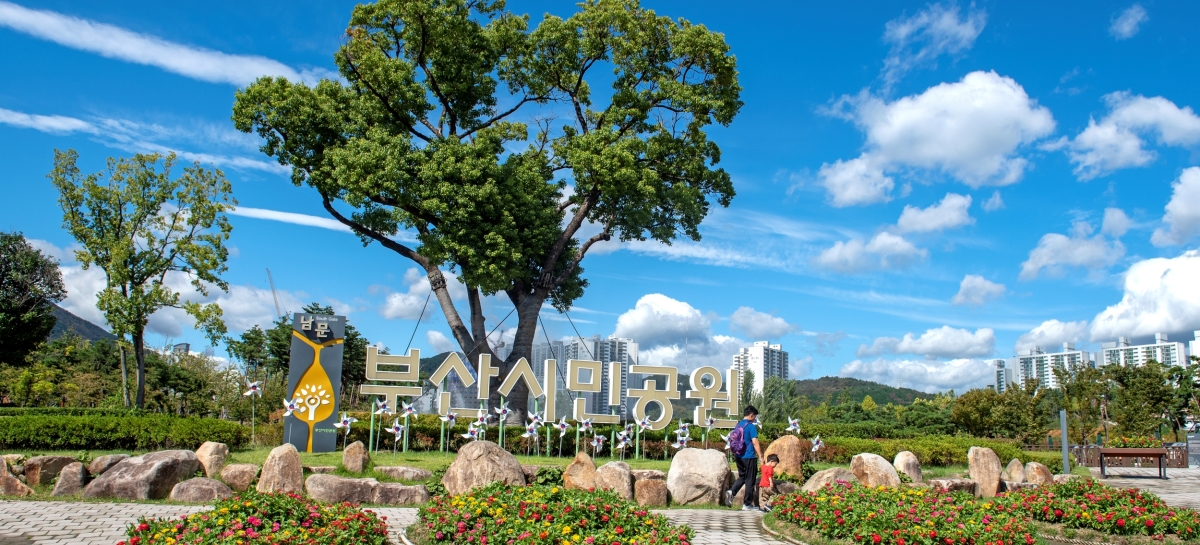
After several days of beaches and coastal viewpoints, Busan Citizens Park offers a change of pace. Around 470,000 square metres of green space unfold beside the everyday neighbourhoods of Bujeon and Seomyeon. Families unpack lunch on the grass, walkers follow the shade, and visitors head towards small creative workshops. The park’s strongest impression comes less from a single landmark than from something ordinary: people spending time freely on land that was inaccessible to them for many years. This is a place to notice how a city lives, as well as how it remembers.
For a first visit, choose the main lawn, the history museum and one appealing tree-lined path instead of trying to cover every corner. Allow roughly 90 minutes for a selective walk or half a day for exhibitions and unhurried breaks. These are suggested itineraries, not official visiting times. Admission to the park is free, but workshops and concerts may require separate bookings or payment. A free public park does not mean that every building opens at the same time or every activity is included. Separating the outdoor walk from any booked programme makes planning much easier.
Arriving from Bujeon Station
Metro Line 1’s Bujeon Station is a useful starting point. The park operator directs visitors to Exit 7; travellers arriving on the Donghae railway line should use Exit 2 of the railway station. These are different stations with different exit systems despite sharing the Bujeon name, so check the line as well as the station name. From Seomyeon, Bujeon is one stop away on Line 1. On a hot day, or when carrying bags, using the station closest to your approach is more comfortable than adding a long walk through Seomyeon’s shopping streets.
Search for Busan Citizens Park, or 부산시민공원, in your map app, then choose an entrance near the part you want to visit. A pin placed in the middle of such a large park can leave a substantial walk after you think you have arrived. At the entrance, locate the museum, lawn, toilets and your intended exit on the overview map. This prevents unnecessary backtracking later. Adapt the route below to the areas actually open on the day. The park’s address is 73 Simingongwon-ro, Busanjin-gu, Busan; saving the Korean place name can also help when asking for directions.
From racecourse and military base to public park
This green expanse was not always a park. Land once occupied by homes and fields changed use under Japanese colonial rule, and a racecourse opened here in 1930. War and military occupation subsequently reshaped the site, which became home to the US military’s Camp Hialeah. Low buildings and mature trees offer clues to those earlier uses. Hialeah, still present in the name of the central lawn, is therefore more than an unusual label. It recalls a previous identity of the land and encourages visitors to look beneath its present-day appearance.
A citizens’ campaign for the return of the site gathered momentum in the 1990s. The base closed in 2006, the land was returned in 2010, and the park opened on 1 May 2014 after redevelopment. These are distinct stages: the departure of the military did not immediately create a public garden. Today’s paths, cultural spaces and lawn reflect the subsequent question of how that returned land could be shared. Keeping that sequence in mind changes the walk. Even an apparently ordinary tree can become part of the story of how Busan has transformed over time.
Read the landscape through the history museum
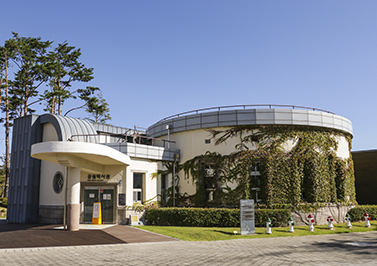
The Busan Citizens Park History Museum occupies the former officers’ club. Looking at the building before entering helps connect its present function with its earlier life. Inside, follow the broad progression from racecourse to military base to public reclamation rather than rushing to absorb every exhibit. Relating the records to buildings you have just passed gives the outdoor walk a more specific sense of place. Ordinary admission is free. The museum generally opens from 09:00 to 18:00, with last entry at 17:00, so arriving near the park’s evening opening hours will not give you access to the exhibitions.
Regular closures are Mondays and 1 January; when Monday is a public holiday, the following day is closed instead. There is also a special exhibition-change closure from 2 to 16 November 2026. Permanent galleries are scheduled to reopen on 17 November, excluding the circular room, with the whole museum reopening on 24 November. During this period, do not make an indoor visit essential to your walk. The museum and outdoor park operate separately. Confirm any reopening changes before travelling; the contact number provided for this closure is 051-888-6851. A visit to the exterior can still help explain the site’s history.
Preserved trees and the Pillars of Memory
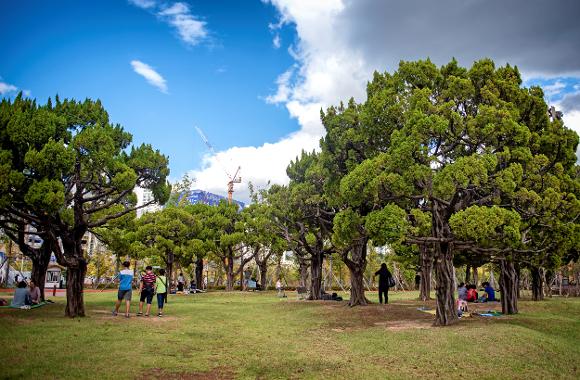
The Memory Forest retains more than 90 plane trees from the former base. Their shade does more than make a newly landscaped park comfortable. Trunk widths and spreading branches remind visitors that living things occupied this ground long before the park opened. There is no need to invent a story for each tree: read the interpretation about preservation and consider the relationship between the old site and the paths now running through it. A short rest here becomes a pause within a longer urban history, rather than simply another stop beneath attractive foliage.
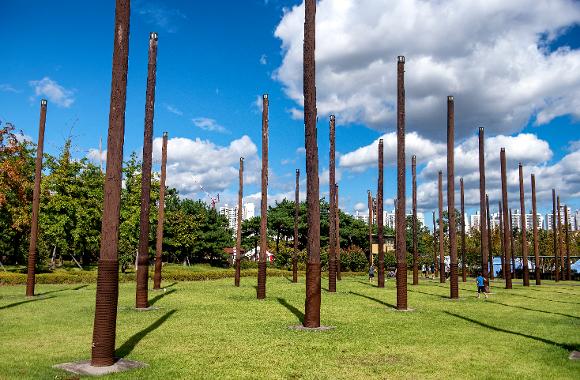
The Pillars of Memory reuse wooden utility poles from the base. Objects that once carried electricity now remain as visible traces of daily infrastructure. Their tall, narrow forms make a striking photographic subject, but knowing their former purpose adds interest beyond their appearance. Frame the gaps between the poles and the sky, leaving other walkers room to pass. Looking at these reused materials alongside newly planted trees reveals an important aspect of the park: parts of the past have been incorporated into its present, instead of every trace being cleared away before a new landscape was built.
Choose a tree-lined walk by mood and season
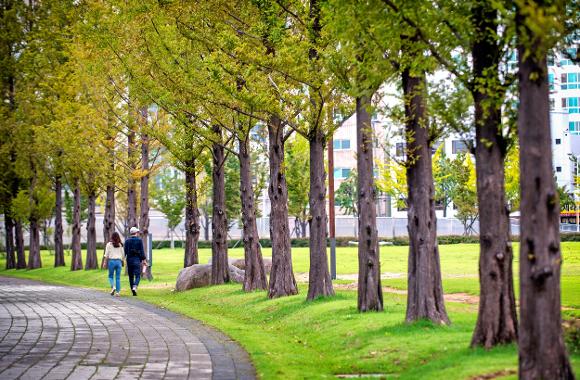
The park is organised around five themes: memory, culture, pleasure, nature and participation. Different trees, including ginkgo, zelkova, cherry and pine, give the paths changing textures. Completing all five themed routes is unnecessary. Choose deeper shade on a warm day, or a path with a strong rhythm of trunks when you want to take photographs. The approximately 300-metre metasequoia avenue creates an appealing sense of perspective. The cherry-tree walk beside Bujeoncheon offers another option, combining seasonal foliage and blossom with the quieter interest of a waterside route.
Spring blossom, dense summer greenery and autumn colour transform the same paths. Flowering and peak foliage vary from year to year, so a particular date cannot guarantee the scene in a photograph. In winter, the structure of the trees and the city beyond become more apparent. When taking pictures, step to the side rather than blocking the middle of a walkway for a prolonged shoot. The transition from enclosed tree-lined paths to the open lawn is itself worth noticing. That shift in scale gives an otherwise simple stroll a satisfying rhythm without requiring a long list of attractions.
Make time for the Hialeah Lawn
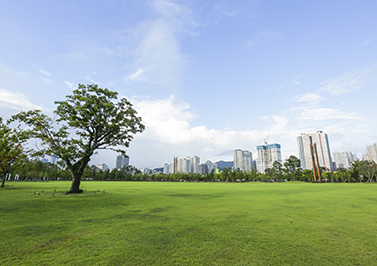
The roughly 40,000-square-metre Hialeah Lawn makes the park’s spaciousness tangible. Its open centre and the edges near tree shade offer different ways to settle in. Water, a small picnic mat and a simple packed lunch are enough for an extended break without much walking. Check the entrance notice before stepping onto the grass, and collect small scraps of packaging as carefully as larger rubbish. Five wooden lighting towers, each 26 metres high, stand around the lawn. Besides contributing to its appearance, they are useful visual markers when you need to regain your bearings.
The lawn normally opens from April through the following January, closing on Mondays; if Monday is a public holiday, Tuesday becomes the closure day. It is fully closed in February and March for grass protection, with additional restrictions possible because of weather or turf condition. Ball games and pets are among the restrictions within the lawn, so distinguish its rules from those applying elsewhere in the park. A closed lawn need not cancel a walk along surrounding paths. If a picnic is the main purpose of your visit, check access first and be ready to use benches and shaded paths instead.
Ponds and fountains follow a seasonal timetable
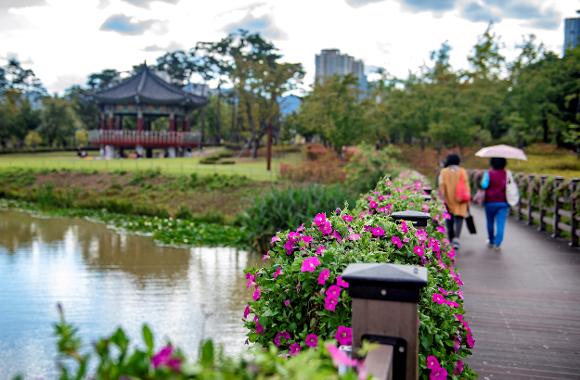
Waterside paths reveal another side of the park, bringing flowers, trees and reflections into the same view. Sky Light Waterfall pairs a tall structure and falling water with Mirror Pond, creating a more open scene than the wooded walks. The musical fountain adds movement for those who time their visit to a session. However, the flowing water shown in promotional photographs is not a year-round promise. The park’s opening hours and the actual operating times of its water features are different, an important distinction when deciding whether to wait for a display.
Sky Light Waterfall and the musical fountain normally operate from April to October, excluding Mondays; weekday operation is also suspended in April. During the operating season, musical-fountain sessions are scheduled for 12:00, 15:00, 18:00 and 21:00 on weekdays, and 11:00, 13:00, 15:00, 17:00, 19:00 and 21:00 on weekends and public holidays, lasting 25 minutes each. Rain, strong wind or maintenance can change this, so follow notices on site. From November onwards, plan around the waterside landscape and trees rather than a fountain performance. Still winter water has a different appeal from the activity of a summer display.
Slow down in the Culture and Arts Village
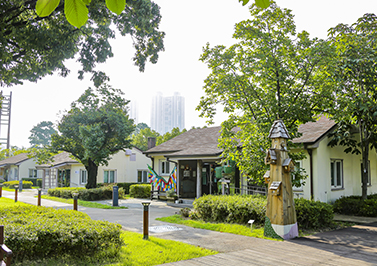
The Culture and Arts Village adapts former non-commissioned officers’ accommodation into creative spaces and workshops. Its low buildings contrast with the scale of the central lawn. Studios working with materials such as wood, clay and textiles suggest another way of spending time here beyond walking and taking photographs. Making something can leave a small, tangible memory of the trip. Even without joining a session, looking at the exteriors prompts an interesting question: how can an area once used for accommodation become a place where new work is created and shared?
These are working cultural spaces, not booths offering every activity on demand. Check the date, starting time, duration, fee and booking requirements of any programme that interests you. International visitors should also ask about the teaching language and whether the activity is easy to follow through demonstration. For pottery or other work requiring later processing, establish whether you can take the result away that day. If collection would fall after your departure, a different material may suit your itinerary better. Once a workshop is booked, shorten the walks around it rather than arriving rushed and missing the pleasure of making something.
With children: sand and play within the city
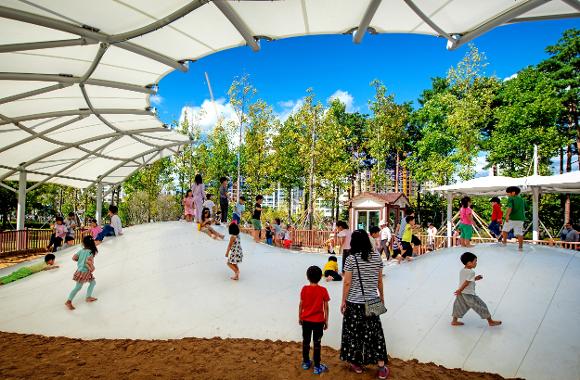
The Urban Beach provides sand without a journey to the coast. It is a play space inside a park, not a seaside beach with incoming waves, and that distinction helps set expectations. Children may happily spend a long time digging or making small shapes, so there is little reason to force the visit into an adult walking schedule. Look for the shaded areas and bring drinking water, spare clothes and a small towel for brushing away sand. A slow family visit can be built around this one activity rather than a series of compulsory sightseeing stops.
Choose play equipment according to the age guidance and instructions displayed on site, and accompany younger children. Short links between the sand, shaded paths and an accessible section of lawn can provide enough variety. Water-play facilities have separate seasonal arrangements and should not be assumed to operate whenever the sand area is available. With a pushchair, use firm paved paths as the main route and assess grass or sand separately. Knowing the nearest toilets and the exit you will use when everyone gets tired is usually more helpful than adding one more well-known corner to the itinerary.
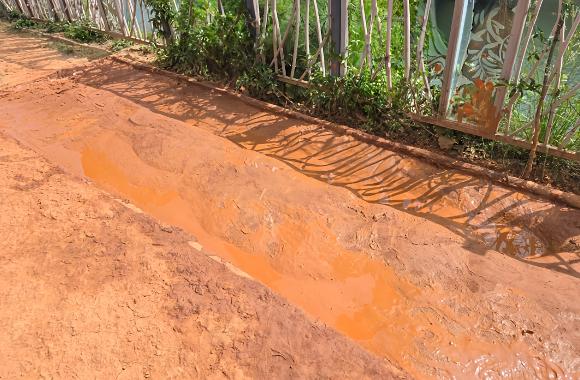
A barefoot pause on the red-clay path
The barefoot red-clay path offers a change in sensation after paved walks and broad lawns. Softer, moist earth and firmer sections feel different underfoot. If this kind of space is unfamiliar, first look at the surface and the direction in which others are moving, then try only a short stretch. Treat the experience as a chance to notice the texture of soil, rather than as a special medical treatment. Foot-washing facilities and a place for shoes are provided nearby, making it possible to include a brief trial without turning it into the whole purpose of a park visit.
Conditions change after rain and in cold weather, so decide whether to use the path when you see it. Bring something to dry your feet and suitable footwear to put back on; the ordinary walking paths remain a good option if barefoot walking is uncomfortable. Avoid leaving bags unattended far away or occupying the washing area for longer than needed. Include time for rinsing and getting ready again, not just for walking on the clay. Allowing this small practical margin keeps an appealing optional activity from creating a rush to your next booking or train.
From a fan photograph to an evening concert
The park is also known as a place where BTS member V visited and took photographs. For fans, an otherwise everyday tree-lined path can therefore become a destination in its own right. Follow local guidance if you want to find the viewpoint, while leaving time to discover scenes of your own. A small figure among tall trees, sky between the Pillars of Memory, or the city rising beyond the lawn all convey something distinctive about the park. Adjust your framing so other visitors’ faces do not dominate the picture, and keep shared paths open while you take it.
An evening plan can include Busan Concert Hall, which opened on 20 June 2025 inside the park. The classical-music venue makes it possible to connect an outdoor afternoon with a performance. Concert schedules, tickets and admission conditions are separate from park access, so choose and check a performance first. Do not assume the auditorium can be freely toured on days without a concert. If you have booked a seat, leave the lawn with enough time for admission. Confirm the venue name and address as well: Busan Concert Hall here and Busan Opera House in the North Port area are different destinations.
Suggested walks: 90 minutes or half a day
For around 90 minutes, orient yourself at the entrance map, combine a tree-lined path with the Hialeah Lawn, then add either the Pillars of Memory or the museum exterior. One possible allocation is 15 minutes for finding your way and approaching the main area, 35 for the trees and lawn, 20 for a historical feature, and the remainder for resting and returning to an exit. This is a flexible suggestion, dependent on walking pace and the entrance chosen. Trying to add a timed fountain display and a full exhibition visit can make the same short outing feel unnecessarily hurried.
With half a day, start at the museum when it is open, continue through the Memory Forest and the pillars, rest near the lawn, then choose the arts village or a waterside walk. Rearrange that order around a booked workshop; families might shorten the historical stops and allow more sand-play time. A meal afterwards in the Bujeon or Seomyeon neighbourhoods connects the park with the surrounding city. Staying in one area before choosing a restaurant or café offers a different rhythm from squeezing several beaches into a day. If you remain after sunset, check the last train from the station you intend to use.
Practical details for a comfortable visit
The park generally opens from 05:00 to midnight, with free admission. Its main enquiry number is 051-850-6000. Packed food is allowed, but cooking, alcohol and smoking are prohibited; bicycles, motorcycles, boards and skates are also restricted under park rules. Keep dogs leashed, collect their waste and check areas such as the lawn where pets are not permitted. Small shade shelters are not allowed at any time of year without conditions: the usual permitted season is mid-April to the end of October, from sunrise to sunset, subject to size and open-side requirements. A simple mat is less cumbersome to plan around.
Wheelchair and pushchair users should check the route between their chosen entrance and destination. Facilities are available, but the entire park should not be assumed to be completely level; a different path may work better where slopes or surfaces change. Prioritise shade and breaks during extreme heat, and verify indoor opening before relying on buildings in wet weather. Operational details here were checked in October 2026. Follow notices for your visiting date when exhibitions, lawn care or other arrangements change. The park is best understood at a pace that leaves room to stop, rather than as a checklist to finish.
Reviews 1
Park and history
Public visitor review summary
I liked paths and outdoor art, and recommend the museum for the park’s history.
A little closer to Korea.
Thank you for reading.