A hill where Nampo slows down
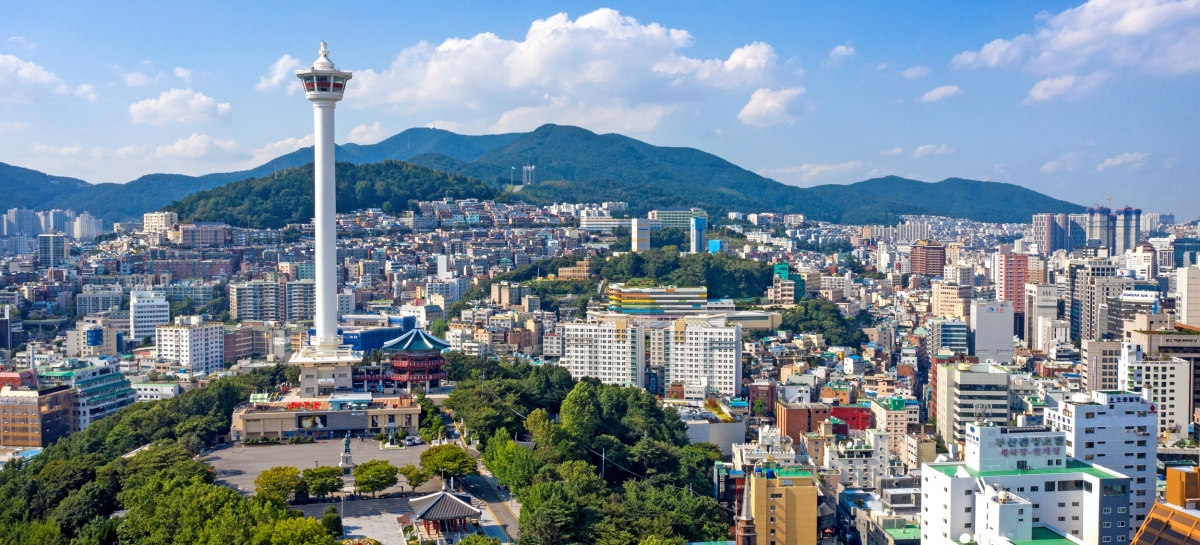
Walk away from the shopfronts of Gwangbok-ro and up to Yongdusan Park, and the city changes scale. At street level, signs and windows compete for attention; on the hill, trees, monuments, a bell pavilion and the tower become your landmarks. This is a pause within Busan’s older commercial centre, conveniently placed between a market visit and a meal. It does not require the long journey of a coastal excursion, but reducing it to a quick photograph of the tower misses much of what makes the place interesting.
Start by separating the free outdoor park from the ticketed Busan Tower. The flower clock, Citizens’ Bell, Admiral Yi Sun-sin statue and shaded paths can form a satisfying walk without an observatory ticket. Add the tower if you want to understand the harbour from above. A clear afternoon, a brief visit in unsettled weather and an evening among city lights offer quite different experiences, so decide which matters most before building the rest of your day around it.
Allow roughly 45–90 minutes for the park and extra time for the tower queue and visit. This is a planning suggestion, including pauses and photographs, rather than a fixed tour duration. Even for a quick walker, the route uphill and the route back down are not identical. If you have luggage, a stroller or someone who finds steps difficult, think about the return journey before leaving the shopping streets, rather than only after reaching the plaza.
Coming up from Gwangbok-ro and getting back down
Nampo Station on Metro Line 1 is a useful starting point for the approach through Gwangbok-ro. From the direction of exit 7, walk into the shopping street and look for Yongdusan Park signs and the escalator entrance. Walking from exit 1 of Jungang Station is another option. With either station, avoid treating a straight line on a map as a reliable walking time. Crossings, gradients, crowds outside shops and stops for children or photographs all affect the journey.
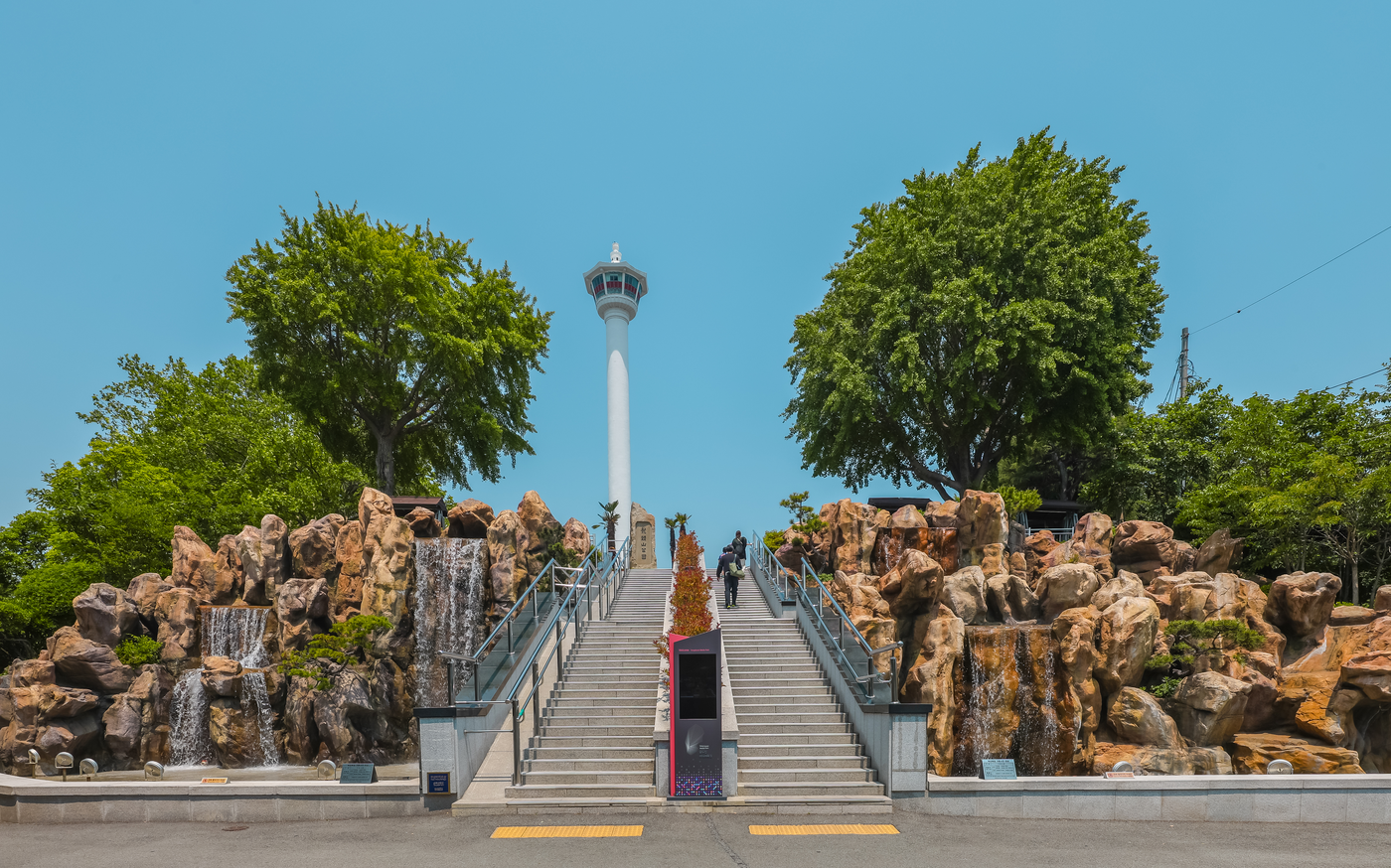
The escalator occupies the middle of a stairway over a roughly 87.3-metre approach and runs towards the park only. The official facilities guide lists round-the-clock operation, although maintenance and local restrictions can change availability. The crucial detail is that this is not a down escalator: the return on this approach uses stairs. Visitors with sore knees or bulky bags should check an alternative road approach and their onward transport beforehand. An escalator entrance does not establish a step-free route through the whole park.
A dragon’s head and the layers of the hill
The name Yongdusan is associated with the hill resembling a dragon’s head rising from the sea towards the land. An earlier name, Songhyeonsan, referred to its pine-covered character. Dense development now makes the original shape difficult to read at a glance, but the position of this modest hill above the harbour and old town remains clear. Thinking about that relationship between land and sea gives the name more meaning than simply searching for a dragon sculpture.
The history is less straightforward than a pretty view suggests. A Japanese colonial shrine once stood here; a park was established in 1916 and formally designated in 1944. During the Korean War, the hill was connected with refugees’ lives and education. It became Unam Park in 1955 and regained the name Yongdusan Park in 1960. Today’s paths sit over these changes. Do not expect every earlier structure to survive visibly; instead, remember that the calm plaza carries histories of colonial rule, displacement and everyday civic life together.
Finding your bearings around the plaza and statue
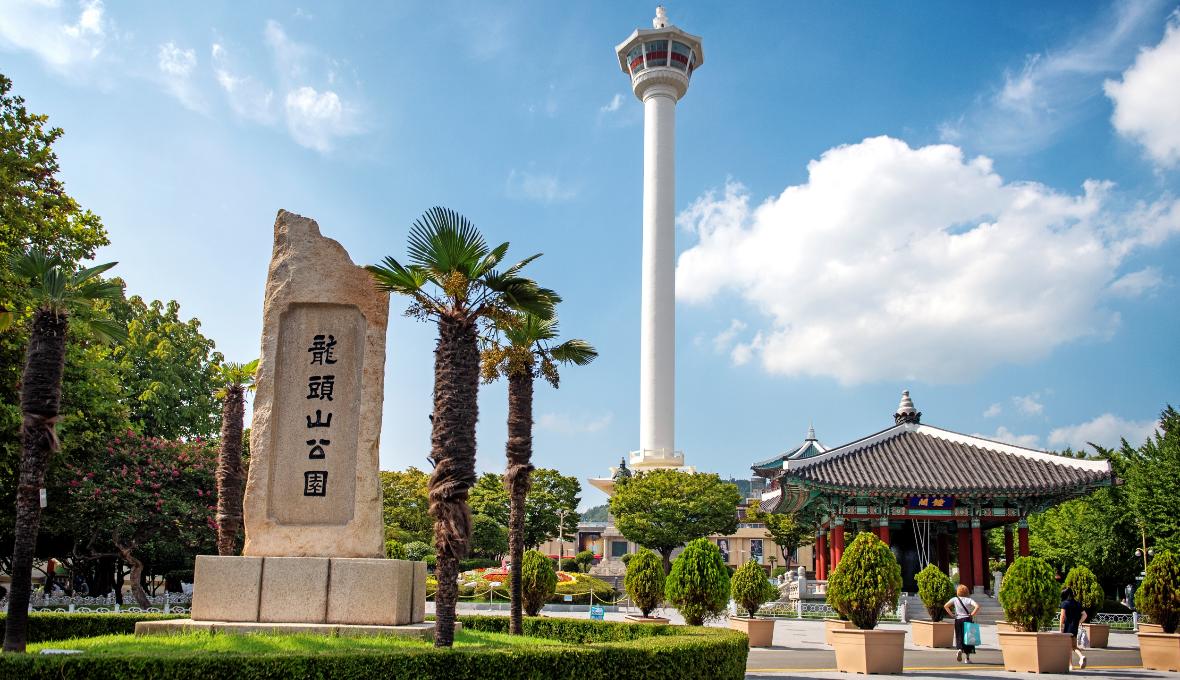
Before heading directly to the tower ticket office, take a moment to understand the plaza. The tower supplies a strong vertical landmark, while the bell pavilion and flower clock draw attention closer to the ground. If members of your group will meet again after exploring separately, choose a specific monument you have all seen, rather than simply saying “the park entrance”. Several approaches meet the grounds, and visitors can easily imagine different entrances when making that arrangement.
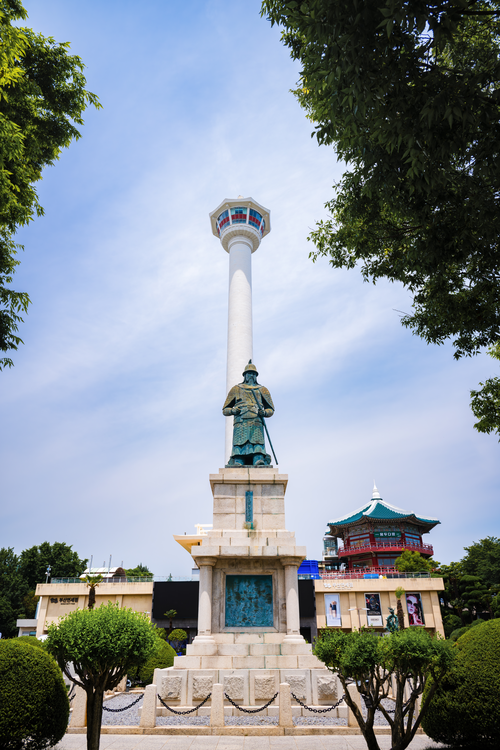
The Admiral Yi Sun-sin statue was installed on 20 March 1956. Considering why a naval commander is commemorated here, above Busan’s maritime cityscape, adds depth to a familiar photograph. Look at the statue’s proportions against its pedestal, its orientation and the sky beyond. Inscriptions also reflect the language and concerns of the period in which a memorial was erected, which is useful to distinguish from a modern historical account. Stand back to see the whole composition without climbing on the base or blocking other people’s route.
A flower clock that changes with the season
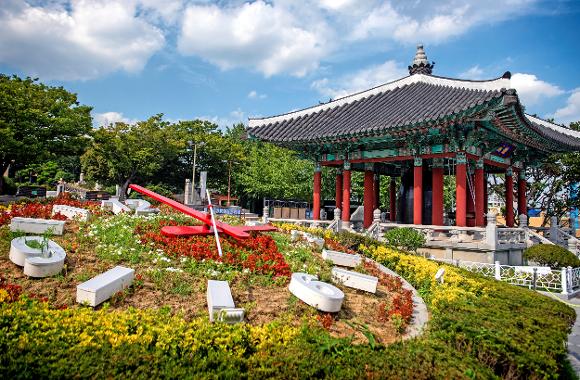
The flower clock is approximately five metres across. First installed in 1973, it has been refurbished more than once. Its numbers, hands and planting create an easy place to read the time with children or notice the season while resting. Flower varieties and arrangements change with maintenance cycles, so enjoy what is growing on the day rather than expecting the colours in an older photograph. Even when blooms are sparse, the circular form and moving hands remain recognisable features.
The nearby fountain does not run throughout the year. The official facilities information describes summer operation in July and August, subject to weather and events. Water jets therefore should not be an essential part of an autumn or winter photography plan. Daylight reveals the planting and the pavilion’s painted timber, while lower sun draws longer shadows across the surroundings. Keep outside the flower bed and change your viewpoint instead of stepping inside it; the clock and pavilion often work well together in a single composition.
The Citizens’ Bell and shared public memory
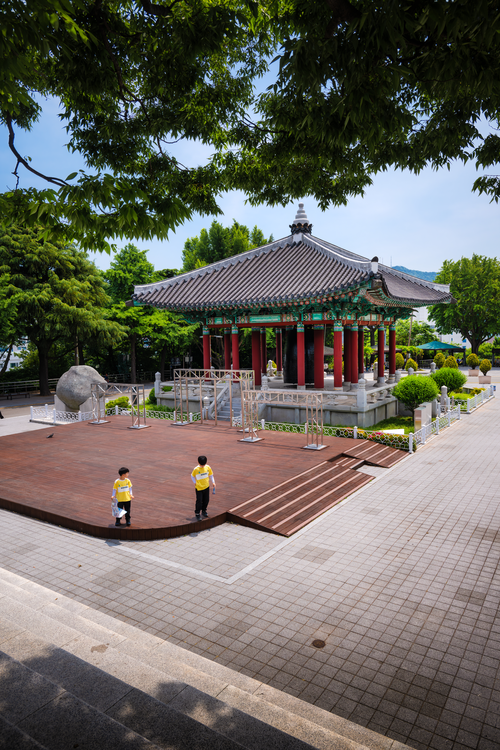
The Citizens’ Bell was created at the end of 1996 with contributions from many local residents. Waves, camellias, gulls and Oryukdo motifs connect the bell to recognisable symbols of Busan’s landscape. Look beyond the pavilion roof to the bell between its columns and the public space around it. If the decorative details are difficult to see, there is no need to cross a barrier for a closer look: the relationship between pavilion and plaza is part of the interest.
This is not an instrument that visitors can ring freely whenever they arrive. It is associated with civic occasions such as the March First independence commemoration, Liberation Day and the New Year, with exact programmes and crowd restrictions determined by each event’s announcements. A quiet everyday walk and a crowded year-end bell ceremony are different kinds of visit. Even without hearing it sound, the pavilion offers a way to think about a public place created through collective contributions, and the moments people have gathered here to mark.
Taking a quieter route beneath the trees
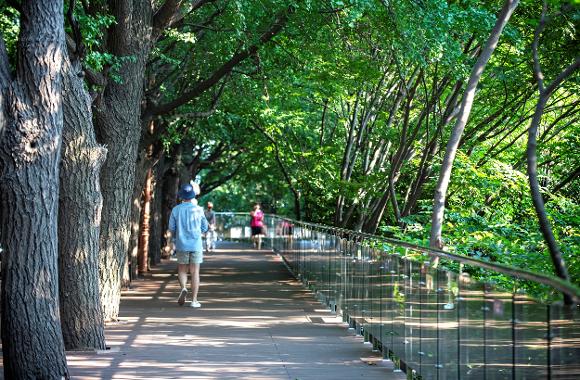
The centre of the plaza is only part of the park. Move towards the tree-lined paths and the shade and pace change. This is a useful stretch for a rest if you have come up from Nampo carrying shopping bags. A bench is not necessarily an available seat, so a flexible walk with short pauses is easier than relying on one particular resting spot. At bends, leave room for people coming the other way, including when you stop to take a photograph.
A city-centre location does not make every surface as level as a shopping mall. Gradients, fallen leaves and wet steps after rain still deserve attention. Comfortable shoes and water on a hot day make even a short outing easier. When foliage is thick, the tower can appear in fragments through branches; in a more open season, its outline becomes clearer. Following the shade and light you actually find, rather than recreating a particular image, helps a relatively small park feel varied and rewarding.
Deciding whether to add Busan Tower
Busan Tower, completed on 9 October 1973, is a 120-metre structure and the park’s defining vertical landmark. Its height is different from the hill’s elevation above sea level; those figures should not be confused. Current visitor material also uses the name Diamond Tower. Looking at the tower from the public grounds and looking down from inside it are separate experiences. Let your budget, the weather and the time remaining determine whether the observatory is worth adding to your walk.
The published tower hours are 10:00–22:00, with the last ticket sale at 21:30. Standard adult admission is listed at 12,000 won, and children and visitors aged 65 or over at 9,000 won; confirm qualifying ages and any discounts with the current ticket information. Special operations and weather can affect a visit, so check the day’s arrangements when an evening view is central to your plan. The outdoor park remains a free experience whether or not you buy a tower ticket, allowing a group to make different choices comfortably.
Reading the harbour, bridges and mountains
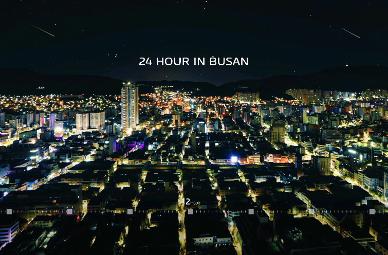
At the observatory, try reading the view in layers: nearby roads and roofs, then water and bridges, and finally the more distant ridgelines. This turns a mass of buildings into a geographical picture of Busan Port, Yeongdo and the older city. Finding landmarks such as Yeongdodaegyo Bridge, Busan Harbor Bridge and Bongnaesan in their actual directions helps build a mental map of your journey. Compare signs with the surrounding terrain rather than confidently naming a feature you cannot really identify.
Clear and overcast days produce very different panoramas. When the distance is hazy, focus on the texture of nearby harbour infrastructure and streets instead. Daylight describes the city’s shape; after dark, roads and illuminated buildings stand out. Photographs through glass can include reflections from interior lights and other visitors, so adjust your angle without pressing equipment against the window or obstructing someone else’s view. Sunset also shifts through the year: arriving at the same clock time does not guarantee the same evening light.
Media experiences and the real night view
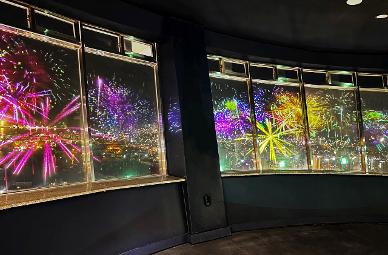
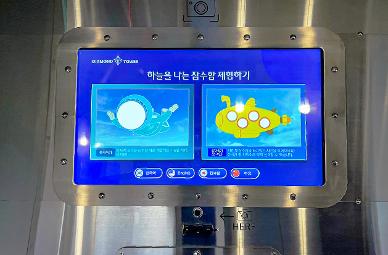
The tower’s visitor information describes AR activities and media displays that supplement the panorama. Fireworks mapping on the observation levels is a visual presentation, not evidence of a live fireworks festival taking place over the harbour every night. Understanding it as effects added to windows and indoor screens creates the right expectation. With children, distinguishing real city lights outside from images generated inside can become a small observation game rather than a disappointment.
Equipment, screen content and operating arrangements can change as attractions are renewed. A device or scene in an earlier photograph is therefore not a guarantee that exactly the same activity will be offered on your visit. On-site information is the best guide to the current experience. Take turns at popular screens and preserve some time for simply looking at the city. The media photographs illustrate how the tower combines an urban viewpoint with indoor entertainment; they are not a complete programme for every date.
Photographing the park at different distances
Vary wide views of the tower with details of the flower clock or pavilion and quieter images of the paths. Looking almost straight up from below emphasises height, while stepping back in the plaza shows the landmark as part of a place people use. Decide what a picture is about before trying to fit every facility into it. A clock hand against flowers, an eave or a strip of shade can describe the atmosphere more clearly than an overloaded panoramic composition.
At busy times, keep luggage and tripods out of the centre of the walking route and take photographs without holding up the flow. Be considerate when another visitor’s face would fill the image, and do not ask children to cross fences or flower beds for a better pose. After dark, stay with open, illuminated paths and leave time to return to the streets below. There is no need to enter an unlit slope or a restricted facility for a picture. A sequence that records how the city changed around you often tells more than a single dramatic frame.
Visiting with children or limited mobility
For a family outing, work out resting points, toilets and the descent before focusing on tower admission. Asking children to read the flower clock or find familiar motifs on the bell gives them reasons to explore without a lengthy lecture. The plaza is shared with other pedestrians and sometimes events, so keep children in sight and slow down near steps and slopes. A short walk followed by a snack can be more successful than extending the visit until everyone is tired.
Tourism information lists facilities including accessible toilets, parking spaces, a lift and wheelchair loans. Their presence does not establish an uninterrupted step-free route from every metro exit to every attraction. In particular, the Gwangbok-ro escalator is not a wheelchair route. For a stroller or wheelchair visit, ask the park office about the currently suitable road approach, drop-off point and loan availability, then plan around your actual equipment and needs. A brief shaded walk may be a better shared experience than adding the observatory for a companion who tires easily.
Two ways to build an old-town afternoon
For a daytime outing, walk from Nampo Station through Gwangbok-ro, explore the plaza, flower clock, bell pavilion and shaded paths, then descend for lunch. If time and energy allow, continue towards Gukje Market, Bupyeong Kkangtong Market or BIFF Square. Choosing one market and the park thoughtfully is often more comfortable than rushing through every nearby landmark. Food stalls and shops keep individual schedules, so check the specific business if a particular dish or purchase is essential to your day.
For evening views, reverse the emphasis: eat and explore the shopping streets first, then reach the park before sunset to experience the transition to night. If adding the tower, allow for the ticket cutoff and any queue, and keep the onward walk to your station or taxi pickup in mind. Jagalchi Market and the Yeongdodaegyo area also fit an old-town itinerary, but zigzagging among all these places adds more distance than a map may suggest. A route moving in one general direction is easier to adjust to weather and the group’s energy.
Addresses and practical details before setting out
Search for Yongdusan Park or 부산 중구 용두산길 37-55 in a map. For the tower, look for Busan Tower or Diamond Tower as well. The outdoor park is free, while the tower and commercial facilities keep their own opening hours. Drivers should allow separately for public-parking charges and availability; reaching a road near the park does not mean parking directly beside every attraction. With narrow streets and substantial foot traffic in the old town, combining metro travel with walking is often the simpler option.
The park enquiry number is 051-860-7820 and the tower number is 051-601-1800. In strong wind or rain, or on an event day, checking access restrictions and facility operations beforehand can prevent a wasted journey. Bring comfortable shoes, suitable outerwear and an umbrella when needed, and leave a little slack in the timetable. The best reason to visit Yongdusan is not to tick off every installation. It is to set down the bustle of the streets for a while and notice where an old harbour city has made room for rest, memory and shared occasions.
Reviews 1
Blocked views
Public visitor review summary
The escalator made the climb easy, but trees blocked the city views I expected from the park.
A little closer to Korea.
Thank you for reading.