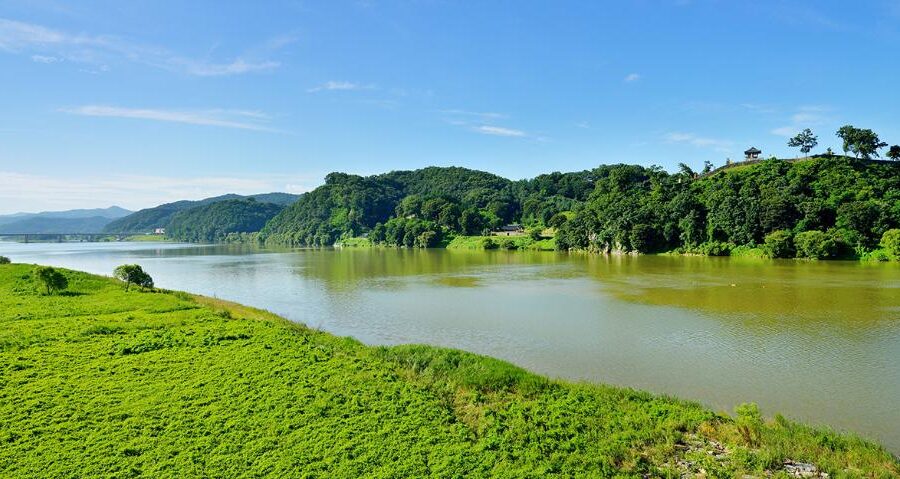
Seeing Busan at the pace of water and birds
On Eulsukdo, the familiar image of Busan changes from high buildings and beaches to waterways, low islands, reeds and the movement of birds. This island at the Nakdong River’s meeting with the sea places a distant city and nearby wetland in the same view. Walking beneath the wide sky is part of the pleasure, but covering as many paths as possible is not the best way to understand it. Stay in one place for a while, notice the water level and watch what the birds are doing, and a landscape that first seemed empty begins to reveal differences.
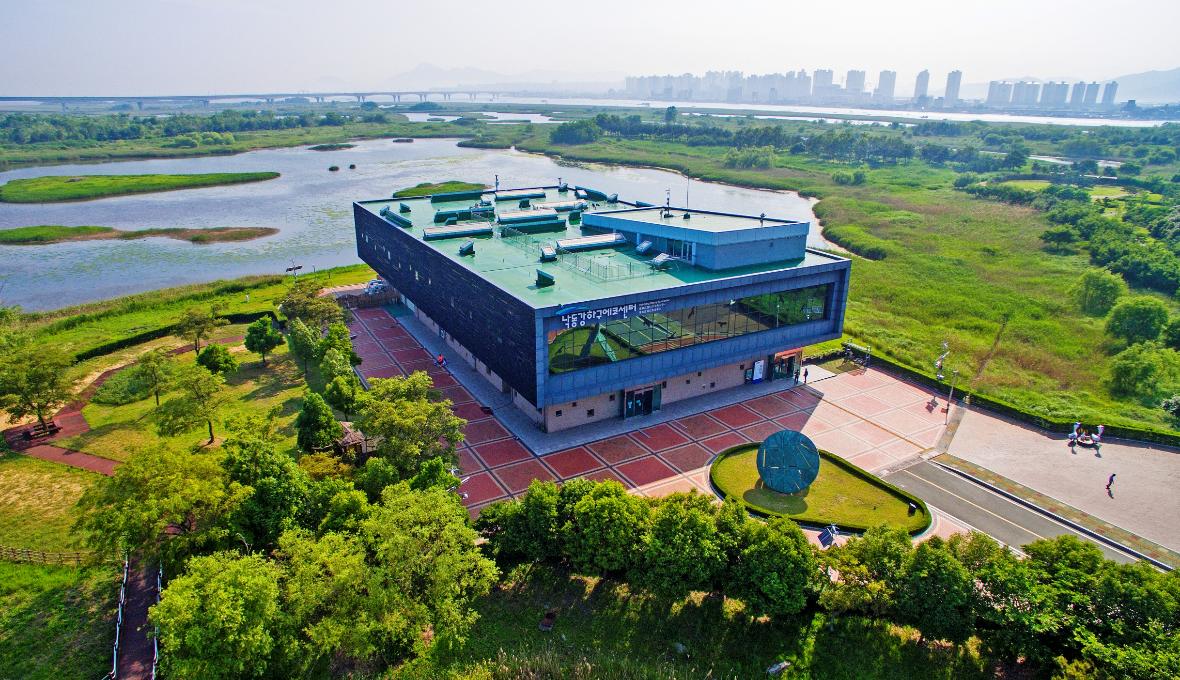
The Nakdong Estuary Eco-Center makes a useful starting point. Learning how an estuary forms and how its animals live helps connect the birds and plants outside into an environment, rather than treating them as background scenery. Indoor observation and a short walk nearby can make a complete visit; reaching the southern tip is not compulsory. Decide whether the day is mainly about birds, a relaxed family outing or a combination with art, and the balance between movement and rest becomes easier.
Allow roughly two hours for the centre and nearby open areas, or half a day if adding a longer walk or cultural venue. These are planning suggestions that include observation and pauses, not fixed route times. Wild birds do not appear to a performance schedule, so keep expectations about a particular species or large flock flexible. Even when the birds remain distant, there is plenty to notice about water, deposited land, restored ground and the boundaries between habitat and visitor space.
An island shaped by restoration as well as nature
Eulsukdo formed as sediment carried by the river accumulated at its mouth. Its name is associated with abundant birds and clear water, and it lies on the East Asian–Australasian migratory route. The lower Nakdong migratory-bird habitat was designated Natural Monument No. 179 in 1966. Protection in name did not prevent all damage, however. Knowing something of the island’s history changes how you read the wetlands and lawns visible today: they are not simply an untouched landscape left over from the past.
The area was used for scallion cultivation, sewage treatment, dredged-material storage and waste disposal, among other purposes. Completion of the estuary barrage in 1987 was another major change. Busan undertook restoration work for the migratory-bird park between 2000 and 2005, while the northern ecological park was developed between 2009 and 2012. Today’s resting places and paths carry the results of those decisions and continuing management. It is more useful to see Eulsukdo as a place where a city is learning to care for nature again than as somewhere entirely separate from urban life.

Two parks and three management zones
Distinguishing the northern ecological park from the southern migratory-bird park helps make sense of the island. The ecological park includes lake-like wetlands and walking spaces; the migratory-bird park around the Eco-Center places stronger emphasis on protecting and observing habitat. The latter is managed through education and use, buffer, and core conservation zones. Not every line resembling a path or channel on a map is open to ordinary visitors, and even the education and use zone contains restricted facilities or sections.
The current managing authority lists visiting hours for both parks as 08:00–19:00. Access is restricted from 19:00 until 08:00 the next day, with parking closure and lights switched off, so do not rely on an older tourism listing that says 20:00. Buffer and core conservation areas have access restrictions to protect habitat; research, management and organised programme access are different from an independent walk. On-site signs and barriers determine the actual route available that day. Finding an improvised way around a closed section is not part of visiting a protected wetland responsibly.
From Hadan Station to the Eco-Center
A common public-transport approach is Metro Line 1 to Hadan Station, followed by a bus towards Eulsukdo. From the direction of exit 3, check current services and stops using the signs or a transport app. Routes 58, 58-1 and 58-2 appear in visitor guidance, but confirm the service operating on your day. After alighting in the Eulsukdo or Culture Center area, your walking direction depends on whether you want the northern cultural facilities or the Eco-Center to the south. Understanding the stop and the final pedestrian connection is more useful than memorising a bus number alone.
Nakdongnam-ro carries substantial traffic, so do not cross wherever two points look close on a map. Use the designated pedestrian connections, checking for steps if travelling with a stroller or wheelchair. The Eco-Center’s map address is 1240 Nakdongnam-ro, Saha-gu, Busan. Drivers should also distinguish its parking from parking for the cultural venues. The official parking guide lists 100 won per ten minutes and 2,400 won per day for a small vehicle; check the signs for the rate and operation that apply. Parking and optional activity charges are separate from free exhibition admission.
Preparing for observation inside the Eco-Center
The Nakdong Estuary Eco-Center was established in 2007 and renewed its exhibitions in May 2024. A stop indoors before walking outside provides a framework for understanding the estuary and its inhabitants. The first floor includes local exploration information, an introduction to the centre and a temporary-exhibition space. The sloping route upwards features an installation suggesting birds in flight. Distinguish models and images from actual wild birds, and consider what each display explains; this creates a useful connection between indoor learning and outdoor observation.
The centre opens from 09:00 to 18:00, with admission ending at 17:00. It closes on 1 January and Mondays, or the following day when Monday is a public holiday. General admission is free, while equipment rental and some programmes may have separate conditions. Food, bicycles and inline skates are not brought into the exhibition building, and pet entry is restricted. The centre advertises free wheelchair loans and first-floor belongings storage, so ask at the desk if luggage or mobility makes the visit difficult. In the late afternoon, remember that the centre stops admitting visitors before the park closes.

Reading the second-floor exhibitions
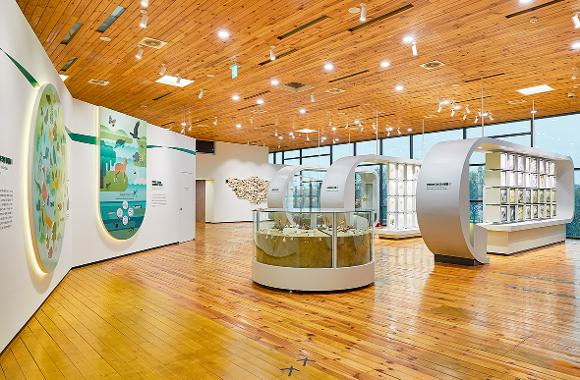
The second-floor displays connect the Nakdong’s source and coastal sandbar formation with biodiversity, bird life, indoor birdwatching and hands-on activities. Begin by linking the river’s journey with land created by deposited material, then notice how different animals use different environments. Bird specimens allow close comparison of body proportions, beaks and wings. Their presence in a gallery does not mean that every displayed species will be outside the window that day. Keeping the exhibition’s wider scope separate from actual daily sightings leads to more realistic expectations.
Other features described by the centre include making music from bird sounds, an ink-painting-style animation of Eulsukdo’s seasons, estuary literature and archive material, and an activity in which visitors’ drawings appear in a wetland animation. Check the equipment and available activities on site and share popular stations with the next visitors. With children, choosing one feature such as a bird’s feet or beak to look for outside can be more memorable than completing every screen. Even without reading every label, leaving with one useful question about the landscape makes the exhibition worthwhile.

Begin birdwatching with behaviour, not just names
Winter visitors generally offer more observation opportunities from late autumn into early spring, but arrival and departure vary with the year’s weather and environmental conditions. Whooper swans and several kinds of ducks are associated with the winter habitat, while warmer months bring different birds, plants and activity. You do not have to identify every species immediately. Start with whether a bird is floating, feeding in shallow water, resting or tending its feathers. Remembering size, neck length and bill shape gives you something useful to compare later with a display or field guide.
When birds are far away, use binoculars or a designated observation point instead of following them closer. The centre lists outdoor binocular rental for two hours at 2,000 won for lower magnification and 5,000 won for higher magnification, with additional-time charges and availability to check. Higher magnification is not automatically easier for a beginner, so ask how to use the equipment. Keep voices low and avoid attracting birds with food or recorded sounds. Patient observation from a suitable distance offers a better chance of seeing behaviour without changing it.

Look at reeds, mud and changing water
An estuary brings river water, seawater, sediment and living organisms together. Water depth, salinity and the character of the bottom influence which plants and animals use each part. Eulsukdo places open water, reed-fringed channels, mudflats and restored wetlands in the same landscape. Ground exposed as water recedes is not simply empty land: small organisms and feeding birds make it part of a larger system. Behind the conspicuous birds are the water and vegetation conditions that support their presence.
The river’s flow and estuary management affect the water environment as well as the sea’s movement, so a particular tide does not guarantee an identical scene on every visit. Choose what to observe according to the actual water, wind and light on arrival. Comparing the direction of moving reeds with where birds gather can give even a landscape photograph a story. Remain on designated paths instead of stepping down to the water or crossing mud for a closer image. Understanding a broad ecosystem without physically approaching every part is central to this kind of visit.

Picnic spaces, Memorial Park and southern viewpoints
For a shorter walk near the Eco-Center, connect the open picnic plaza with nearby authorised paths. Lawns and shelters make pauses possible, but they do not permit cooking or camping wherever you choose. Eat only in suitable permitted spaces and carry away packaging and leftovers. Spring flowers and autumn grasses change the scene with the season; rather than planning solely around a particular bloom, enjoy the trees, sky and open space together. A simple nearby route is often enough after a detailed exhibition visit.
Memorial Park occupies a place once used for compacting waste, now turned into a resting area. A longer outing may include the exploration centre and small ecology library in a reused sewage-treatment facility, and the southern birdwatching area. The official guide describes a hide and a two-level observation structure there, but check the currently accessible route and any protective measures before setting off. A named viewing facility does not open the surrounding wetland to unrestricted access. Calculate the return distance and time; turning back midway is a valid choice, and the last point on a map need not become the day’s objective.
The electric cart is first come, first served
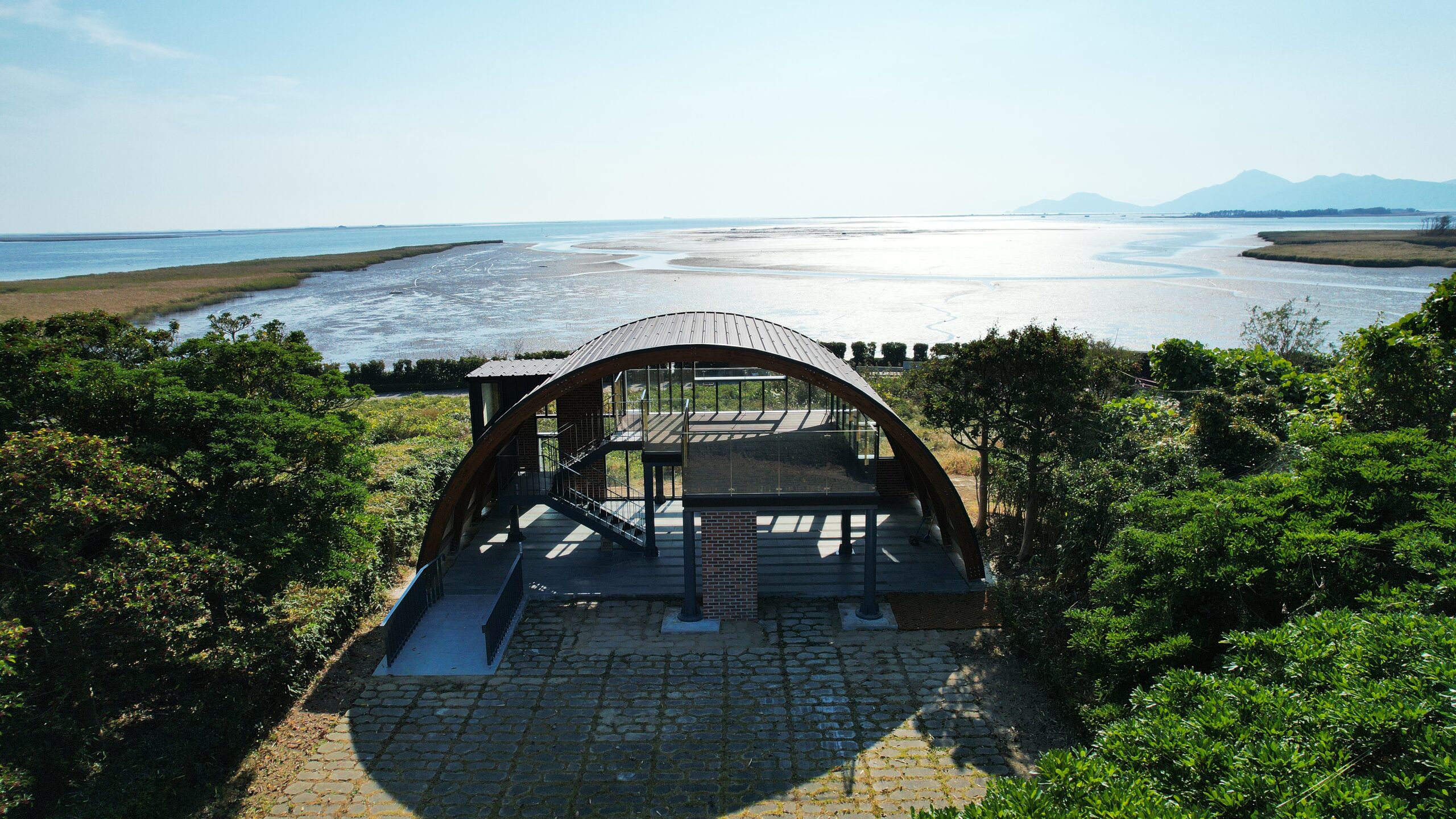
If reducing walking distance would help, check the electric-cart service. The general guide describes a roughly thirty-minute circuit from the Eco-Center’s large-bus parking area through Memorial Park, the exploration centre, Eulsukdo Bridge and restored landfill areas before returning. The ride is free, boarding is first come, first served on site, and reservations are not accepted. Capacity is described as about twenty adults per vehicle. Do not assume an entire group will board together or design a day that only works if the cart is available.
Operating dates are announced monthly, and rain, centre events or vehicle use can reduce or suspend the service. The general timetable describes departures between 10:00 and 16:30 with a lunchtime break, but the notice for the actual date takes priority. On public holidays, passengers may alight at intermediate stops but cannot board there; on weekdays, intermediate boarding depends on empty seats. Ask the visitor-information point at 051-203-9960 about departures. Before getting off partway, consider the possibility of having to walk back rather than treating the cart as a guaranteed hop-on shuttle.
Booked programmes and wildlife protection
Some Eco-Center activities require registration separate from an ordinary visit. The November 2026 notice states that advance booking opens at 10:00 fourteen days before the programme date. Check each activity’s age range, meeting place, preparation and cost. Similar names do not necessarily mean the same starting point: activities can meet at the Eco-Center, exploration centre or another estuary observation site. Severe weather or avian-influenza conditions can change or cancel a programme, so a booking alone does not guarantee that every planned area will remain accessible.
The Busan Wildlife Treatment Center also demonstrates the island’s conservation role. It treats and rehabilitates injured wildlife for return to the wild; it is not an ordinary attraction for touching or feeding animals. If you find an injured or unusually behaving bird, do not try to catch it. Remember the location and inform staff instead. Habitat restrictions and observation distances are not incidental obstacles to a holiday: they leave animals somewhere to stay. Human curiosity and the needs of wildlife do not always move at the same pace.
Adding the cultural centre and contemporary art
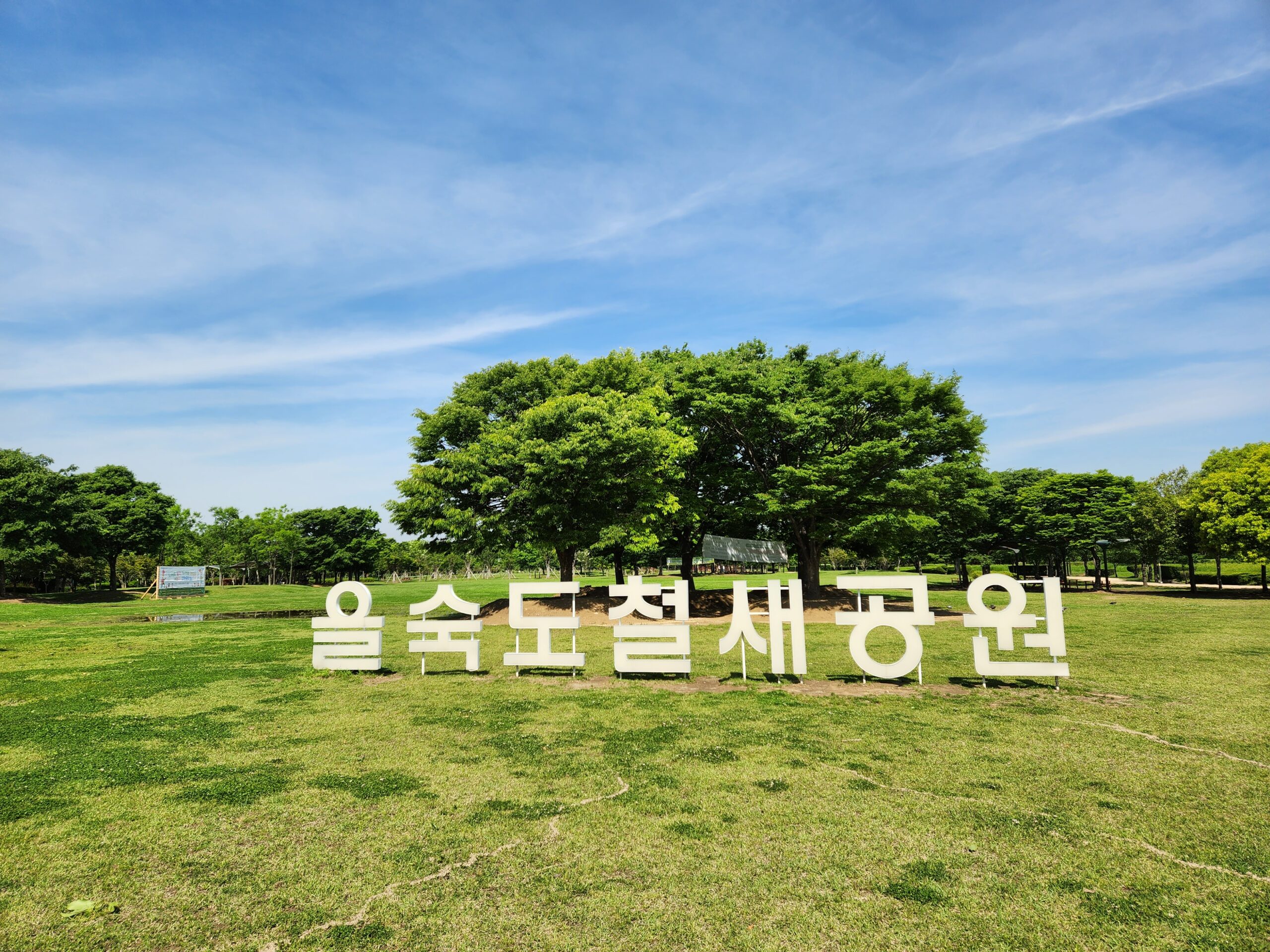
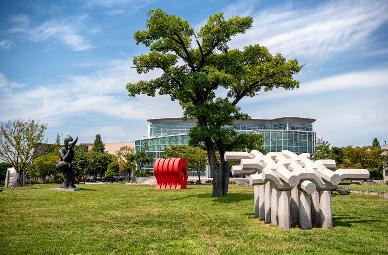
Eulsukdo also offers cultural venues. Sculpture and lawns around the Culture Center create a different visual rhythm from the wetlands, and performances or exhibitions can be added according to the venue’s programme. Look at an outdoor artwork’s form from a distance, then consider its materials and relationship to nearby trees. A sculpture is not automatically play equipment, so follow signs about touching or climbing. Even without a performance, publicly open areas around the building offer a separate kind of walk.
The Museum of Contemporary Art Busan, opened in 2018, expands the island’s cultural possibilities. Its planted facade and architecture deserve time, as do the exhibitions inside. Temporary shows change, so an artwork in an older photograph should not be treated as a permanent current exhibit. Check the museum’s own closing days and any activities requiring a reservation. To explore both it and the Eco-Center in depth, allow half a day rather than squeezing them into an hour or two. Moving between venues also includes finding the correct road and pedestrian connections.

Preparing for families and different mobility needs
The centre advertises a step-free main entrance with automatic doors, a lift, accessible toilets and wheelchair loans. The building’s accessibility does not mean every outdoor path has the same conditions. For a stroller or wheelchair outing, ask about surfaces, slopes, toilets and the return distance, and begin with nearby open areas. Do not assume every mobility device can be carried on the electric cart; ask about boarding requirements if this matters to your plan.
Wind across the estuary can feel stronger than among city streets. A wind-resistant layer and gloves help in winter, while water and sun protection are useful in summer; wet walking surfaces need care after rain. With children, divide the outing into small goals, such as watching one bird’s behaviour and then resting. Outdoors, visitors with pets should use a leash and carry waste bags, while remembering that the centre’s indoor rules are separate. If a bird repeatedly becomes alert or moves away, consider whether you have approached too closely.
A half-day route and final checks
For a first visit, morning exhibitions and indoor birdwatching followed by a slow walk in nearby open areas make a manageable plan. Add the Memorial Park direction if you want a longer walk and current signs permit it, or choose the Culture Center or contemporary-art museum instead of a long outdoor section. For evening light, calculate the 19:00 park closing time and your return journey first. Sunset varies with season and weather, so do not plan to remain in a dark wetland simply to secure a particular photograph.
For park and centre operations or current access restrictions, contact the Eco-Center operations team on 051-209-2031. Save the address and return bus-stop information before setting out, keeping the centre’s 17:00 admission cutoff separate from the park’s 19:00 closing time. Choose a place where you can remain quietly rather than trying to bring distant birds closer. In your photographs or notes, record weather, water conditions and observed behaviour as well as species names. Those details become a useful point of comparison when you return in another season.
Reviews 1
Morning pause
Public visitor review summary
I valued a quiet morning walk and shaded resting spots during a brief stop.
A little closer to Korea.
Thank you for reading.