A bowl leaves one kitchen, crosses a narrow lane and arrives at another family’s table. Before long, dinner has become a neighbourhood exchange. That small movement is a good introduction to Reply 1988: a drama in which affection often travels disguised as food, an errand or an argument. The romance gives viewers something to predict, but the everyday traffic between homes gives the series its emotional weight. You do not have to remember 1988 to recognise the desire to belong somewhere this closely.
The twenty-episode tvN drama, written by Lee Woo-jung and directed by Shin Won-ho, originally aired from November 2015 to January 2016. It follows five childhood friends and their families in Ssangmun-dong, northern Seoul, beginning around the 1988 Olympics. This is an introduction to the characters and the kind of viewing experience to expect, without revealing the final romantic pairing. It stands on its own: watching Reply 1997 or Reply 1994 first is optional, although returning viewers may enjoy connections between the series.
Start with five friends, not a husband guessing game
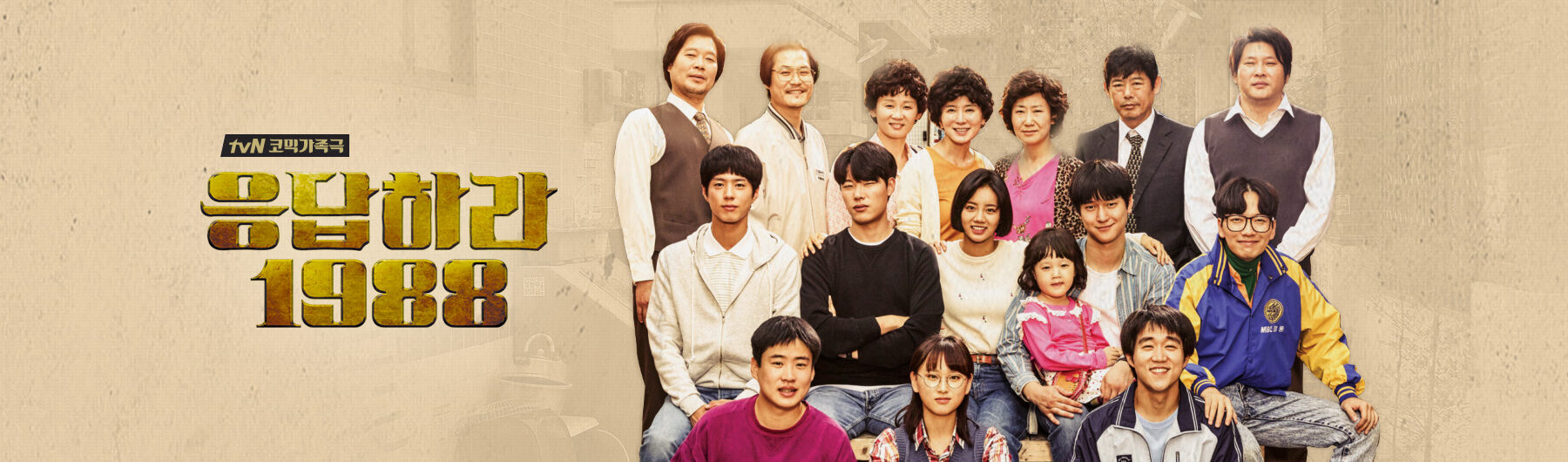
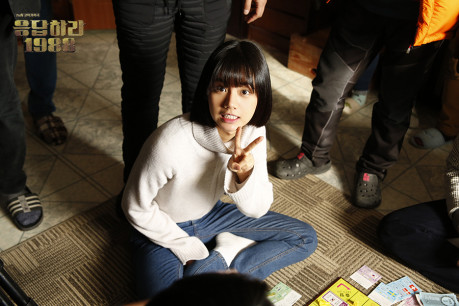
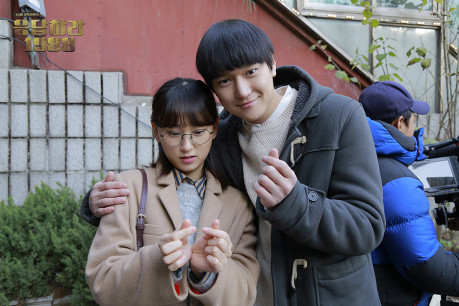
Sung Deok-sun, played by Lee Hye-ri, is the energetic middle child in a family short of money and space. She can be clumsy, funny and hungry for recognition, particularly when she feels overshadowed by her older sister. Her school results are not the measure of her warmth. Notice who she includes, who she looks after and how differently she behaves when she believes someone might like her. Her wish to feel special is an accessible entry point for anyone still working out what other people see in them.
Kim Jung-hwan, played by Ryu Jun-yeol, is often harder to read. His restrained face and teasing manner leave care to emerge through timing and actions. The drama asks you to watch the interval between wanting to do something and actually doing it. Choi Taek, played by Park Bo-gum, has a different relationship with confidence: he is an accomplished professional baduk player, yet his friends readily help him with ordinary things. Quietness means something different in each of these two characters, and neither should be reduced to a single romantic label.
Sung Sun-woo, played by Go Kyung-pyo, is a diligent student with a strong sense of responsibility toward his mother and little sister. His reliable image does not make his inner life simple. Ryu Dong-ryong, played by Lee Dong-hwi, brings jokes, dancing and an apparently easy social confidence to the group. Behind the comedy is a teenager who also wants attention and company. Together, the five create an appealingly uneven friendship: their talents, family circumstances and emotional fluency do not match, but they already know how to occupy the same room.
Taek’s bedroom is one of those shared rooms. Friends eat, watch television, sprawl and interrupt one another there; their familiarity is established through use rather than announced in dialogue. For a first viewing, remember the five faces and which home each belongs to. There is no need to learn the whole ensemble in one sitting. The first episode can feel crowded because you are entering relationships that have existed for years, not watching strangers meet and introduce themselves neatly.
The parents are not supporting scenery
Deok-sun’s parents, played by Sung Dong-il and Lee Il-hwa, fill their cramped home with noise, worry and imperfect affection. Her sister Bo-ra, played by Ryu Hye-young, can be abrasive and intimidating, while her younger brother No-eul adds another place in the family hierarchy. The arguments matter because being loved and feeling understood are different things. The show can make a family funny without pretending that its members never hurt one another, and a practical gesture may arrive where a fluent apology cannot.
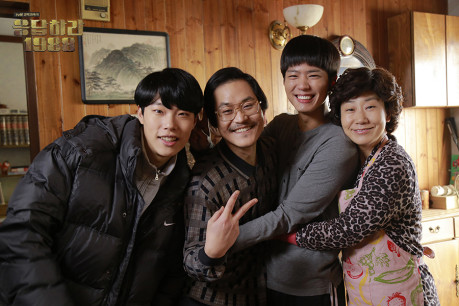
Jung-hwan’s household offers another rhythm. Ra Mi-ran and Kim Sung-kyun play his parents; Ahn Jae-hong plays his older brother Jung-bong, whose many enthusiasms complicate the expectation that every young person should progress along the same academic path. The father’s jokes and the mother’s exasperation are entertaining, but their relationship also raises a quieter question: what happens when somebody’s attempt to create warmth does not resemble the warmth another person needs? The comedy works best when both sides remain visible.
Sun-woo’s mother, played by Kim Sun-young, and Taek’s father, played by Choi Moo-sung, widen the picture of parenting. Their households are shaped by loss, work and the daily responsibility of caring for a child. Adult friendship becomes important in its own right. The mothers chatting together are not simply a chorus commenting on teenage romance; they need companionship, reassurance and help, too. This is one reason the series can connect with viewers at different ages, and why a later rewatch may draw attention to different people.
What a plate of food tells you
Shared meals make the relationships legible. Sending food next door can express generosity, preserve somebody’s dignity or quietly acknowledge a difficult day. The movement of dishes also lets the story show differences between households without reducing them to a list of incomes. Watch who offers help, who resists it and who knows how to make acceptance easier. Those details give the neighbourhood more texture than a simple claim that people used to be kinder.
For young international viewers, the most useful approach is curiosity rather than treating every scene as a lesson about all Korean families. Age, school seniority and family position influence how people address one another, but personality changes how those conventions feel. Bo-ra’s authority as the older sister and Deok-sun’s impatience with it are both part of the story. Subtitles may convey the argument while losing some differences in speech level; listening to the changing tone of the Korean audio can add another layer even if you do not understand every word.
The setting also contains material constraints. Privacy is limited, money affects choices, and a household telephone or a shared television changes who knows what and when. Today, a message might resolve a misunderstanding immediately; here, waiting, overhearing and failing to say something can carry more weight. The objects are therefore doing narrative work. Cassette players, clothes and old broadcasts are enjoyable period details, but their strongest function is to shape how the characters spend time together.
Warmth, with a few rough edges
The series is particularly persuasive when it lets affection remain untidy. Teenagers can be selfish and generous in the same afternoon. Parents can be devoted and still fail to listen. A friend may understand your habits better than your feelings. That tension gives small moments room to grow: the same teasing that once looked casual can later reveal how carefully somebody has been paying attention. The pleasure comes from accumulating knowledge of people, rather than collecting dramatic revelations at the end of every episode.
That method requires time. Episodes are long, often around ninety minutes, with some running longer; check the running time on the version you use before settling in. Family conversations and separate household stories can delay the romantic plot for a substantial stretch. Someone seeking a brisk sixteen-episode romance may find this frustrating. A comforting reputation does not make the pacing universally comfortable, and you do not need to turn finishing a famous drama into a personal obligation.
The humour can also divide viewers. Raised voices, exaggerated reactions and the recurring goat-like comic sound effect are conspicuous parts of its style. Some people find that mixture affectionate and familiar; others find it distracting. The present-day framing scenes create a puzzle around Deok-sun’s future, but focusing entirely on that puzzle can make the rest of the ensemble feel like a diversion. A better test is whether you want to return to these households even when no romantic question is being answered.
There are sadder strands beneath the cosy surface, including bereavement, financial strain, illness and conflicts between parents and children. Bo-ra’s involvement in student activism also reminds viewers that the period was more complicated than the nostalgia of clothes and music might suggest. The series is fictional and selective, not a comprehensive history of late-1980s Korea. Its affection for a particular community can coexist with a critical eye toward the pressures its characters accept as ordinary.
A way into the lane
Try the opening two episodes with enough time to pay attention, then ask a simple question: are you beginning to care about the people around the dinner tables? You may still be sorting out names, but curiosity is a better reason to continue than an online ranking. One episode on a free evening can suit the drama better than an exhausted marathon. If you watch with a friend, compare which small act of care you noticed, not only which couple you expect to end up together.
Avoid searching character pairings before you finish; even image results and discussion titles can reveal major outcomes. The viewer reactions below concern atmosphere, pacing and attachment rather than the ending. Streaming availability, subtitle languages and edits vary by country and service. Viki and TVING have title pages for the programme, but a listing is not a guarantee that every viewer can stream it in their region. Check access and the episode list in your own account before planning a group watch.
The strongest reason to choose Reply 1988 is its attention to people who can become invisible through familiarity. A parent waiting at home, a friend taking up half your floor and a neighbour carrying a dish may not look like the centre of a great story. Here, they are. For someone building an adult life away from home, that perspective can feel especially resonant. The show invites you to notice the company around ordinary days while those days are still happening.
Reviews 9
Getting to know a crowded cast
Edited viewer review
It took me six to eight episodes to warm to it, but it may be my favourite K-drama. There are so many people from the start that I struggled to match parents, children and siblings. The mothers’ similar haircuts did not help. The goat sound effects also took getting used to.
The Netflix version I watched blurred television footage repeatedly, sometimes while characters were talking about it, and that nearly put me off. Early on, the romance was not clear enough for me to know what sort of story to expect; a possible romantic moment could give way to a long parental argument.
Once I knew everyone, they felt unusually real and endearingly flawed. I especially liked the older brother who kept finding new interests—stamps, puzzles and arcade games—instead of studying. By then they felt like friends and family. The ending worked wonderfully for me.
systranerror · Reddit
More than romantic love
Edited viewer review
I have watched it three times, and it is one of my favourite dramas. What I love is that romance is only one part of it. Family relationships, being young, growing up, leaving things behind and facing difficulties all matter.
The community shapes how people see life, and the sense of a family you find beyond your own home feels so warm. Each episode has something meaningful in it for me.
Opening-Desk-539 · Reddit
Growing into the neighbourhood
Edited viewer review
The many characters can take a little time to get used to. As I came to know them, I felt as though I had quietly become part of their busy, warm neighbourhood. Not having lived in that period or knowing much about Korean culture did not keep me outside it.
The shared meals, open doors and laughter capture the feeling of a neighbourhood becoming family. The pace, writing and performances brought back thoughts of childhood, the relationships we treasure and the love that is easy to take for granted. It is the sort of drama that leaves warmth behind, with smiles and tears together.
Dinki_V · Reddit
The ensemble mattered more than the pairing
Edited viewer review
I would probably revisit it more often if the episodes were shorter. The neighbourhood feels nostalgic if you grew up somewhere similar, and I enjoyed the gradual pace. The romance caused plenty of debate when it aired, so I would avoid searching for answers before watching.
For me it became more about the ensemble and everyday relationships than choosing a romantic side. That difference from a typical romance drama was refreshing; it does not mean I disliked the romantic part.
sadieblodgetts · Reddit
Memories of my own street
Edited viewer review
I am an older Asian viewer, and I grew up in a similar neighbourhood, though our street was wider. We went to the same schools and played outside in summer. My mother’s best friend lived three houses away. Watching this brought back many of those memories.
mimibusybee · Reddit
Nostalgia from the first episode
Edited viewer review
For me, it is worth watching. I felt the nostalgia especially strongly in the first episode. It develops slowly, though, so I understand why some viewers find it boring or keep wondering when it will become interesting.
MJDT80 · Reddit
The sound effect nearly lost me
Edited viewer review
Those goat sounds almost made me stop watching. I did not need a sound cue to tell me when something was supposed to be funny.
Impermanence7 · Reddit
The present-day scenes did not work for me
Edited viewer review
I liked most of it, but the present-day couple did not make much sense to me. I am open to an explanation of what those scenes add. Perhaps keeping the original performers would have helped; as it was, those moments felt unnecessary.
SpicyRitas · Reddit
A difficult beginning
Edited viewer review
Getting started was really hard for me. I tried about five times before finally sticking with it. In the end, I liked it, but I did not love it.
linkypilson · Reddit
A little closer to Korea.
Thank you for reading.