A foundation built around a close colour match
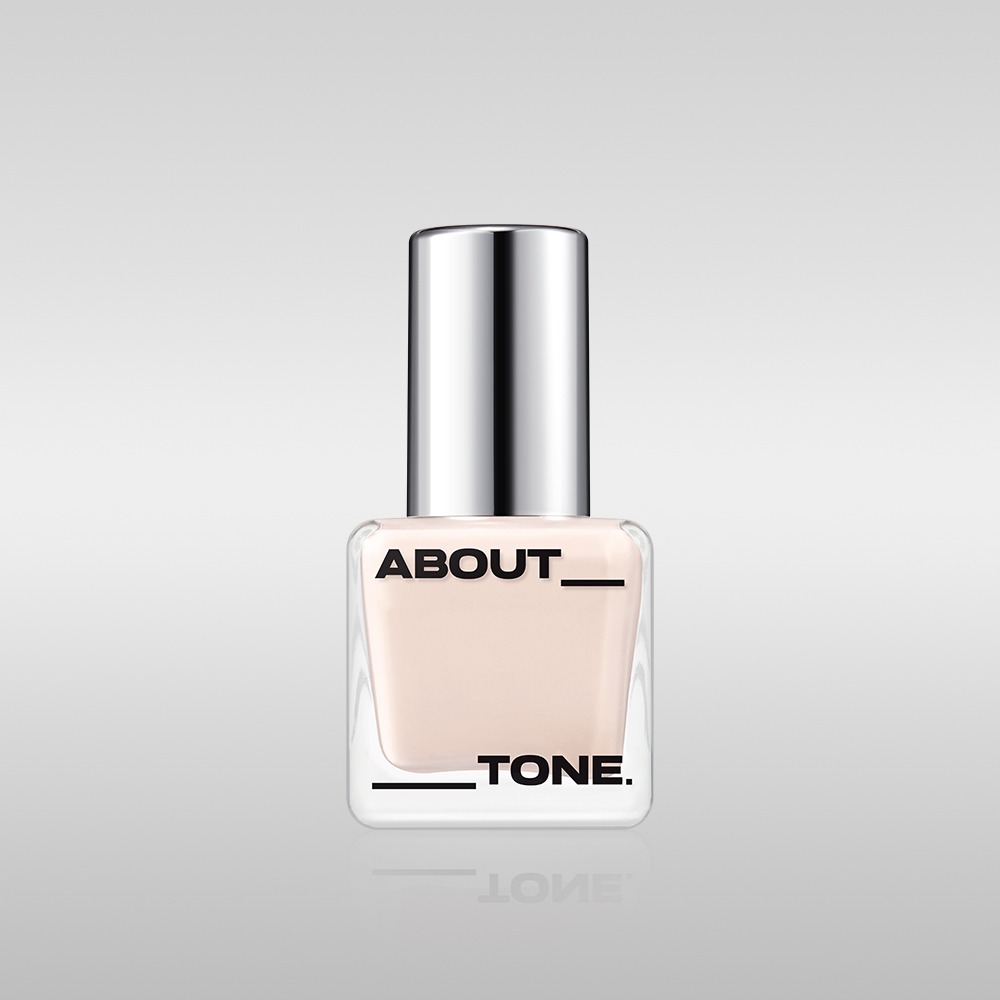
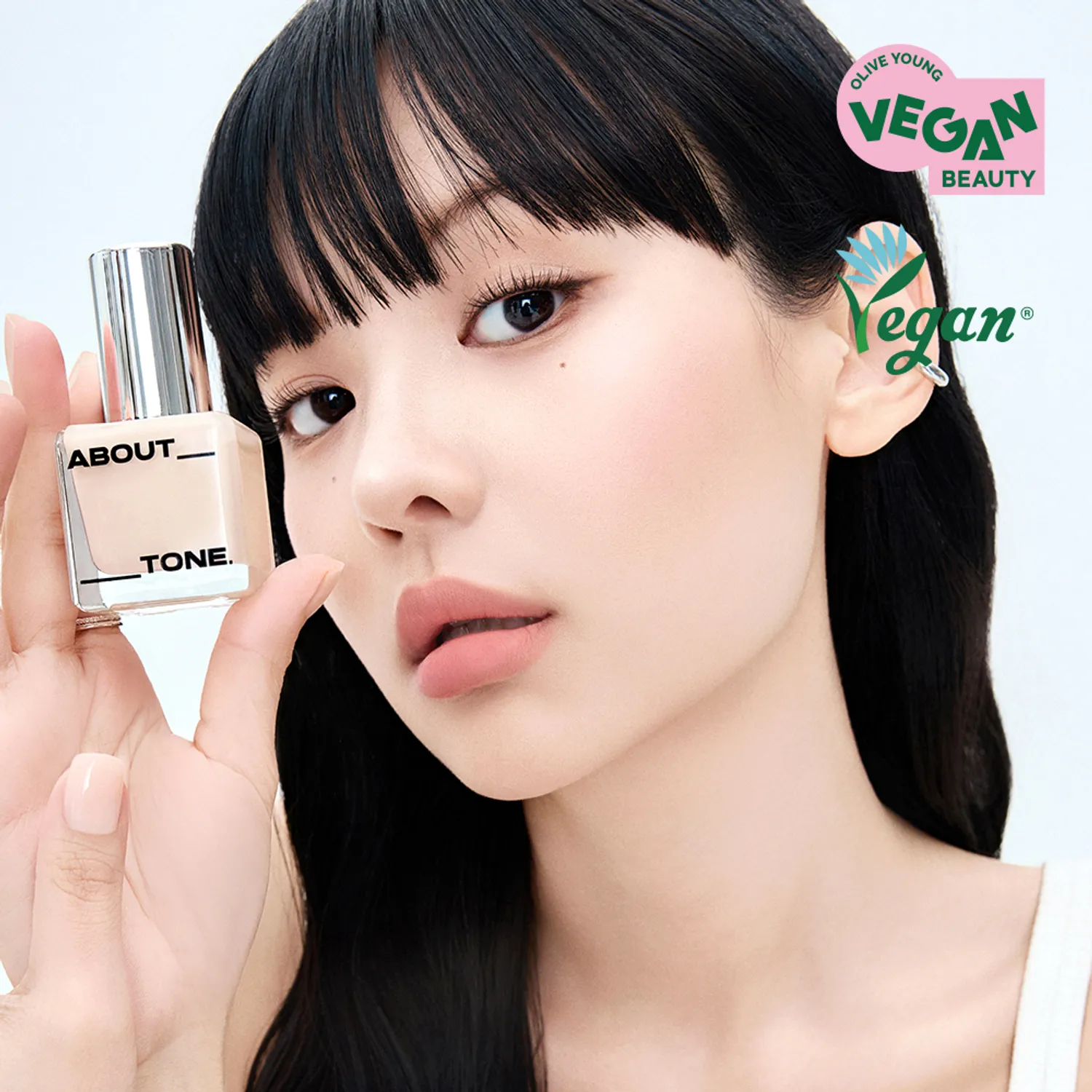
ABOUT_TONE Skin Layer Fit Foundation is a 30mL liquid foundation in a clear rectangular bottle with a silver cap and pump. Its defining choice is a semi-matte base that can be built in thin layers, with eight shades that include intermediate 21.5 and 22.5 options. For someone whose usual 21 looks too pale while the next shade feels too deep, those smaller steps are more useful than simply choosing the brightest bottle. The aim is an even transition between the face and neck while keeping control over how much skin remains visible.
The current OLIVE YOUNG Global menu offers eight individual shades, even though the listing title still includes “Set/Single.” Older reviews mention a spatula or mini sun serum, but those past bundles do not establish what a current order contains. Treat the selected option and basket description as the package specification. This review concerns the bottled foundation, not the similarly named Skin Layer Fit Cushion or Cover Fit Concealer. Their format, application and shade appearance should be assessed separately rather than assumed to match because they belong to the same family.
Read the shade range in two directions
The eight names are 19 Fair, 21 Warm Light, 21 Cool Light, 21.5 Warm Beige, 21.5 Cool Beige, 22 Ivory, 22.5 Beige and 23 Natural. The number is a useful way to navigate this particular range, while Warm and Cool help distinguish the colour direction at a similar depth. Neither part is a universal conversion chart. A shade 21 from another brand can differ in brightness, yellow or pink balance and saturation. Keep the full name when comparing swatches or ordering, especially because two choices share both 21 and 21.5.
The brand presents 19 Fair as a bright pink-based option; 21 Warm Light as a warm vanilla base; and 21 Cool Light as a brighter pink base. The 21.5 pair introduces natural warm beige and natural pink beige between the familiar steps. Further along, 22 Ivory is described as a natural neutral base, 22.5 Beige as a calmer beige, and 23 Natural as a natural base. These descriptions narrow the comparison rather than promise a match. The range concentrates on relatively light complexions; its deepest shade is not automatically suitable for every medium or deep skin tone.
Compare neighbouring shades on the jaw
Start by deciding whether the current base is wrong in depth or in undertone. If it looks reasonably light but distinctly yellow, compare a different colour direction before moving a whole number. If the colour direction is comfortable but the face looks brighter than the neck, a nearby deeper option may be more useful. Someone considering 21 Warm Light and 22 Ivory can include 21.5 Warm Beige in the comparison; someone seeking a pinker middle step can examine 21.5 Cool Beige. This is a testing route, not a prescription based only on a seasonal colour label.
On clean skin, place narrow swatches of two or three candidates beside one another near the jaw and blend only their edges. Look at the face, neck and exposed upper chest in natural daylight, then check normal indoor lighting. Allow the product to settle before deciding, because a wet swatch can look different from a finished layer. A hand swatch is helpful for texture but can be a poor match for the face. Photographs, display brightness and a model’s complexion cannot substitute for this comparison; use them to shortlist rather than to select a shade with certainty.
Use the half shades to solve a specific problem
The 21.5 and 22.5 additions make the most sense when you can name the gap you want to fill. A foundation that is too pale around the mouth needs a different adjustment from one that is too peach or too yellow. Compare one variable at a time: first a comfortable brightness, then the undertone within that neighbourhood. Avoid judging only by a heavily covered cheek. A thin application across the lower face makes the boundary with the neck easier to see and prevents additional coverage from disguising a colour mismatch during the trial.
The brand also lists separate foundation spout pouches and an eight-shade pouch set, which may be worth considering where available before committing to multiple full bottles. They are separate purchases, not a promised inclusion in the 30mL listing. If you already own two shades of this same foundation, test a small fresh mixture on a clean palette rather than pouring one into the other bottle. Record the proportion and assess the dried result. Mixing cannot guarantee the ideal undertone, and a different product mixed into the foundation may change its application and finish.
Understand what semi-matte means here
The product is presented as a gel-to-silk formula: spreadable at first, then designed to leave a smoother, less shiny surface. Semi-matte does not mean that every trace of natural light reflection should disappear. The useful target is controlled shine on the centre of the face with enough flexibility that expression lines and the cheek surface still look comfortable. The brand describes buildable coverage and a triple adhesion system, but the amount applied, preparation underneath and repeated rubbing all influence the final appearance. Begin with a thin layer before deciding that more coverage is necessary.
A dry cheek and an oily nose do not need identical treatment simply because the bottle says it is for all skin types. On a drier area, concentrate on comfortable preparation and a light application; on a shinier area, consider restrained powder after the foundation has settled. Powdering the whole face heavily at the outset can hide whether the foundation alone gives the finish you wanted. Look at the face from ordinary conversational distance as well as close to a mirror. A base can appear polished at that distance without covering every visible pore or natural variation.
Prepare the skin without overloading the base
Cleanse gently and use the moisturiser that leaves your skin comfortable. Give the products underneath time to settle rather than applying foundation over a visibly wet or slippery layer. Dry patches are easier to notice under a semi-matte finish, so address comfort before adding more pigment. The Korean product detail lists SPF30/PA++, but a thin cosmetic layer should not be treated as a complete sunscreen routine. Apply sunscreen as a separate, adequate layer according to its directions, then let it settle before makeup. Mixing foundation into sunscreen changes the applied film and is not a reliable way to preserve the sunscreen’s labelled protection. Foundation coverage and sun protection are different tasks in the morning routine.
If the combination rolls into small flakes, change one variable at a time: the quantity of moisturiser, the time between layers or the pressure of the tool. This makes it easier to identify the problem than replacing the entire routine at once. A primer is optional rather than a compulsory partner. Try it only where it solves a clear concern, such as a small area whose texture you want to soften. Avoid spreading several thick preparatory layers over the whole face merely because the foundation is marketed for adhesion; extra product can make the result harder to control.
Shake, dispense and work in small areas
The retailer advises gently shaking the bottle up and down before spreading an appropriate amount evenly along the skin’s texture. The brand also explains that the gel-to-silk contents can shift to one side, causing the pump to release air: stand the bottle upright and gently tap its base two or three times as directed. Do not strike the glass forcefully. A dark-looking gap seen through the clear bottle may be an empty space in the thick formula; if the contents themselves look abnormal, ask the seller rather than assuming every unusual mark is harmless. Dispense onto a clean palette or hand, start with a little and keep the outlet clean. There is no universal pump count for every face.
Work across one area at a time rather than dotting a large amount everywhere and letting it sit. Begin where you want the most evening of tone, then blend outward with the remaining product. Around the hairline, jaw and sides of the nose, use less and inspect the edge carefully. Repeatedly dragging a tool over an area that is already setting can disturb the layer below. If a spot looks uneven, pause, examine whether it needs blending or removal, and correct that small area before dispensing more foundation for the whole face.
Choose a tool for the finish you want
Clean fingertips offer close control over a small amount and are useful for a quick, thin application. Spread gently, then use light pressing motions to soften the edges rather than rubbing the same patch repeatedly. A flat brush can distribute a narrow veil over a larger area, while a denser brush can concentrate coverage more quickly; reduce pressure if it leaves tracks or lifts the base. The relevant choice is the amount and movement you can control consistently, not the assumption that an expensive tool will automatically improve every application.
A puff or sponge can press the layer into an even surface after it has been spread. Load it lightly and use repeated gentle taps, with the cleaner edge around the nose and mouth. If using a sponge designed to be damp, squeeze out excess water so that it is not dripping. A very wet tool can thin or disturb the layer unpredictably. The brand sells several puffs separately, but the current individual foundation options do not establish that one is included. Choose a tool you can clean thoroughly and dry fully between uses.
Build coverage only where it is needed
After the first layer settles, look for the remaining areas that actually need attention. A second fine layer on redness around the nose or a small uneven patch can be more useful than another full-face coating. Press a tiny amount onto the centre of the area and soften its boundary with the product already on the tool. Let some of the natural variation remain if a lighter base is the goal. “Buildable” is permission to adjust coverage, not an instruction to keep layering until every facial feature has the same opacity.
For a sharply defined mark, a small amount of concealer may offer more precise coverage than thickening the foundation around it. Check the concealer’s shade and finish separately, especially if using a brightening tone under the eyes. Keep heavy layers away from creases around the mouth and eyes, where movement can make excess product more apparent. When adding cream blush, tap instead of sweeping forcefully over the base. For a powder blush, first check that the foundation surface is sufficiently settled to avoid an unexpectedly concentrated patch of colour.
Set and refresh a semi-matte face selectively
Apply setting powder only after assessing where shine is unwanted. A light touch around the sides of the nose, centre of the forehead or another area prone to movement may be enough, while drier cheeks can be left with the foundation’s own finish. Remove excess powder from the brush before bringing it to the face. If a powder changes the base noticeably lighter or darker, reassess its colour and quantity rather than assuming the foundation shade is wrong. The combined appearance matters more than the shade name on either container alone.
For a midday refresh, first blot excess shine gently rather than rubbing. Then inspect whether coverage is actually missing or whether only the surface looks oily. Add a very small amount to a worn area and blend its edges; applying another complete layer over oil, powder and previous makeup can make texture more visible. Carrying a clean compact puff or brush is useful only if it is stored hygienically. If a patch is already thick or flaky, removing that small section and rebuilding a light layer can be neater than repeatedly pressing more foundation over it.
Put the wear claims in their proper context
The brand advertises anti-darkening and 24-hour makeup longevity testing for 21 Warm Light. Its description identifies a test of 21 adult women aged 19–65, conducted on 8–9 August 2024, by GSC Anti-Aging Lab. That is a specific test description, not a guarantee that every shade will look unchanged through every climate, mask, skincare combination or activity. The useful question for everyday wear is how the base behaves during your own normal day: colour after settling, comfort on dry areas and coverage around the nose are separate observations.
Skin irritation testing is also described, with the original five shades and the three intermediate shades identified in separate test groups. A completed irritation test does not mean that an individual cannot react to the product. If a new cosmetic causes persistent irritation, stop using it and seek appropriate advice. For a practical first comparison, keep the usual moisturiser, sunscreen and tools consistent and change only the foundation. Check it in similar lighting at the start and later in the day; otherwise a lighting change can be mistaken for a colour change in the base.
Read ingredients for the exact shade
The brand publishes separate ingredient lists for all eight shades, while the retailer’s text currently lists the original five: 19 Fair, 21 Warm Light, 21 Cool Light, 22 Ivory and 23 Natural. These contain water, silicones such as cyclopentasiloxane, isododecane, pigments including titanium dioxide and iron oxides, and film-forming ingredients. Niacinamide, squalane, glycerin, oat protein extract, hydrolyzed sodium hyaluronate and several ceramides also appear. This gives a clearer picture of the formula than calling it simply a skincare foundation, but the presence of those ingredients does not establish treatment of a skin condition or a particular clinical benefit.
The three intermediate shades also list niacinamide, squalane, oat protein extract and ceramides, but pigment order and the detailed lists vary. Do not treat all eight lists as identical. Check the packaging of the exact shade, especially if you avoid a particular ingredient or have a known sensitivity. The brand’s skincare-base percentage and ingredient descriptions concern the formulation; they do not turn foundation into a replacement for a moisturiser or medical care. Pigment balance also matters when comparing colours. A small numerical step can be useful, but it still needs a visual match on the skin rather than a decision based on the ingredient list alone.
Care for the bottle and the tools
The retailer identifies Hankook Cosmetics Co., Ltd. as manufacturer, BBIA Co., Ltd. as the responsible distributor, and South Korea as the country of manufacture. Its text lists 24 months from manufacture and 12 months after opening, whereas the Korean brand’s current eight-shade panel states 36 months from manufacture and 12 months after opening. Because those pre-opening periods differ, use the actual package date rather than extending a bottle’s life from a web description. Follow the dates and symbols on the bottle you receive, mark the opening date and use it within the applicable period; opening a bottle near its expiry does not create a fresh two-year life. Keep it away from direct sunlight and excessive heat, close the cap after dispensing and store it where children cannot reach it.
Wash foundation brushes regularly, with dermatology guidance suggesting every seven to ten days, and clean sponges or puffs according to their care instructions. Allow them to dry thoroughly before enclosing them in a pouch. Do not share tools used directly on the skin, and remove makeup gently at the end of the day with a cleanser that suits the products worn. Avoid vigorous scrubbing to chase the last visible pigment. A clean tool and controlled removal are part of maintaining a predictable routine, especially when repeatedly applying a layered, film-forming base.
Choose the purchase around the shade, not the promotion
Before paying, check the full shade name, 30mL quantity, the selected single or set description, delivery eligibility and the seller’s current return conditions. Prices and gifts change, and an attractive older photograph can remain visible after a promotion ends. The Korean brand store and OLIVE YOUNG Global also serve different delivery arrangements; a shade offered in one location need not be in stock or deliverable in another. Calculate value from the foundation you will use, not from an accessory you may already own or a gift that is not listed in the basket.
This foundation is most straightforward to consider when you want a controlled semi-matte base and can find a close match within its eight relatively light shades. Start by comparing neighbouring colours, then test a thin layer with the tools and preparation you actually use. A comfortable match that needs only selective extra coverage is more practical than buying a lighter shade and compensating with a thick application. Keep the routine simple enough to repeat: gentle shaking, a small amount, careful blending at the edges, local correction and restrained powder where necessary.
Reviews 1
21 Warm Light
Public purchase review summary
I liked the coverage without heaviness, but the colour could look a little dull later.
A little closer to Korea.
Thank you for reading.