A rounded shape with a clear outline
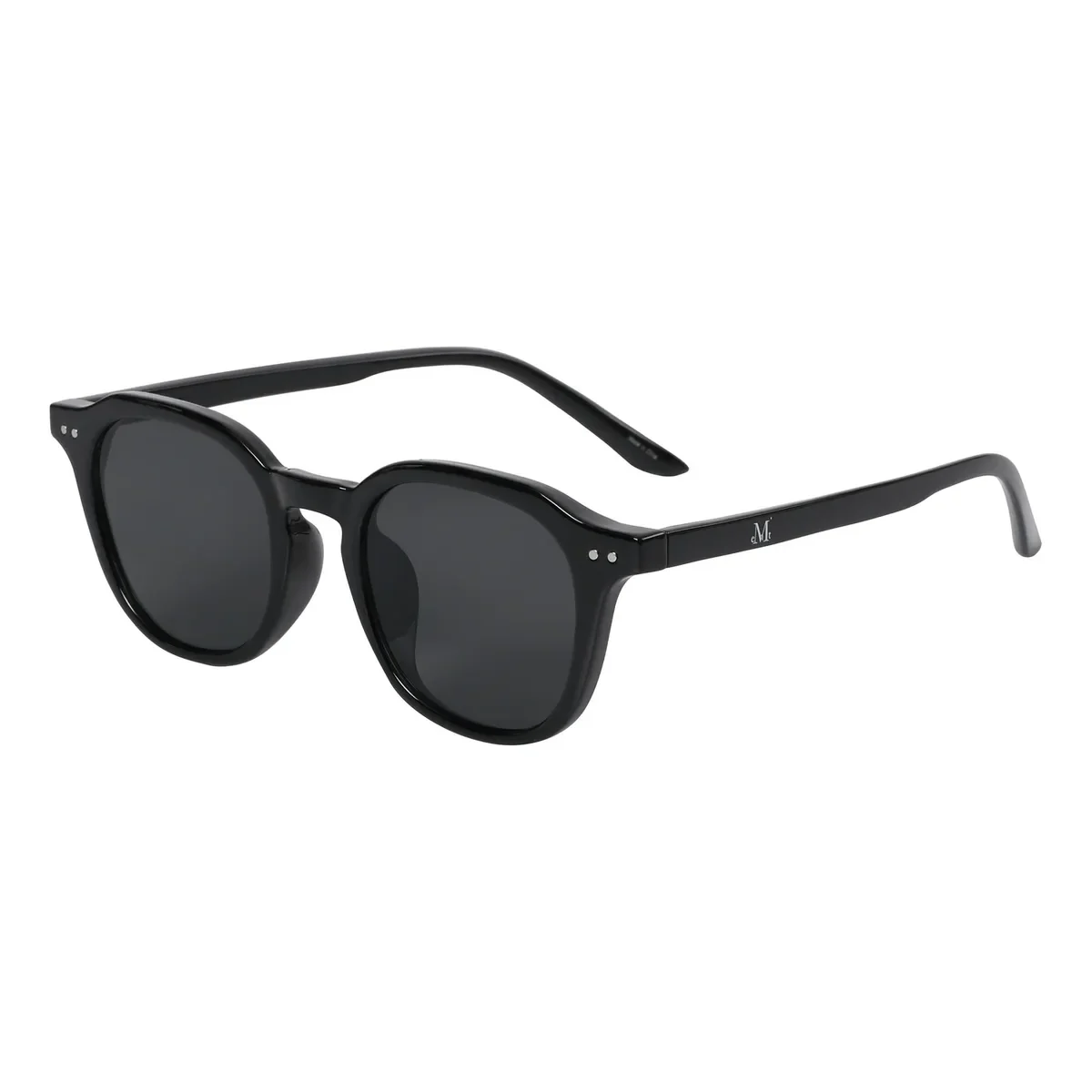
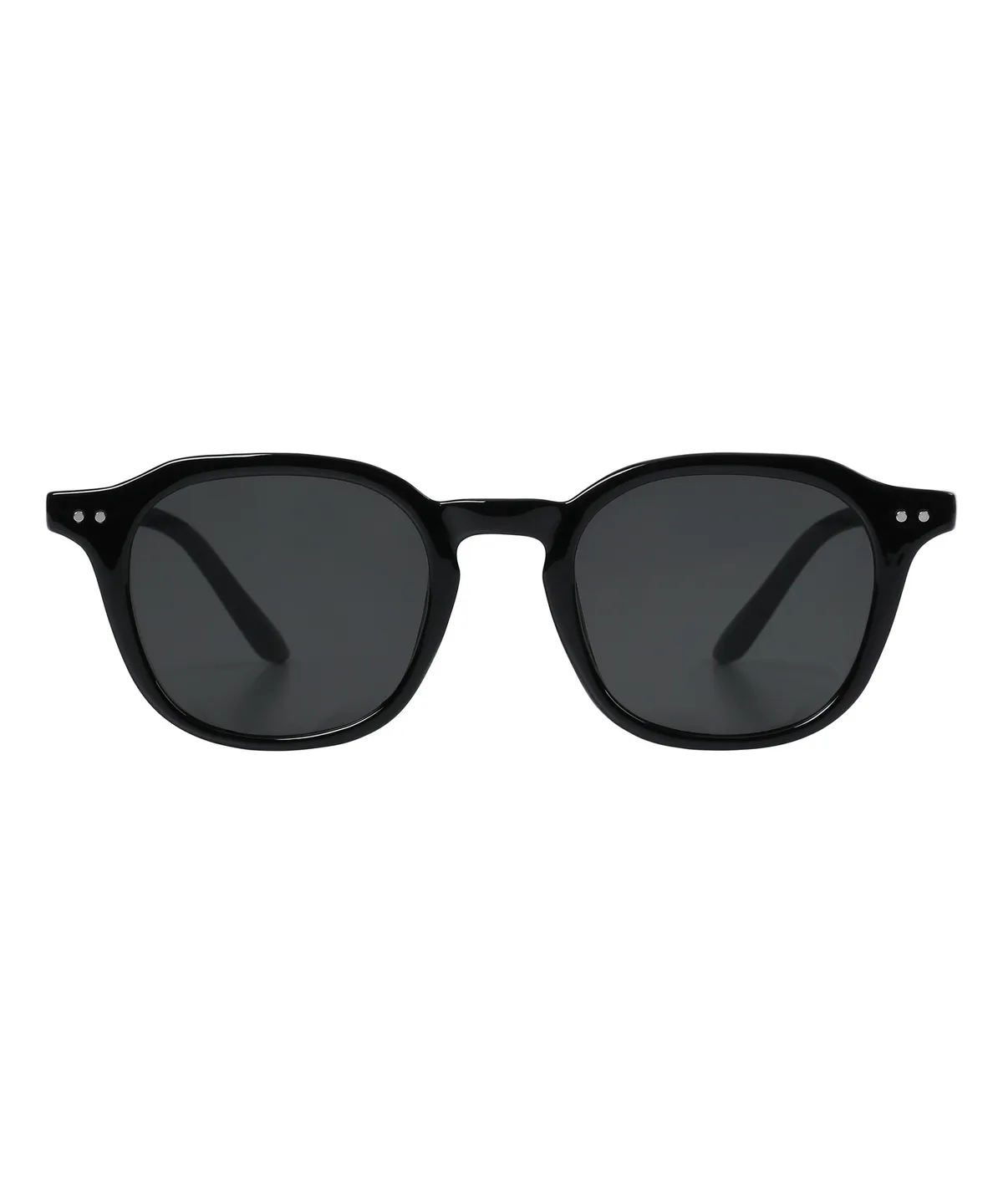
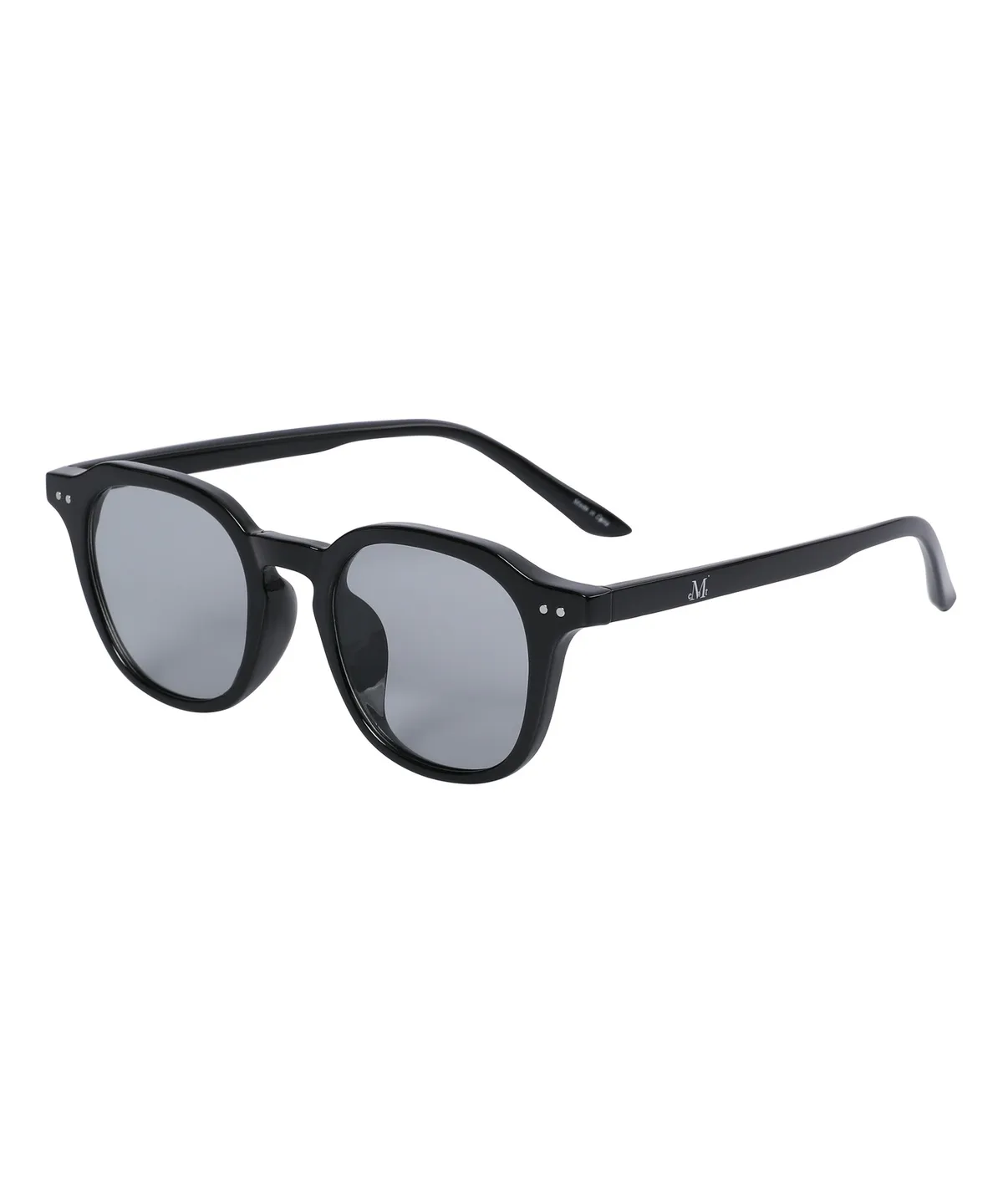
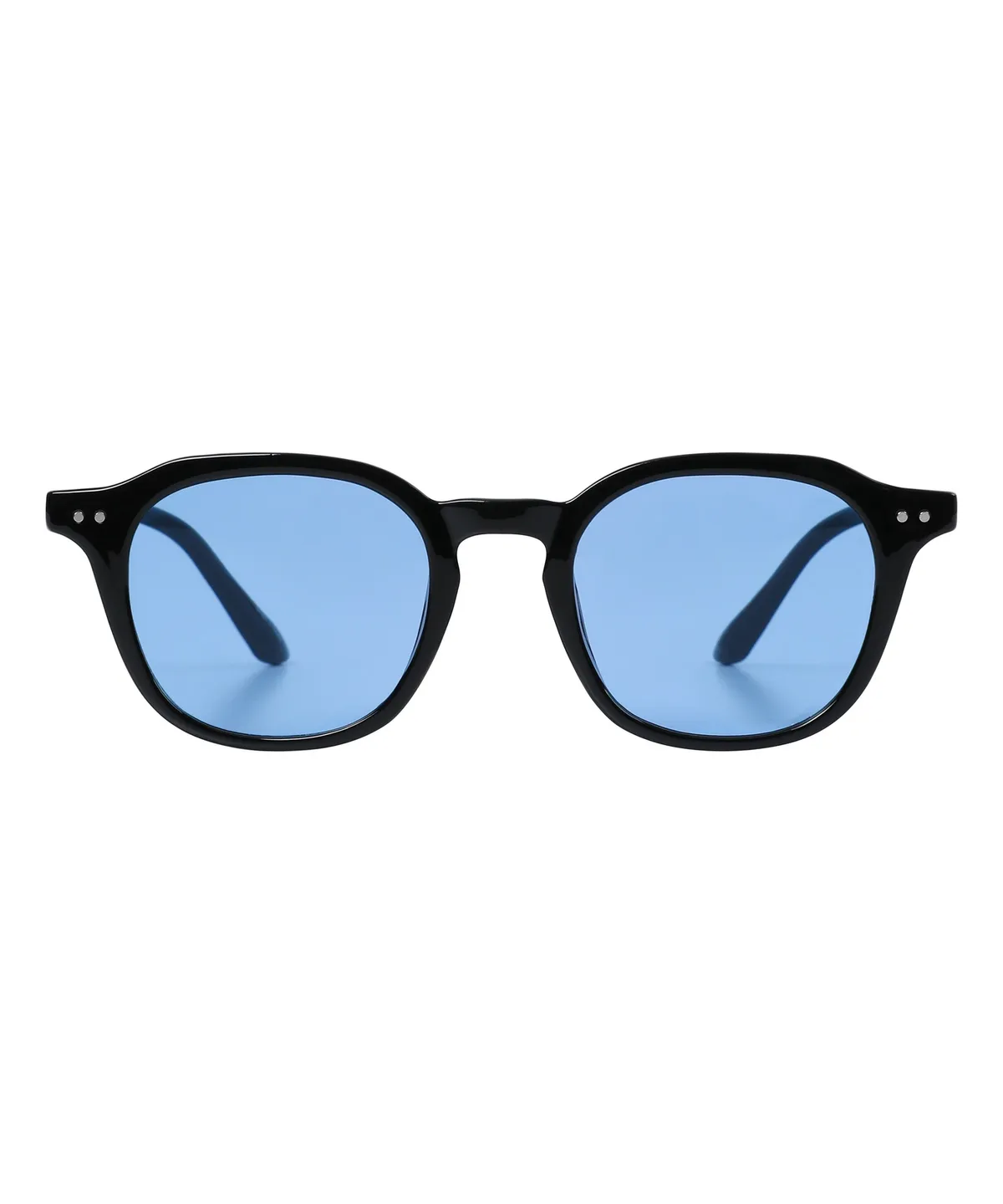
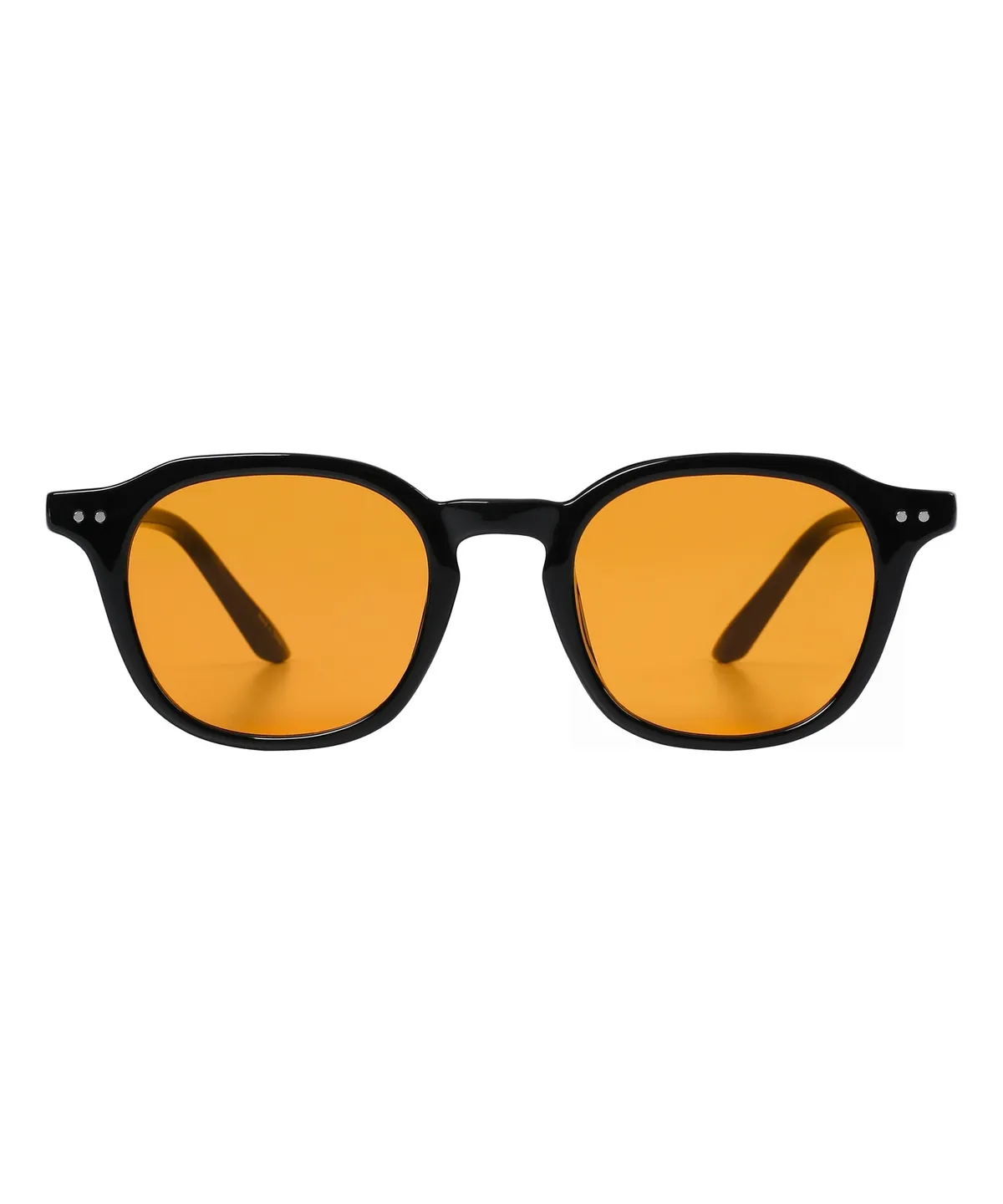
MUCENT’s Orca Tint Round Sunglasses put five lens colours inside the same black frame. The front is rounded rather than perfectly circular: the upper edge flattens slightly, while the lower curves give the lenses a softer outline. A raised, keyhole-like opening at the bridge interrupts the dark rim, and two small silver-coloured dots mark each outer corner. These details make the design more specific than a generic round pair without turning it into a heavily decorated accessory. The Korean brand name is 무센트, and the full product name includes “Unisex” and “5Color.”
The appeal is the contrast between a consistent silhouette and very different amounts of visible colour. Black looks compact and subdued in the product photographs; the brighter tints make the lens area much more noticeable. That changes the effect beside a shirt collar or fringe even though the frame itself stays black. This guide evaluates the published specifications and product images, rather than reporting a personal wear test. It is most useful for deciding which colour to investigate and which measurements to compare with glasses that already fit you.
Know exactly which version you are choosing
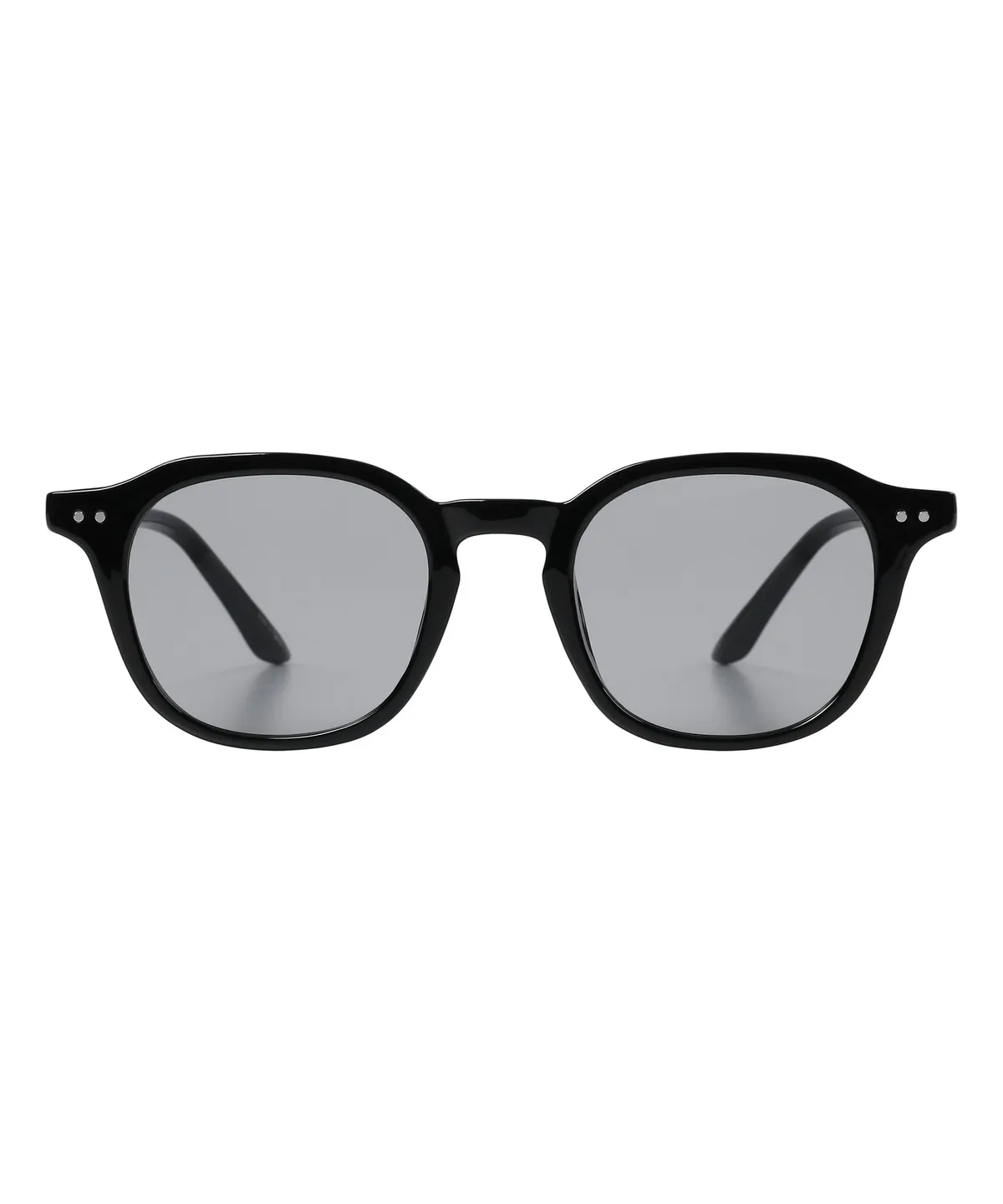
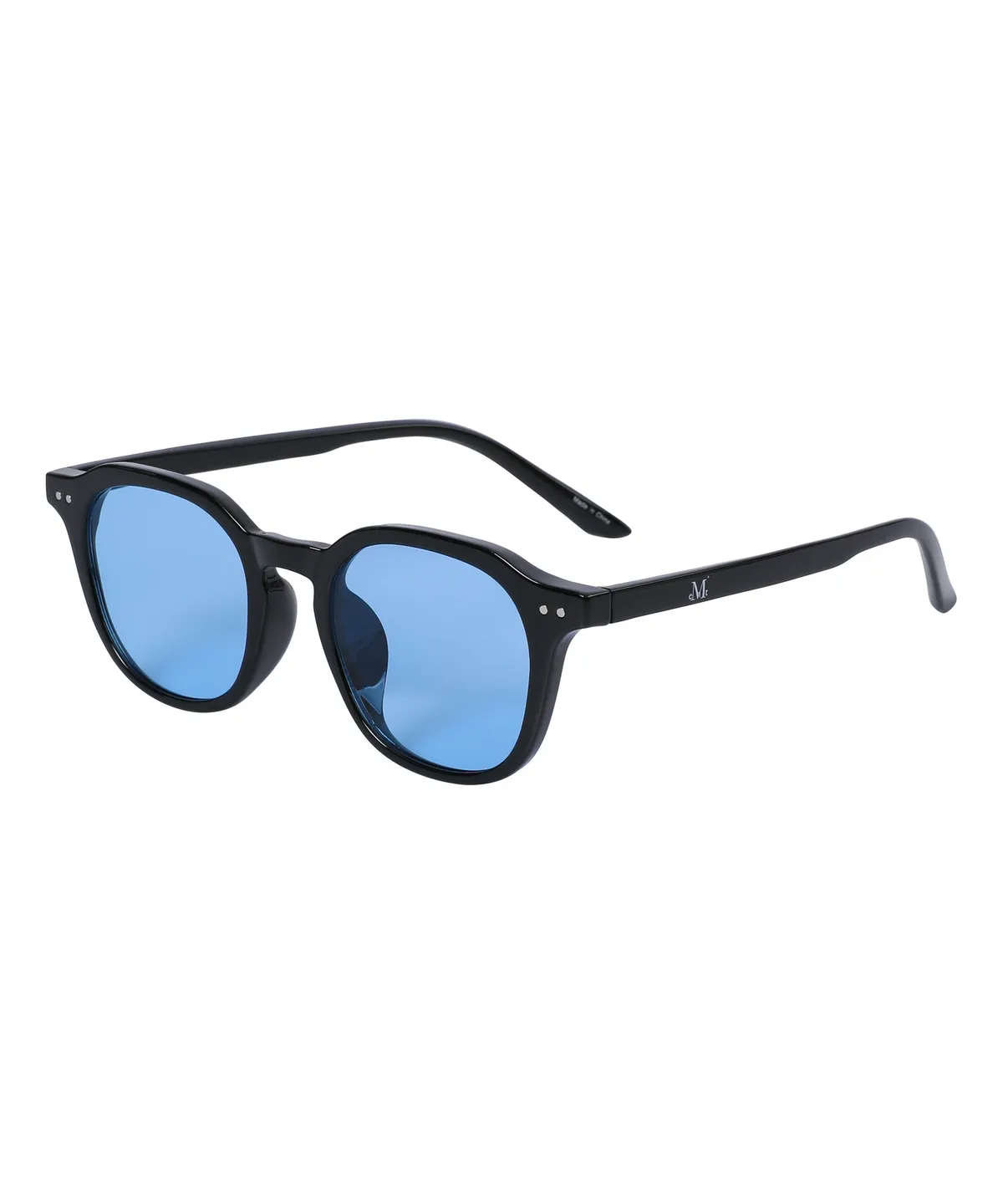
The five official option names are Black, Tint black, Tint blue, Tint pink and Tint orange. Keeping these labels intact is useful when moving between the brand shop and the retailer, because Black and Tint black are separate choices. In the photographs, Black has darker charcoal lenses; Tint black appears lighter grey and allows more of the folded temples behind the lenses to show through. They should not be treated as two spellings for the same item. If you want the darker appearance, check the selected option as well as the main image.
Blue, pink and orange refer to lens colour, not to a blue, pink or orange acetate frame. All five versions shown use a black frame. The product is sold in a single Free size and is listed as unisex; neither description guarantees that it will fit every face. The MUSINSA listing identifies product number P0000BFR and manufacture in China, while the official shop also identifies China as the country of manufacture. These are useful matching details when checking that a similarly named listing really is the Orca being discussed here.
Acetate is the frame material, UV400 is a lens label
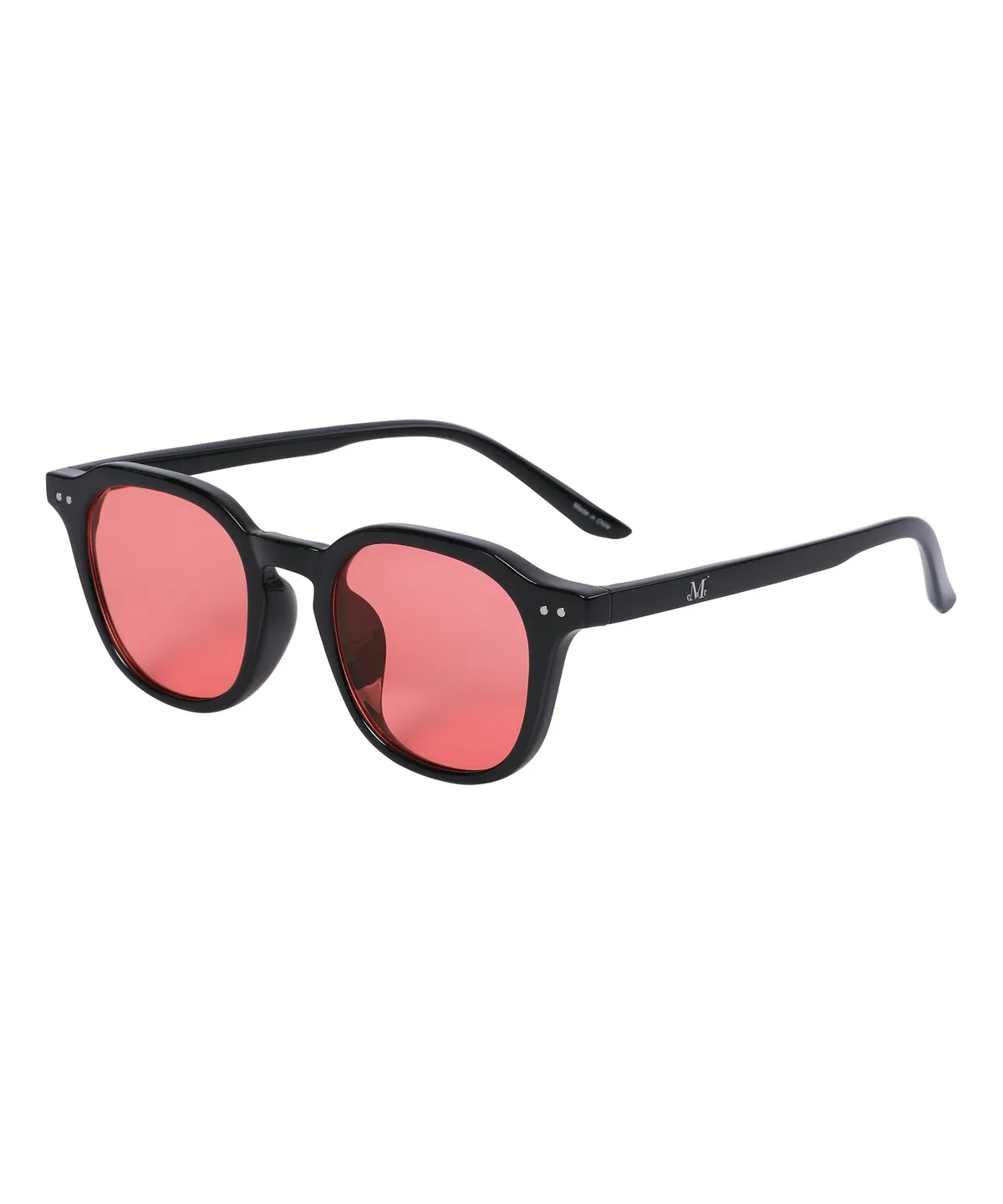
The stated frame composition is 100% acetate. That specification describes the frame rather than every component of the assembled sunglasses: hinges, lens material and decorative fittings are not all made of acetate simply because the frame entry says 100%. In the close views, the black surface has a smooth sheen, the rims have visible thickness and the temples narrow towards the curved ends. The small side emblem is much less prominent than the black outline when the glasses are viewed straight on.
The lens entry is UV400. It should be read as the seller’s UV-protection designation, not as the name of the plastic or glass used to make the lens. The available specification does not establish a lens substrate, total weight, spring-hinge construction or an independent test certificate. Nor does it confirm polarization, a prescription conversion service or a photochromic function. A description of colour looking different in natural light does not by itself mean that the lenses automatically darken outdoors. Those distinctions prevent attractive marketing language from becoming features the product has not actually documented.
Translate the size chart into useful comparisons
The branded size image lists an overall front width of 14.5cm, lens width of 4.9cm, lens height of 4.3cm, bridge interval of 2cm and temple length of 14.5cm. In millimetres, those figures are 145, 49, 43, 20 and 145 respectively. The two 145mm measurements refer to different parts: one spans the front of the frame, while the other follows the length of a temple. The 43mm lens height is also useful because it describes how much vertical space the rounded shape occupies beside the eye and cheek.
Start with a comfortable existing pair and compare equivalent measurements. Do not add two 49mm lens widths and a 20mm bridge and expect that sum to equal the 145mm overall width; rims and the outer portions of the front occupy additional space. Likewise, a number printed on another frame may use a measurement convention that is not identical to the wording in this size chart. Treat these published figures as a practical shortlist tool. If a small difference determines whether your glasses fit, ask the seller for clarification rather than assuming photographic proportions are exact.
The bridge determines more than the frontal look
The bridge has an open, keyhole-like contour that creates a small break in the black front. Its 20mm published interval helps describe the design, but that single number cannot predict how the frame will sit on a particular nose. Contact depends on the shape of the bridge, the slope of the nose and the position at which the frame settles. The product photographs show an integrated frame bridge rather than a prominently separate pair of adjustable nose-pad arms. That visual observation is not a promise of any particular adjustment service.
When trying the sunglasses, look straight ahead and then gently lower your gaze. Check whether the frame stays in place, presses on one small area or rests too heavily on the cheeks. Smiling can reveal contact that is not obvious in a still mirror pose. The lens height makes this check especially useful for a rounded frame. Do not judge a successful fit solely by how level the upper rim looks in a selfie, and do not bend or heat the bridge yourself to force a different fit. A seller or qualified optical professional can advise on whether adjustment is appropriate.
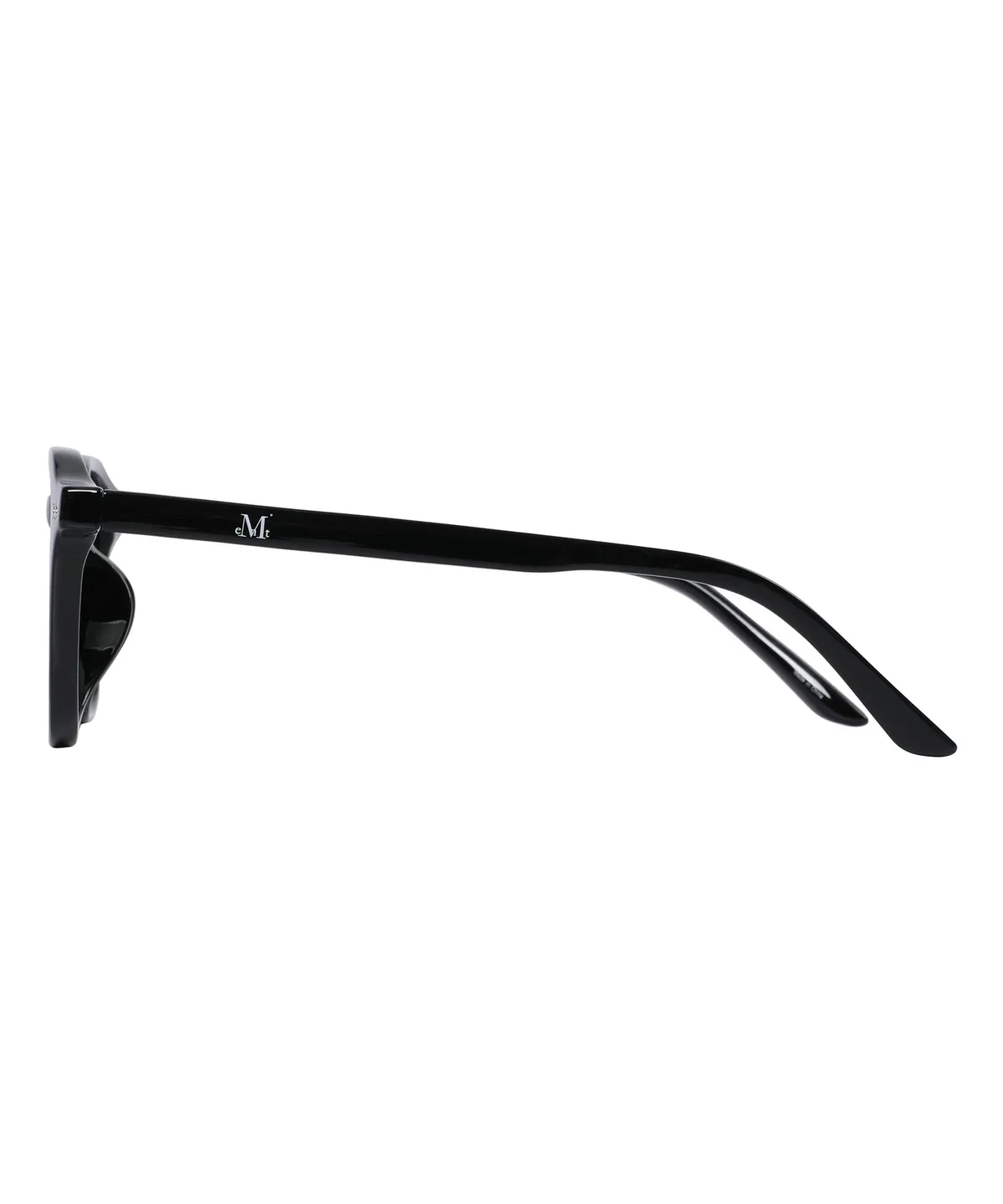
Check the temples and the space around the ears
The side photograph shows a relatively restrained temple, a small pale emblem and a curved tip. The nominal temple length is 145mm. This says more about available reach towards the ear than about the pressure a wearer will feel at the sides of the head. Overall front width, hinge position and temple curvature work together, so a familiar temple length does not make the rest of the fit automatic. No reliable weight figure is published in the material reviewed, which means “lightweight all day” would be an unsupported comfort promise.
A useful fitting check includes opening both temples normally, putting the frame on with both hands and noticing whether the sides flare outward or grip unevenly. Long hair, a cap, headphones or a mask strap may share the same space behind the ears, so consider your usual combination rather than examining the sunglasses in isolation. The small side logo is easy to coordinate with other accessories, but visual simplicity should not distract from pressure points. A frame that requires constant repositioning deserves closer checking before it becomes a daily pair.
Black and Tint black serve different visual purposes
Black is the quieter choice if you want the lenses and rims to read as one dark shape. With a white T-shirt, a striped shirt or a light jacket, that concentrated outline gives the face area a clear focal point without adding another colour. The front image is useful for assessing this effect because both lenses are seen evenly. The three-quarter view, by contrast, shows the thickness of the rim and the way the temple extends behind it. Together they explain more than a colour name alone.
Tint black keeps the same black structure but introduces a softer grey lens field in the photographs. It can suit an outfit already built from grey, faded black, stone or navy when a solid dark lens would feel visually heavy. This is a styling distinction, not a claim that the lighter-looking option is suitable for every light level. Lens appearance in a studio photograph does not provide a measured visible-light transmission value. Choose the look you prefer, then separately confirm the performance information needed for your intended use.
Blue, pink and orange change the colour balance
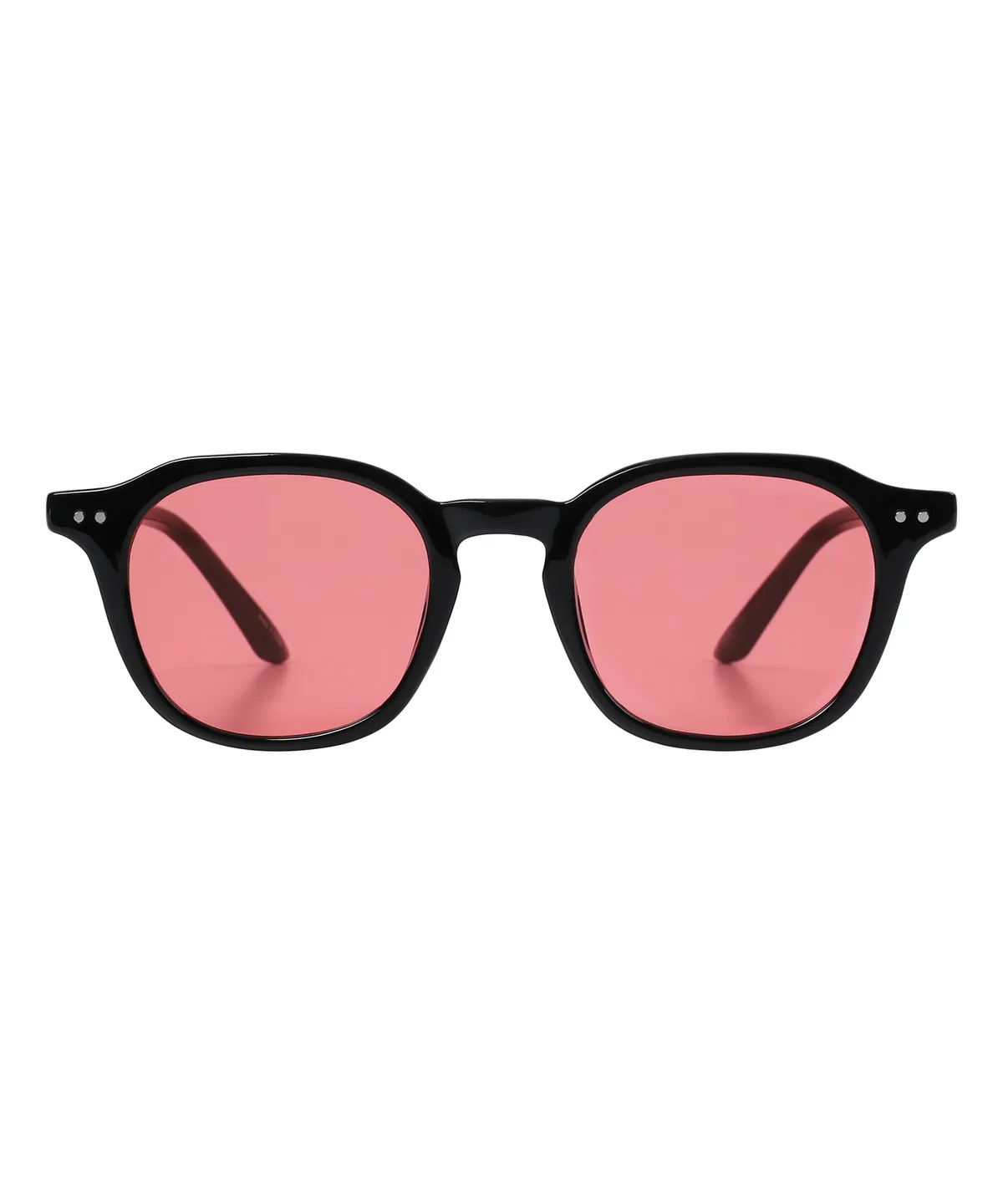
Tint blue creates a cool accent against the black rim. It can echo blue denim or a pale blue shirt, while an otherwise neutral outfit allows the lenses to carry most of the colour. Tint pink appears as a warm pink-coral shade in the product images and can soften the contrast of black clothing without introducing a large printed item. The black bridge and corners remain visible in both versions, so the effect is a coloured centre held inside a consistent dark border. Neither version requires every other accessory to match its lens colour.
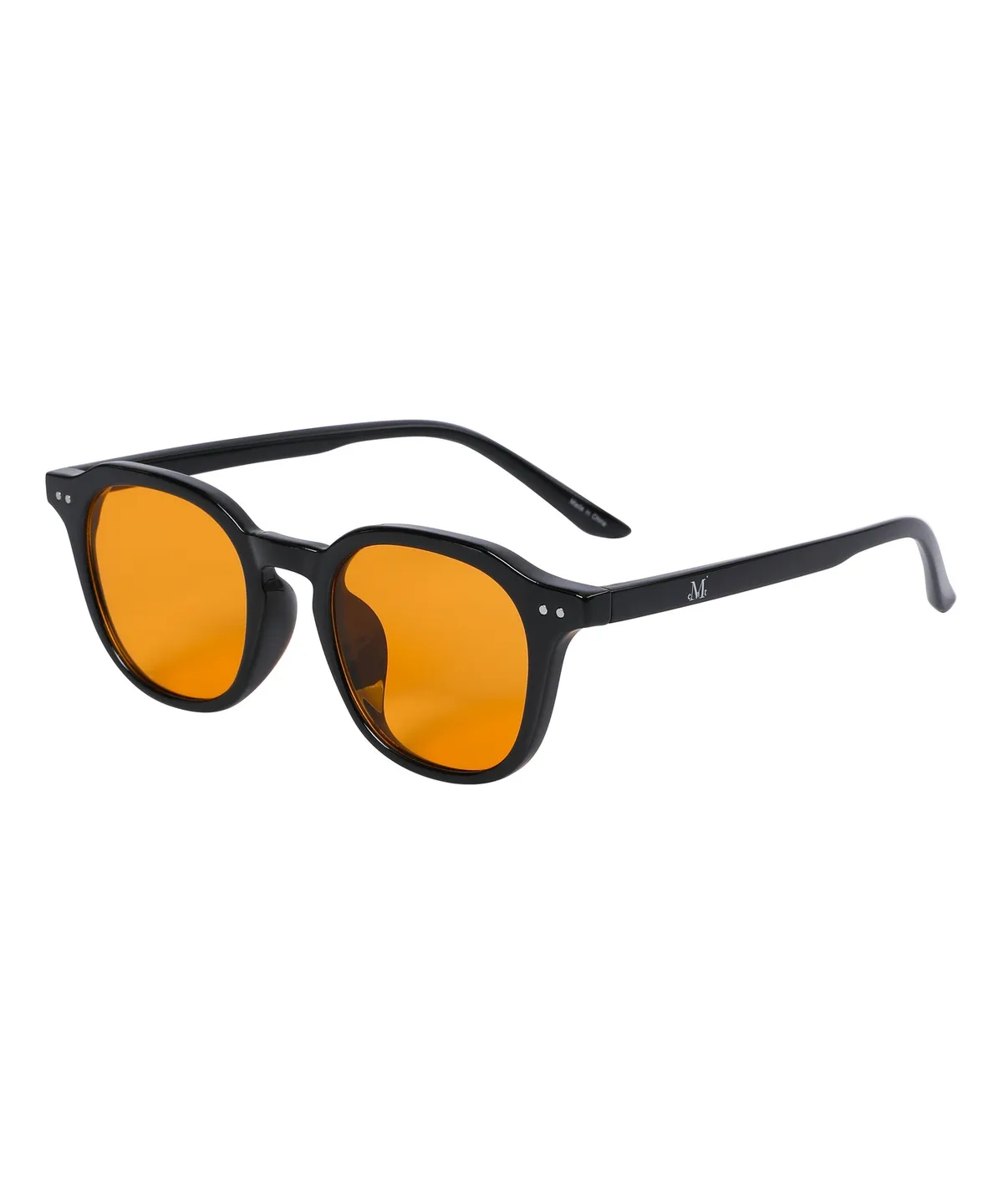
Tint orange is the most obviously warm option in the photographs, moving towards amber or yellow-orange depending on the angle. It can make a simple grey sweatshirt or cream knit feel more deliberate, especially when other accessories remain quiet. A small related colour in a bag detail or shoe can connect the outfit, but repeating orange across several large pieces may compete with the face. These are colour-combination suggestions rather than guarantees about skin tone or personal suitability. Screens, lighting and the background can alter the perceived hue, so compare several images before choosing.
Judge proportions with the clothes you actually wear
A rounded lens can balance the straight lines of a structured collar, a boxy jacket or a square-neck top. The Orca’s black upper edge keeps enough definition that the frame does not disappear beside heavier clothing. With a casual T-shirt, the lens colour becomes more prominent because there are fewer lines around the face. With a patterned shirt, Black or Tint black may create a calmer visual result, while a coloured tint can pick up one small colour already present in the pattern.
Hair, hats and jewellery also affect the apparent size of the frame. A low cap brim leaves less visible space above the lenses; a large hoop earring adds another curve beside them. Rather than deciding from a face-shape rule, compare the actual balance in front and side views. The 145mm front and 43mm lens height provide a more concrete starting point than labels such as “fits everyone.” The goal is a frame that looks intentional with your normal wardrobe and remains comfortable when you move, not only one that looks balanced in a single pose.
Separate tint, UV protection and specialist functions
Visible lens colour and the UV400 label describe different aspects of the product. A dark-looking lens is not, by appearance alone, proof of a higher UV-protection level than a lighter-looking one. Equally, a coloured tint does not establish polarization. The information checked for this Orca model does not give a filter category or measured visible-light transmission, and it does not provide separate performance values for each of the five colours. The responsible comparison is therefore to keep the advertised UV400 designation while acknowledging that those additional figures are not supplied.
If you need sunglasses for a task with specific optical requirements, confirm those requirements and the relevant product documentation before relying on this model. The listing alone is not enough to endorse night driving, specialist sports or other demanding conditions. A fashion photograph can show the frame and colour well, but it cannot substitute for a performance specification. Buyers who require a particular filter category or polarization should ask directly for that information; if it remains unavailable, a model with clearly documented relevant specifications offers a firmer basis for the decision.
Use the photographs for the questions they can answer
The front views are best for comparing lens colour, the bridge opening and the two corner dots on each side. Angled views show the depth of the frame, the side emblem and how far the temples remain visible through the lenses. The side view isolates the temple line, which can otherwise be difficult to judge against the second lens. Looking across these views helps avoid confusing a darker photograph with a different frame finish. In this article the product photographs remain in their original proportions rather than being stretched or divided into artificial detail shots.
Photographs cannot establish the pressure on a nose, the exact weight in the hand or the durability of a hinge over time. They also cannot promise that an on-screen blue or pink will look identical under a particular lamp. Use the images to narrow the colour and shape, then use the measurements and an actual fitting opportunity to resolve size. That division makes online shopping more practical: you are asking each type of information to answer a question it can reasonably answer instead of expecting a large gallery to remove every uncertainty.
Inspect the pair before making it part of your routine
The brand’s detail information states that an eyeglass case and cleaning cloth are included. Check the order contents when the parcel arrives, because the sunglasses, the selected colour and the accessories should agree with the purchase description. Examine the frame on a clean surface in ordinary light, looking for visible marks, loose-looking hardware or an uneven resting position. Open and close the temples gently rather than forcing them beyond their natural range. This is an initial condition check, not a stress test of the hinges or acetate.
Before removing any return-related labels or taking the pair outdoors, review the return conditions of the shop used for the order. The official Korean shop and the global retailer may have different delivery and return arrangements. Keep packaging until you have checked the colour and fit, and take clear photographs if you need to describe a visible problem to the seller. An inexpensive promotional price does not change the value of a careful first inspection. Avoid continuing to wear a damaged frame while assuming a loose component will settle into place by itself.
Gentle cleaning and a case are the practical essentials
The published care advice warns that strong impacts can break the product, recommends a case when it is not being worn and calls for gentle wiping with a microfiber cloth. Follow that simple approach rather than scrubbing the lenses with a shirt hem or rough tissue. A cloth that has picked up grit should not be pressed across the lens. Keep the cleaning cloth clean and check with the seller before using a chemical lens cleaner whose compatibility with the lens or coatings is unclear. The material description does not identify every coating or authorize every cleaning solution.
Fold the temples carefully and place the pair in its case so that keys, coins and other hard objects do not rub against the lenses. Avoid leaving it loose at the bottom of a bag or under heavier items. A claim about acetate’s heat resistance is not a reason to attempt heat adjustment at home or leave the frame where intense heat can build up. When putting the sunglasses down briefly, keep the lenses away from abrasive surfaces. These ordinary handling choices protect the visible finish without inventing a special treatment regimen that the brand has not supplied.
A sensible choice starts with colour, fit and clear expectations
The Orca makes the most sense when you want a rounded black acetate frame and prefer to express the difference through lens colour. Black offers the most unified dark appearance, Tint black a softer grey, and blue, pink or orange a more obvious accent. Compare the 145mm front, 49×43mm lenses, 20mm bridge interval and 145mm temples with a comfortable pair before treating Free size as sufficient information. If the bridge or temple fit is uncertain, a fitting opportunity or a clear return arrangement is more useful than another favourable styling adjective.
For the final purchase check, match the full Orca product name, selected colour and P0000BFR identifier where shown, then review the current price, delivery destination and included accessories on the retailer page. Promotions and stock can change, so a past discount should not determine the decision. The documented strengths are a consistent black acetate design, five distinct lens options and a usable set of dimensions. The open questions include weight and several optical performance details. Choosing with both sides visible produces a more grounded purchase than assuming every attractive tint carries the same unstated capabilities.
A little closer to Korea.
Thank you for reading.