

The game continues even when nobody is running
If the title Running Man makes you think only of races and name-tag battles, a recent episode featuring a long conversation in a café may come as a surprise. Competition on this show is not confined to physical action. Deciding whom to team up with, negotiating an unfavorable condition and working out how much to trust another person are all part of the game. Faced with the same rules, one player charges ahead while another starts bargaining. Those different choices turn an ordinary meal or a journey between locations into a small story. The pleasure of finding out who wins runs alongside the pleasure of watching people respond to one another.
New viewers do not need to memorize hundreds of episodes. A better starting point is to understand this episode’s objective, its teams and the consequences of failure, then follow the choices someone makes within those conditions. This guide introduces the main cast before suggesting four very different entry points. It explains each setup and what to watch for without revealing winners or endings. Whether you prefer a tense chase, an actor’s unexpected competitive streak or an outing that moves between city locations, the aim is to help you choose a first episode that suits your taste.
From a locked shopping mall to many kinds of race
Running Man premiered on July 11, 2010. In episode 1, the cast entered a closed shopping mall, completed missions and searched for the five-digit password needed to escape. A confined space, limited time and interference from another team made the location itself a game board. The programme subsequently developed name-tag chases, hidden-role mysteries, paired contests and outings that mixed travel or meals with missions. This variety explains why an older episode can feel very different from a recent one. It is more useful to approach each instalment as a new arrangement of challenges than as another match in a sport whose rules never change.
Listen for the day’s agreement during the opening: will teams remain together, are there individual scores, and what will the objects earned in earlier missions do in the finale? People wearing the same team colours may still have different personal incentives. Conversely, rivals may cooperate to avoid a shared disadvantage. Even when name tags are involved, elimination methods, special powers and conditions for returning to play can change. Applying the rules of a previous episode automatically can be confusing. You need not learn every detail at once; the question “What does this person want right now?” is often enough to connect one scene to the next.
Yoo Jae-suk and Ji Suk-jin: leading the conversation and unsettling it
Yoo Jae-suk both explains the programme and competes in it. His role becomes particularly clear when he shifts between these positions. He may help clarify someone else’s argument, then join the bargaining when a condition works against him, or turn a small verbal slip into the focus of the conversation. Treating him as an impartial referee would miss this overlap between hosting, mischief and competition. Compare the Yoo with a secret assignment in episode 91 with the Yoo drawing out a café conversation in episode 824: the same person can be central to maintaining suspense and to extending a joke.
Ji Suk-jin often sustains a scene through his reactions and his determination to explain his side of an argument. Official clips from episode 824 show a complaint about a payment amount and persistent questioning from Yoo becoming a conversation in their own right. The interesting question is not simply who is logically correct. Watch the loop in which an explanation attracts stronger reactions, and those reactions demand another explanation. A selection of winning moments would reveal little of this contribution. Stay with the expression after a rebuttal and the interruption from the next person, and the pair’s long-established conversational rhythm becomes easier to appreciate.


Kim Jong-kook and Haha: how strength changes the negotiations
Kim Jong-kook is someone other players take seriously in a physical contest, but describing him only as “the strong one” leaves out much of his function. The presence of a powerful opponent changes whom people approach for an alliance and when they conceal information. One participant avoids a direct confrontation, another tries to recruit him, and another searches for an alternative allowed by the rules. Following those decisions reveals how physical strength shapes the story even before a contest begins. In an episode such as 91, where a secret assignment overlaps with a public escape objective, possession of information matters alongside athletic ability.
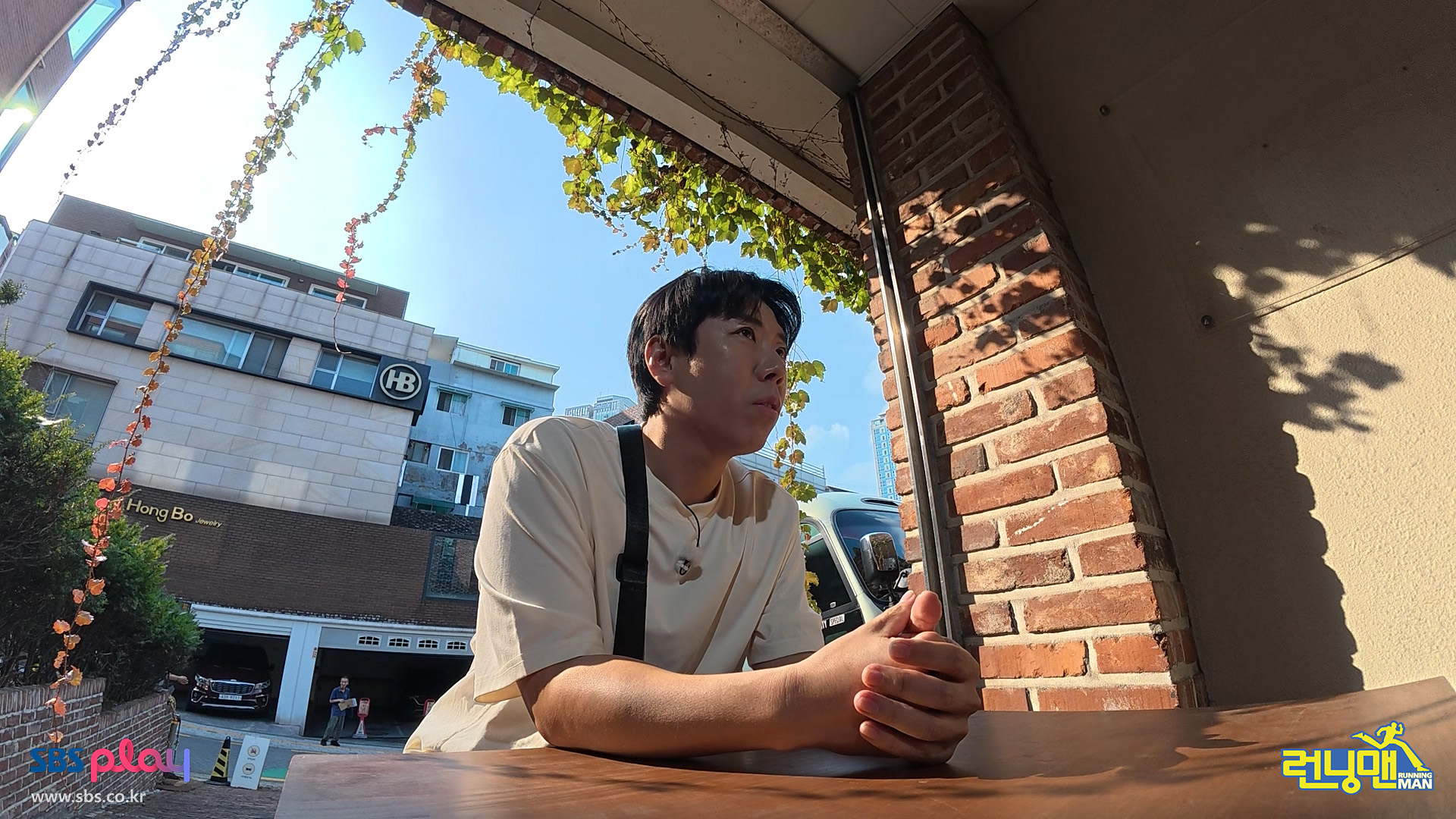
Haha is especially rewarding to watch when he improvises a response or recasts a situation in his own favour. He may take an exaggerated claim a step further, or try to turn an awkward position into a negotiation or a joke. A small gesture between major missions—such as holding up food during a recent café scene—can also provoke reactions from the others. When watching him alongside Kim, follow how one responds to the other’s forceful assertion. The distance between outward confidence and the choice actually made often reveals more than a fixed label for either personality. Their comic possibilities change with the people, stakes and rules around them.


Song Ji-hyo: following decisions as well as dialogue
Watch Song Ji-hyo’s expression while other people lead the conversation, and then the choices she makes once a mission begins. Following only whoever speaks longest can obscure other ways of participating. Separately released scenes from episode 824 include a paper-airplane contest with Kim Jong-kook and her responses during a quiz. Physical activity, being asked a question and listening to a colleague’s teasing bring out different reactions from the same person. Looking at how her behaviour changes with the conditions of an episode gives a fuller picture than collecting only moments that match one familiar nickname.
For a newcomer, the nicknames cast members use may be easier to hear than their real names. Someone who has appeared as long as Song has acquired different forms of address across different periods and situations. There is no need to learn all of them before starting. First establish that they refer to the same person; the background to an individual nickname can come later. Competition and affectionate teasing are also presented through entertainment editing. Rather than treating one exaggerated scene as a verdict on a person’s real-life abilities or relationships, notice whose reaction she responds to and which decision changes the direction of the moment.

Yang Se-chan and Ji Ye-eun: quick exchanges and immediate reactions
Yang Se-chan is worth following for fast verbal exchanges and responses tailored to the situation. He picks up another person’s remark and sends it in a new direction, or argues his position when team selection or meal arrangements give everyone a clear interest. A public clip from episode 824 shows him protesting Ji Ye-eun’s decision when he is left out of a meal. Understanding every word is not a prerequisite for following such a scene. Establish who has the power to decide and who loses out because of that decision. Once the direction of the disagreement is clear, a second look at the subtitles can reveal the expressions missed in the rapid exchange.
Ji Ye-eun participates in the games and conversations alongside the established cast in the 2026 broadcasts, often with immediately readable expressions and responses. Episode 824 includes released scenes in which she talks about her own appeal and chooses a dining companion. They offer a useful contrast between being the centre of attention and holding the power to choose. Her immediate response to an older colleague’s teasing can make the relationships within a scene legible even before every line is understood. Pairings or editing that emphasises closeness belong to the entertainment situation; they need not be treated as information about an actual romantic relationship.
Why older episodes have different faces
Open an episode from 2012 or 2013 and the lineup will differ from a recent broadcast. Gary and Lee Kwang-soo, both long associated with earlier Running Man, appear in older instalments, while the 2020 selection also includes Jeon So-min. A different number of faces in an archival photograph does not mean you have found the wrong programme. A long-running variety show changes its combinations of relationships as its cast changes. Rather than learning a complete chronology of arrivals and departures, first identify the teams and special assignments in the episode you have chosen. If one period’s style appeals to you, expand into neighbouring episodes.
Guests can change the atmosphere just as substantially. An actor unfamiliar with variety-show pacing may become absorbed in a game, while an athletic visitor may hesitate over an unexpected rule. The regular cast then has to find new responses. Comparing a guest’s familiar screen image with their behaviour in a game is enjoyable without making one appearance a judgment on the whole person. An established fan and someone arriving solely for a guest may find different pleasures in the same scene. This is why choosing an episode featuring an actor or singer you already like remains a perfectly good way into the series.
Episode 91: the distance between knowing and not knowing
Broadcast on April 22, 2012, episode 91 brings back the “Yoomes Bond” premise. In Songdo, Incheon, the cast are told their respective charges and taken to prisons inside a university building. Their public objective is to escape from the building. Meanwhile, Yoo Jae-suk receives a secret assignment unknown to the others. The return of a water pistol creates the possibility that people moving through the same space are not actually playing the same game. One of the setup’s attractions is how similar an action taken for the escape mission can look to an action taken for the hidden assignment.
Track who knows what rather than simply who runs fastest. When viewers possess information that a participant lacks, an ordinary approach or conversation takes on another meaning. Alternate between Yoo’s need to act without arousing suspicion and his colleagues’ need to find an exit; hesitation before a chase then becomes part of the suspense. You do not have to watch the previous Yoomes Bond episode first, although knowing that the nickname and water pistol are returning elements makes the introduction easier to follow. Leave winner searches and ending summaries until afterwards so that the order in which the missions unfold can do its work.
Episode 147: an athletics day with Kim Soo-hyun and Lee Hyun-woo
Episode 147, broadcast on May 26, 2013, features actors Kim Soo-hyun and Lee Hyun-woo in an athletics-day concept built around its handsome guests. Despite that framing, the setup is far removed from a photo shoot designed to preserve a polished image. Guests and regulars compete through several missions, with a large final challenge involving about 300 students at a university in Seoul. An actor reacting immediately to a game’s demands offers a different pleasure from watching a scripted character. For overseas viewers already familiar with either actor’s work, these recognisable faces also make the initial cast less daunting.
The useful question is who lets go of their composed image once competition begins. Watch how the surrounding cast extend the scene when a plan succeeds and when it goes wrong. Following the teammates who explain, encourage and tease, rather than keeping attention only on the guests, reveals the rhythm of a variety programme. The university sequence was a production involving students at that particular time, not a permanent visitor activity that can be booked today. This episode is best approached for its personalities and team contests; its historical filming locations should not be mistaken for a current sightseeing itinerary.
Episode 520: yodelling, hula and a cappella instead of a chase
Broadcast on September 13, 2020, episode 520 centres on a “lucky hobby” race with a markedly different texture from name-tag pursuit. One-day indoor classes introduce activities including yodelling, samba, hula and a cappella, asking the participants to use their bodies and voices in unfamiliar ways. The lessons feed into entertainment devices involving the selection of a top student and lottery luck. Someone strong in a familiar contest may not be skilled at a new activity; someone who starts confidently may have to respond to an unexpected result. It is a promising choice if shared practice and failure appeal more than a fast chase.
Pay attention to the interval between hearing an explanation and attempting the activity for the first time. Some movements depend on an individual’s feel, while an activity such as a cappella requires listening and adjusting to other voices. When collaboration enters a competitive programme, doing one’s own part well is no longer enough. Reactions to another person’s mistake and attempts to get back into sync become comic material too. There is no need to treat the classes shown as identical booking options available now. Understanding the context of indoor hobbies during the COVID-19 period helps frame this as an episode in which familiar people encounter unfamiliar skills.
Episode 824: turning Jongno cafés and meals into a game
Episode 824, broadcast on October 25, 2026, follows a corporate-card odyssey through Jongno. The cast move between locations and attempt missions: success allows payment with a corporate card, while failure means using a personal card. The Korean shorthand beopka means corporate card. Even without familiarity with Korean office culture, the structure is easy to grasp: the outcome of a challenge changes who bears the cost. A restaurant or café therefore becomes more than a place to rest between games. Choices about food, conditions and companions make it another setting for negotiation.
Released scenes include café conversations, the selection of meal participants, a paper-airplane contest and a quiz. Their variety makes this a useful introduction to a recent episode built from several smaller situations rather than one long pursuit. The payment arrangement is a rule within an entertainment programme, not guidance on ordinary company-card use. If the outing sparks an interest in Jongno, identify the venues separately and check their current opening status and the route between them. Space reserved for filming and waiting times organised by a production team will not necessarily be part of an ordinary visitor’s experience.

Separating dialogue, screen captions and sound effects
Korean variety programmes often add written commentary independently of what the cast are saying. Translated subtitles carrying the dialogue, on-screen captions summarising or exaggerating the action, and sound effects timed to expressions have different functions. Trying to interpret all three layers at once can be tiring at first. Prioritise the spoken exchange and the rules, then notice what a large or repeated screen caption emphasises. Hearing a comic sound effect does not necessarily mean you have missed an essential Korean wordplay. Some humour comes from a repeated expression or an editing rhythm rather than from a line that needs translating.
Forms of address also resist simple word-for-word translation. Hyung, oppa and noona can be used in close relationships outside a family, while sunbae reflects relative experience or professional seniority. A translation that substitutes names may feel different from one retaining the Korean term. Instead of memorising a dictionary of forms of address, match the speaker’s face and gaze with the person being addressed. If something becomes confusing, revisit a short exchange or a rule explanation rather than a whole long sequence. Understanding every written gag absent from the translated subtitles is not a condition for enjoying the next scene.
Finding the right episode and a suitable way to watch
Search with both episode number and original broadcast date rather than relying only on a title. The four selections here are episode 91 on April 22, 2012; 147 on May 26, 2013; 520 on September 13, 2020; and 824 on October 25, 2026. Services may divide seasons differently, translate titles differently or carry different portions of the archive. A highlight clip’s upload date may also differ from its original broadcast date. Matching number, date and guests is more reliable than assuming a thumbnail with a favourite performer must belong to the episode you want.
The SBS programme listing checked on October 30, 2026 gives the regular broadcast slot as Sunday at 6:10 p.m. Korean time. Special scheduling or sports coverage can change it, so consult the day’s schedule for live viewing. For replays, use SBS’s episode information and a licensed provider serving your region, checking access requirements and subtitle languages before playing or subscribing. Availability is not identical in every country. Official clips are useful for sampling the atmosphere, but may omit rules and developments that explain a scene. If a short exchange appeals to you, seeing its place in the full episode can add another dimension.
Choose an entry point, then widen your own taste
Start with episode 91 for a secret assignment and pursuit, 147 for actors responding to competition, 520 for classes and collaboration, or 824 for the recent cast and a Jongno outing. These are four contrasting entry points rather than a ranked list. One episode that fails to suit your taste does not represent every possible mood of the show. Equally, remembering the rules or cast combination that worked for you provides a better route to another selection than relying solely on popularity rankings. The variety of formats is something to explore gradually rather than a syllabus to complete.
After watching, remember one choice as well as the eventual winner. Did someone share useful information or keep it hidden? How did they respond to a teammate’s mistake? Which unexpected remark changed the atmosphere? Running Man presents the result of a game while building comedy from the process of people working towards it. Recognising a few faces and one set of rules is enough at the beginning. As the relationships become familiar across episodes, repetitions and small variations start to register. Watching people run then becomes part of a broader pleasure: waiting to see how they will react to one another.
Reviews 1
Running Man, episode 79
Public viewing review summary
I enjoyed the guest cameos and remembered the surprising spy reveal years later.
A little closer to Korea.
Thank you for reading.


