Namsangol Hanok Village offers an accessible introduction to traditional Korean domestic architecture near Chungmuro. Five relocated and restored houses form the core of a visit that works well when you want cultural detail without a long journey across Seoul.
Seonjeongneung offers an unusually quiet way to experience Gangnam. Within walking distance of busy commercial streets, the Seolleung and Jeongneung royal tomb grounds preserve a landscape shaped by ceremony, woodland and careful spatial order.
Naksan Park is a compact hilltop escape where Seoul’s roofs, mountains and old city wall can be read together. It suits travelers who enjoy a climb with a view and have time to notice the neighborhoods on the way.
Olympic Park is best approached as a generous piece of the city rather than a single photo stop. In Songpa, Olympic-era landmarks share a large landscape with lawns, sculpture and the much older Mongchontoseong earthworks.
Gilsangsa is a fitting Seoul visit when you want to slow your pace rather than collect another major monument. Wooded slopes, tiled roofs and small paths create a contemplative setting in the residential hills of Seongbuk.
Eunpyeong Hanok Village offers one of Seoul’s most distinctive combinations of tiled roofs and mountain scenery. It is a place for a measured neighborhood walk, with Bukhansan’s ridgeline giving the streets a strong sense of location.
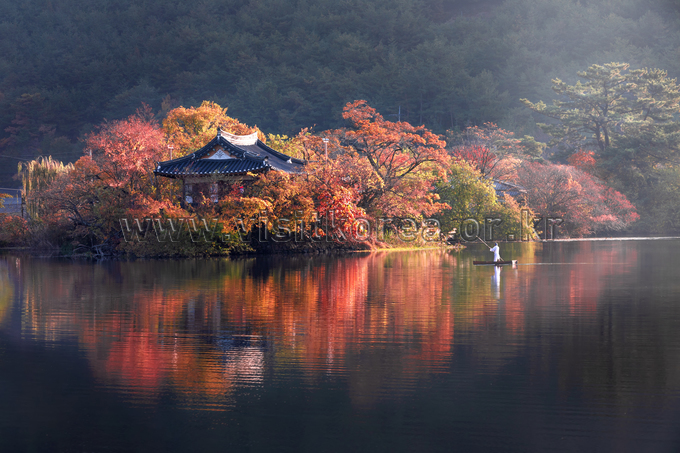
A tiled pavilion appears between trees, then returns as a reflection in the water. At Wiyangji in Miryang, a short pond-side walk can become the gentlest part of a southern Korea itinerary.
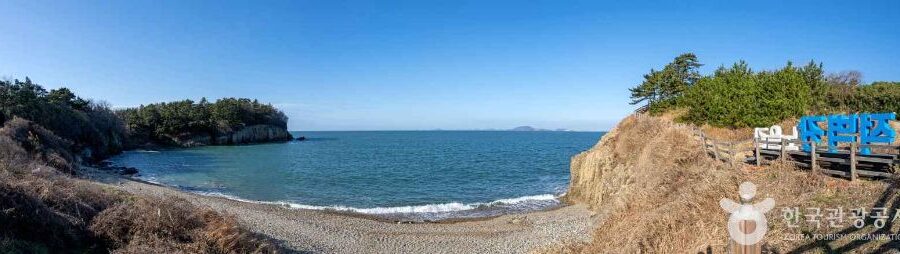
North of Gyeokpo’s better-known coastal stops, Jeokbyeokgang brings red-toned rock, pebbles and open sea into one compact landscape. Come for the colors, but let the tide and the daylight shape your walk.
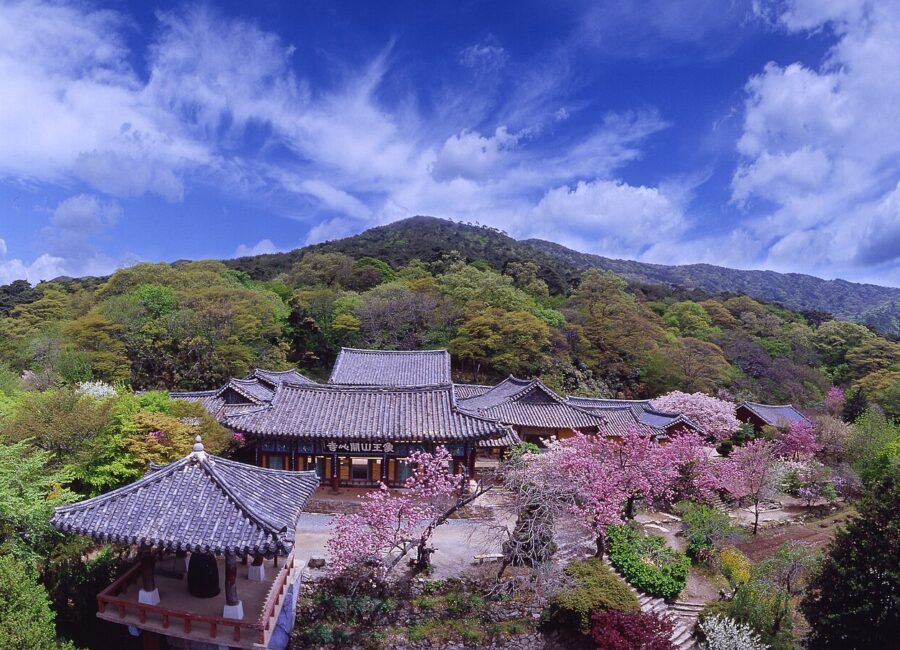
A forest approach, a quiet pond and timber buildings give Gaesimsa reasons to visit well beyond spring. On the slopes of Sangwangsan in Seosan, this temple rewards an afternoon with fewer stops and more attention.
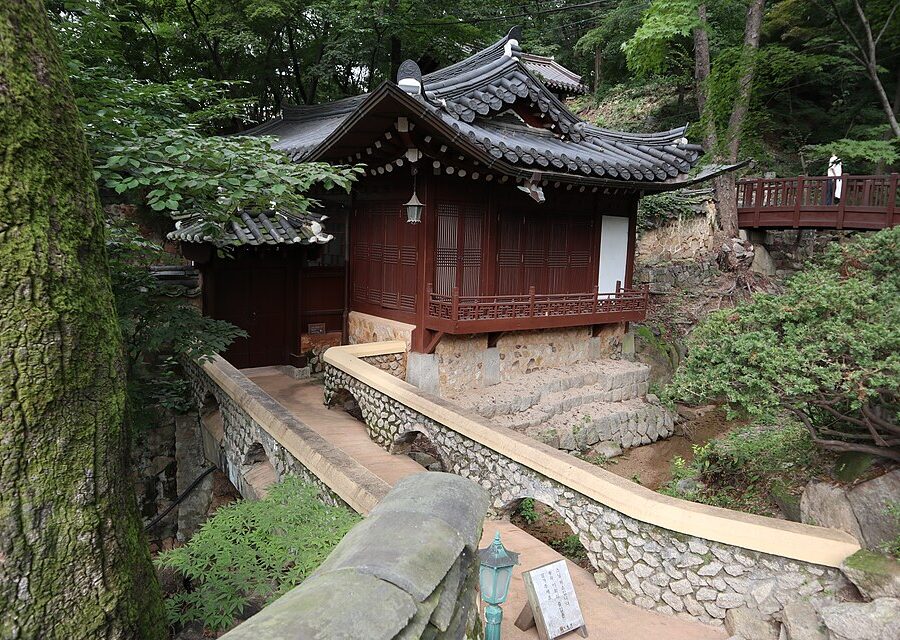
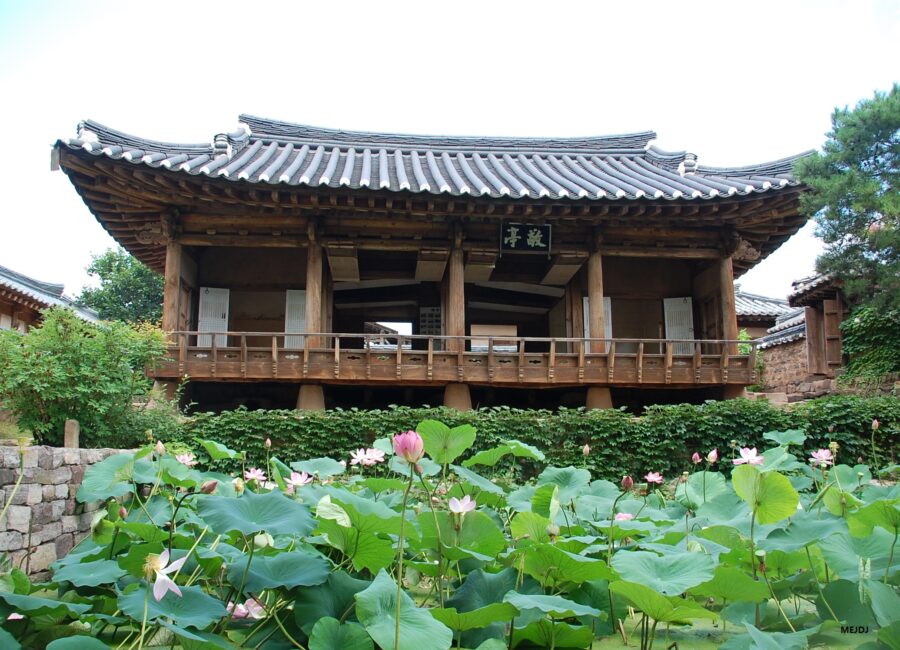
At Seoseokji, the most rewarding view is close at hand: pale stones, a pond and the timber lines of Gyeongjeong Pavilion. This modest garden in rural Yeongyang turns a short stop into a lesson in looking slowly.